dailynewsnblog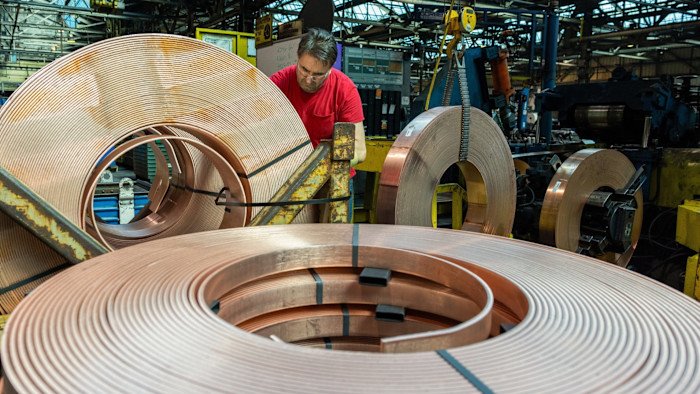
Stay informed with free updates
Simply sign up to the US trade myFT Digest — delivered directly to your inbox.
The US government will launch a $12bn critical minerals stockpile as part of its efforts to counter Chinese dominance over key metals and support domestic manufacturers during shortages and emergencies.
The US Export-Import Bank (Exim) will provide $10bn in debt financing for the effort, named Project Vault, to build up domestic stores of “essential raw materials” across the US that can be tapped by manufacturers such as carmakers.
An additional $2bn will come from private capital.
The project will be led by an independent chief executive, while Exim will have a seat on its board. It will involve the purchase of key minerals such as rare earths, copper and lithium, which will be sourced by three partnered trading companies, Traxys, Mercuria and Hartree Partners.
Exim said the effort would “protect domestic manufacturers from supply shocks, support US production and processing of critical raw materials, and strengthen America’s critical minerals sector”.
The plan was first reported by Bloomberg and is due to be unveiled on Monday.
A White House official confirmed that President Donald Trump was set to launch the initiative.
Western policymakers have stepped up their efforts over the past year to diversify their sources of certain metals to reduce their dependence on China, amid strained ties between Washington and Beijing that have been exacerbated by Trump’s aggressive tariff policies.
China dominates the supply chains for a host of critical minerals, and last year ratcheted up its weaponisation of the sector by restricting exports of some materials including rare earths.
The US already has a defence stockpile of certain key metals, to which it added at least $1bn worth of materials last year.
More than a dozen companies including Lockheed Martin, General Motors, Alphabet’s Google and battery maker Clarios have already signed up to become Vault members.
They will pay a fee that secures the right to withdraw minerals from the stockpile in emergency situations when they are struggling to source the materials on the open market.
Under the plans, Vault itself will not make money besides taking what Exim said was a “small” operational fee. It added that trading houses procuring the materials for the store would also take a small cut.
Vault plans to build up strategic stores such that they hold about 60 days’ worth of material, and it will decide which minerals to buy.
Tim Puko, analyst at Eurasia Group, said the stockpile was not an immediate game-changer in terms of reducing US dependence on Beijing for critical minerals.
But he said it was an important initiative that could potentially stabilise the market in the longer term.
“This is a good start, as long as there is follow-through and they can prove to partners their credibility,” Puko said.