dailynewsnblog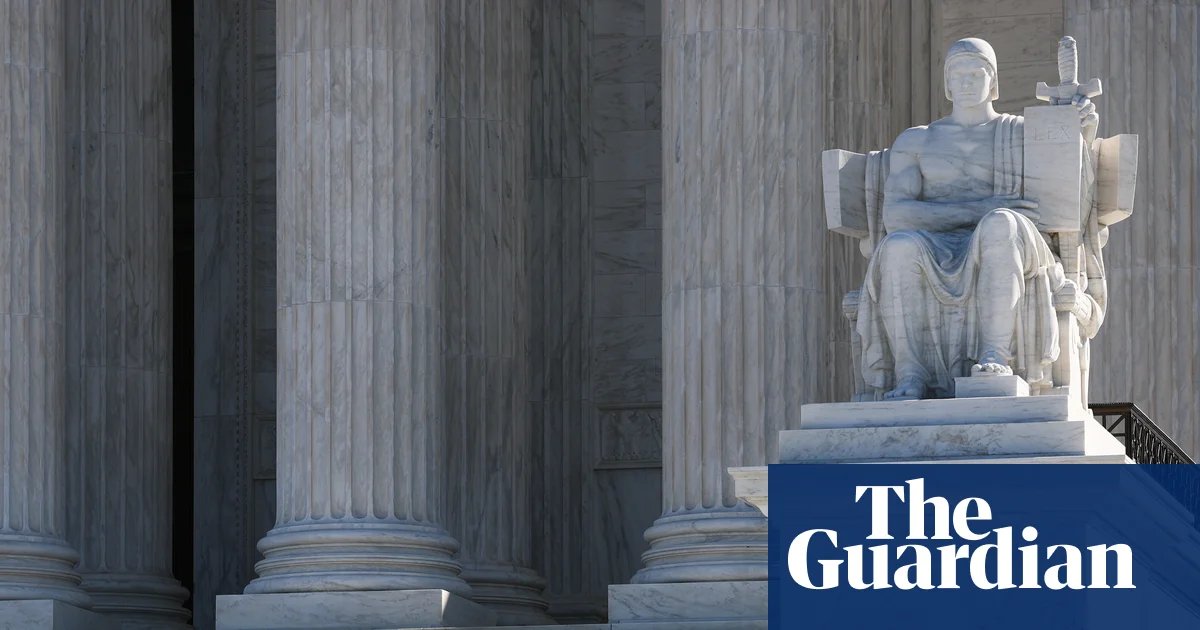
The US supreme court appeared skeptical on Tuesday of whether jury selection in a trial was conducted appropriately when they heard oral arguments in a death penalty case about racial bias in jury selection stemming from Mississippi.
Doug Evans, a now-retired prosecutor, removed all but one Black person from a jury that convicted Terry Pitchford of capital murder in 2006. The judge, Joseph Loper, allowed the juror strikes, despite objections from the defense counsel, and Mississippi’s supreme court upheld the conviction.
Justices seemed to focus in on a moment during the trial in which Loper appeared to insufficiently apply a Batson challenge, referring to a 1986 ruling in Batson v Kentucky, in which the court reaffirmed that it is unconstitutional to keep Black people off juries due to their race.
Making the objection triggers a three step process: first, the objecting party must show that there is an inference of discrimination. Then, the striking party must show reasonable, race-neutral explanations for striking certain jurors. Lastly, the judge makes a determination about whether there was purposeful discrimination.
The last step is the point on which much of the oral arguments focused.
Conservative justices Amy Coney Barrett, Neil M Gorsuch, Samuel A Alito, Clarence Thomas and chief justice John G Roberts appeared to argue that the defense counsel should have objected more adamantly when the trial judge determined that there was no Batson violation. The trial counsel was the “most timid and reticent defense attorney that I have ever accounted”, said Alito, who repeatedly said that the onus was on the defense attorney, not the trial judge, to object to arguments of racial bias.
Justices Sonia Sotomayor, Ketanji Brown Jackson, Elena Kagan and Brett M. Kavanaugh noted that, while not necessarily particularly assertive, the trial counsel attempted to make a point about Batson and note her objection, but was rebuffed by the trial judge who said that there was no violation.
“She’s trying, I think – we weren’t there, we don’t have an audio recording – to make the objections, and the court says: ‘You already made those, they’re clear and the court finds there to be no Batson violation,’” Kavanaugh said. “At that point, she could’ve said: ‘Well, you’re wrong, judge,’ I get that and Justice Alito has good points on that, but it seems pretty clear at that point.”
While liberal justice Sotomayor seemed to agree that trial counsel should have been more assertive, she pointed to the three times the court acknowledged her objections but nevertheless continued.
“The question before us is whether the state supreme court was right when it said she waived her argument,” Sotomayor said. “She might not have presented a good argument, but she didn’t waive her argument.”
“The question is not whether this defense counsel put enough in the record to actually prevail on a Batson claim, the question is instead whether the Mississippi supreme court got it really wrong when it said that she had waived her argument that there was a Batson violation,” Kagan said. “I’m just staring at the transcript, and as to that question, I don’t really see the ambiguity in this transcript because this is coming after the fact of the prosecutor saying: ‘We had race neutral reasons for all of them.’ And she says, three times: ‘I want to contest that.’ and the court says, over and over: ‘It’s in the record, it’s in the record, it’s clear in the record.’”
Pitchford, now 40, was 18 when he and another teen – who was younger than 18 and therefore ineligible for the death penalty – robbed a grocery store just outside of Grenada in northern Mississippi. The other teen fired fatal shots, but Pitchford was convicted of capital murder and sentenced to death.
Seven years ago – in a case that also involved Evans, Loper and Mississippi’s highest court – the supreme court overturned the death sentence and conviction of Curtis Flowers, a Black man who had been tried six times dating back more than 20 years. The court had seven of the nine current justices at the time and Kavanaugh, a conservative justice, wrote that Evans showed a “relentless, determined effort to rid the jury of Black individuals”.
Pitchford and his supporters pointed to precedent from the Flowers ruling and argued that the court should likewise rule in his favor. The case before the supreme court on Tuesday has been making its way through the court system for decades.