dailynewsnblog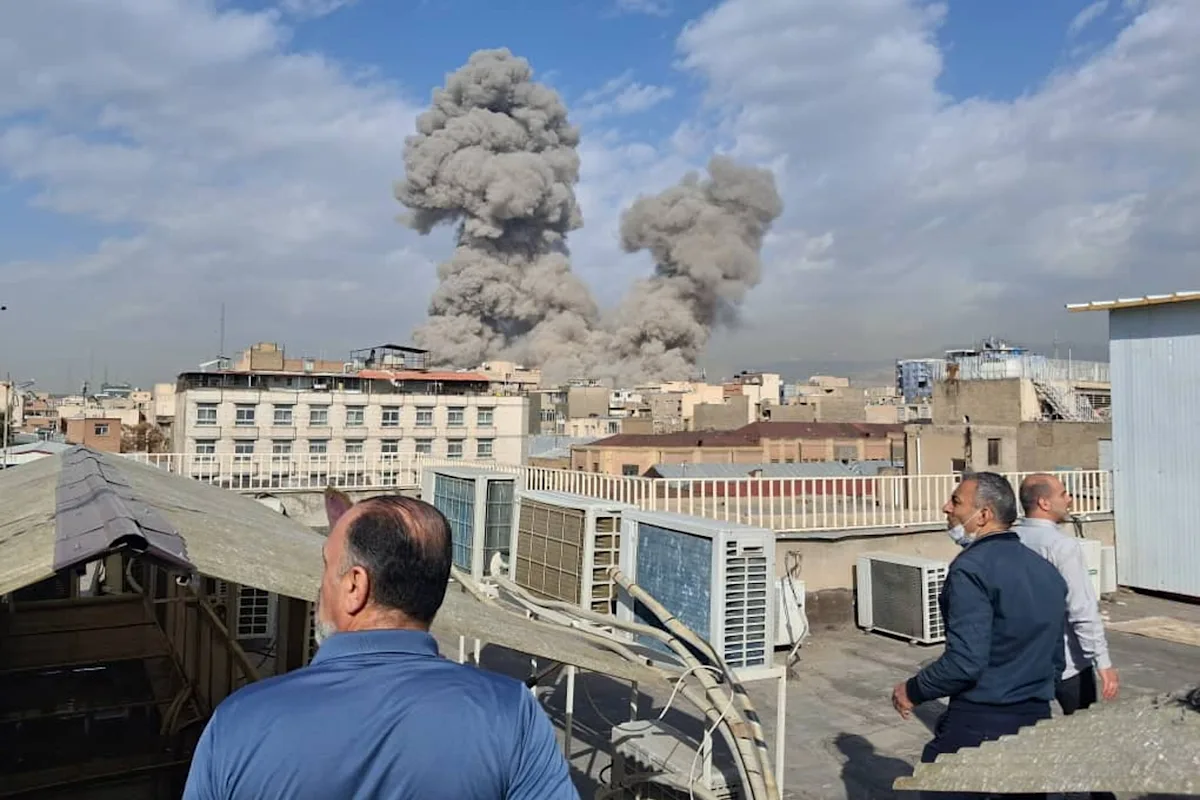
The US and Israel struck Iran early Saturday morning in what President Trump said was a bid to destroy the country’s nuclear program and remove the current regime from power. The move triggered immediate retaliation and may provoke a wider conflict that poses serious risk for the oil markets.
Futures on Brent crude (BZ=F), the international pricing benchmark, had jumped by roughly 2.9% to close above $72.80 on Friday, while those on US benchmark West Texas Intermediate (WTI) crude (CL=F) had moved up by a slightly smaller 2.8% to trade above $67 by Friday’s close.
Without signs of deescalation over the weekend, prices could surge upward by as much as $10 to $20 per barrel when the market reopens Sunday night, Jorge León, head of geopolitical analysis at Rystad Energy, told Yahoo Finance.
“Given the scale of retaliation, most of the strategic initiative now lies with Iran,” León said. “How Tehran chooses to respond over the next 24-72 hours — especially toward energy infrastructure or regional shipping — will be the primary driver of near-term oil market dynamics,” León told Yahoo Finance.
Throughout Saturday morning, the US and Israel launched dozens of air strikes into the Iranian capital Tehran and other major cities across the country after what were seen as last-ditch talks between US and Iranian negotiators on Thursday ended with no deal. The Oman foreign minister, serving as mediator in the talks, said on Face the Nation Friday that he believed “progress” had been made and that a deal was within reach.
Iran immediately retaliated against the US and Israeli strikes, launching missiles against both US military assets and energy infrastructure throughout other Gulf states such as Bahrain and the United Arab Emirates, according to news reports from the region. Iran’s semiofficial news agency Fars reported Saturday morning that Iranian missile attacks had targeted U.S. military facilities throughout the Middle East, including the Al Udeid Air Base in Qatar and others in Kuwait, the UAE, and Bahrain, according to The New York Times.
Inside Tehran, the US struck the compound that holds the presidential palace, where Iranian Supreme Leader Ayatollah Ali Khamenei typically lives, the Times reported.
While no signs of immediate deescalation could push to $10 to $20 prices per barrel, León said, a wider conflict involving oil infrastructure throughout the Gulf “would push prices even higher.”
In a speech posted to Truth Social, President Trump said the US’ “massive and ongoing operation” seeks to not only destroy Iran’s nuclear armament capacity, but to also annihilate the country’s Navy and destabilize terrorist proxy groups throughout the region that receive significant financial backing from Iran.