dailynewsnblog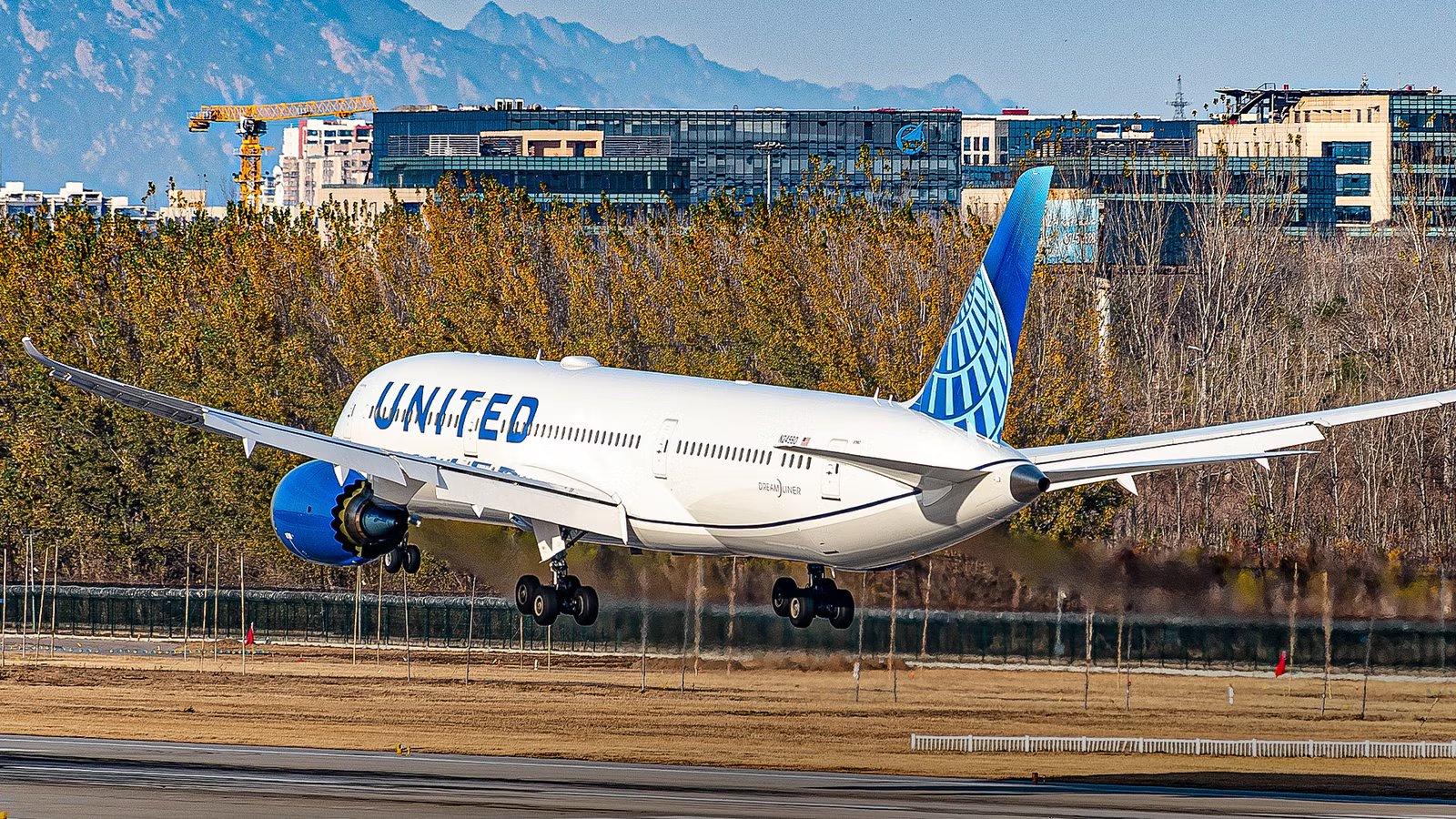
The Boeing 787 fleet forms the solid basis of  United Airlines and its expansive international network. For a carrier connecting two continents across vast oceans, the aircraft provides a necessary balance of fuel efficiency, passenger capacity, and physiological comfort. This guide explores the longest nonstop routes United Airlines operates with its Dreamliner fleet in 2026, looking closely at route data to understand how the airline deploys this specific aircraft on ultra-long-haul operations.
Operating flights that routinely exceed 14 hours requires a highly capable airframe. The Dreamliner, with its composite structure and lower cabin altitude, mitigates passenger fatigue on these extended journeys, making it the ideal candidate for sectors exceeding 6,000 miles. The 787 is as strategic for the airline as it is comfortable for passengers, balancing premium cabin demand with the strict payload limitations inherent to flying across the globe.
The Longest Of All

Sitting at the absolute top of the operational limits for United Airlines is the nonstop service between  Houston and
  Sydney. Covering an impressive 8,587 miles, this route represents the longest Dreamliner deployment in the entire network. The carrier relies exclusively on the Boeing 787-9 variant for this demanding transpacific crossing, utilizing its superior range over the other two models in the fleet.
Linking a primary American energy center to Australia involves a sophisticated balancing of weight and range. Routes of this length push the technical limits of the aircraft, requiring the carrier to optimize the fuel to payload ratio. This is a route where the premium Polaris cabin truly shines, giving passengers ample time to immerse themselves in the product while also ensuring the flight remains commercially productive despite the immense fuel volume required for the journey.
United Airlines schedules 154 flights on this specific routing, providing 39,578 seats across the year. The return leg from Sydney to Houston mirrors these figures precisely, generating over 339 million available seat miles in each direction. Operating such a resource-intensive route requires absolute operational precision, where the aerodynamic efficiency of the Dreamliner is the singular factor preventing the need for an intermediate fuel stop.
Pushing Further Down Under

The 787-9 is the definitive instrument for the transpacific strategy of United Airlines, representing the majority of the carrier’s ultra-long-haul capacity. The larger 787-10 offers more seats, but not the range required to bridge the gap between North America and the far reaches of Southeast Asia and Oceania. Consequently, the 787-9 occupies nearly every top spot in the distance rankings for 2026, serving as the bridge between primary American hubs and distant economic centers.
 San Francisco International Airport (SFO) serves as the primary gateway for these extreme-distance sectors, anchored by the daily service to Singapore Changi Airport(SIN). At 8,440 miles, the flight to Changi is a true test of both passenger endurance and aircraft reliability, yet it remains one of the most profitable routes in the system due to the high density of tech-sector travelers. Further south, the service to Adelaide covers 8,068 miles, while Melbourne is served from both
  Los Angeles and San Francisco, with distances of 7,920 and 7,853 miles respectively. These routes demonstrate how United utilizes the efficiency of the 787-9 to serve Australian markets that were previously difficult to reach without a stopover.
|
Rank |
Route |
Distance (Miles) |
Aircraft Type |
|
1 |
Houston (IAH) to Sydney (SYD) |
8,587 |
Boeing 787-9 |
|
2 |
San Francisco (SFO) to Singapore (SIN) |
8,440 |
Boeing 787-9 |
|
3 |
San Francisco (SFO) to Adelaide (ADL) |
8,068 |
Boeing 787-9 |
|
4 |
Los Angeles (LAX) to Melbourne (MEL) |
7,920 |
Boeing 787-9 |
|
5 |
San Francisco (SFO) to Melbourne (MEL) |
7,853 |
Boeing 787-9 |
The technical superiority of the 787-9 in this theater is largely thanks to its ability to carry a full load of passengers and high-value belly cargo simultaneously. In the Pacific market, where e-commerce and high-tech components are shipped daily between the United States and Asia, the revenue potential of the Dreamliner extends far beyond the ticket counter. United has captured a significant share of the transpacific market once ruled by four-engine jumbo jets through these routes, focusing on high-yield business traffic.

The 10 Most Popular Transpacific Routes Operated By The Boeing 787 Dreamliner In 2026
The 787 and Transpacific routes really go hand-in-hand. The aircraft provides the capacity and efficiency to make these routes work.
A Focus On Underserved Destinations

United has also aggressively expanded its footprint in Africa, transforming its hubs at  Newark and Washington Dulles into primary gateways for the continent. The 787-9 is the essential tool for routes here, as the distances to South Africa push the limits of traditional twin-engine efficiency. Through these new nonstop links, United has bypassed traditional European layovers, offering a more direct path for both corporate and leisure travelers.
The route from Newark to  Johannesburg is a primary example of technical execution, covering 7,988 miles. Johannesburg presents a unique challenge due to its high elevation, which can impact takeoff performance and payload capacity, conditions that typically give other aircraft somewhat of a workout on takeoff. The advanced aerodynamics and powerful engines of the 787-9 allow United to operate this sector with fewer weight restrictions than older aircraft types, ensuring that the nearly 8,000-mile journey remains a staple of the international schedule, with plenty of seats filled consistently.
Similarly, connections to Cape Town from both Washington Dulles(7,923 miles) and Newark (7,816 miles) highlight the growing demand for direct access to the southern tip of Africa. These clearly highlight the true strategic placement of the Dreamliner to capture a market that has historically been underserved by North American carriers. With over 150 flights scheduled for each of these South African corridors in 2026, United is betting heavily on the sustained growth of the African aviation sector.
Where The 787 Is Relied On Most

Where United has leaned on its 787-9 fleet the most is to serve as the primary link between major North American hubs and the most lucrative markets in Asia. These routes are characterized by a heavy reliance on premium business traffic, necessitating an aircraft that can provide both the range and the cabin experience expected by high-value travelers. These Asian sectors represent some of the highest-frequency long-haul operations in the United network, reflecting a trend seen across the major US airlines holistically.
The route between Newark and  Delhi illustrates the immense logistical scale of these operations, covering 7,323 miles with 365 flights scheduled annually, according to Cirium data. Similarly, the transpacific connections to Tokyo are vital, with Newark to
  Haneda at 6,760 miles and Newark to
  Narita at 6,732 miles serving as dual gateways to the Japanese capital. For the business traveler departing from Houston, the 6,643-mile journey to Tokyo Narita provides a critical nonstop link for the energy and manufacturing sectors, reinforcing the role of the Dreamliner as a tool for global commerce.
Many of these routes often required a stopover or the use of larger, less efficient aircraft like the Boeing 747. The introduction of the 787-9 allowed United to maintain daily frequencies on routes that might not support the capacity of a larger widebody but require the premium seating density of the Polaris cabin. This size match has been especially effective on the 7,260-mile route between Los Angeles and  Hong Kong, where the carrier provides 730 flights in 2026, ensuring that travelers have consistent, daily options for transpacific travel.

Where Does United Airlines Typically Fly Its Boeing 767-400ERs?
The widebody variant flies many of the carrier’s routes to Europe.
Filling In The Gaps

The 787-9 claims a large portion of the spotlight for distance, but the United fleet uses all variants, with the others being used for specialized purposes. The distribution of routes reveals a clear divide where the 787-9 handles the extreme distances, while the 787-8 and 787-10 are deployed where specific capacity or demand profiles dictate a different tool. This strategy ensures that United can serve secondary markets with the smaller variant or maximize passenger throughput on high-demand corridors where extreme range is not the primary constraint.
The 787-8 finds its niche on long and thin routes, such as the 6,912-mile journey between San Francisco and Christchurch. With only 43 flights scheduled for 2026 using this specific airframe, the carrier can test and maintain a presence in the New Zealand market without the risk of over-supplying seats. The lower capacity of the -8 variant makes it the ideal candidate for seasonal or emerging routes where the operational costs of a larger aircraft would undermine profitability, yet the distance still requires the efficiency of the Dreamliner platform.
|
Feature |
Boeing 787-8 |
Boeing 787-9 |
Boeing 787-10 |
|
Primary Role |
Long and Thin Routes |
Ultra-Long-Haul |
High-Capacity/Medium-Range |
|
Typical Seats |
243 |
290 |
318 |
|
Max Range |
7,305 nm |
7,530 nm |
6,330 nm |
|
Longest 2026 Route |
SFO-CHC (6,912 mi) |
IAH-SYD (8,587 mi) |
ORD-HND (6,306 mi) |
At the other end of the spectrum, the 787-10 appears at the bottom of the distance rankings for the 6,306-mile sector between  Chicago O’Hare and Tokyo Haneda. This variant is the heavy-lifter of the family, trading a portion of its range for significantly higher seating capacity, providing 115,752 seats annually on this single route. For the Japanese market, where cargo and passenger demand remain consistently high, the -10 acts as a high-volume shuttle. Here, the ability to move more people is far more valuable than the ability to fly additional miles.
A Promise, Delivered

The 787 promised a lot to the aviation world, and United has found those promises to be true. As one of the world’s largest airlines, and fleets for that matter, United likely never expected such an aircraft to be so valuable to the global operation of the airline, but here we are today. The 787 has become a primary engine for generating revenue across the world’s most demanding travel markets.
Whether operating in the high-altitude environment of Johannesburg or the humid, dense air of Singapore, the aircraft maintains a high degree of operational reliability that allows United to schedule high-frequency services. For the valued passengers, this translates into more choice and better connectivity, as the 787-9’s efficiency enables nonstop flights to secondary cities like Adelaide and Christchurch that would have been commercially impossible with the fuel-heavy tri-jets of a previous generation.
The sustainability of these ultra-long-haul routes will depend on the continued evolution of the Dreamliner platform and the integration of new technologies. United has already begun testing the limits of sustainable aviation fuel on its longest sectors, recognizing that these 15-hour flights are the most carbon-intensive part of their operations. As the fleet matures, the focus will likely shift from simply adding new dots on the map to optimizing every pound of fuel and every inch of cargo space to ensure that the 8,000-mile marathon remains a viable and sustainable part of global aviation.