dailynewsnblog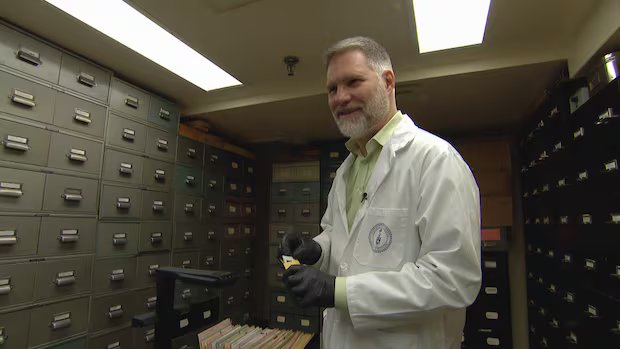

Listen to this article
Estimated 5 minutes
The audio version of this article is generated by AI-based technology. Mispronunciations can occur. We are working with our partners to continually review and improve the results.
A unique collection of microscopic fungi used for Canadian medical and biodiversity research has been saved from being shipped overseas.
The UAMH Centre for Global Microfungal Biodiversity has received a $1-million donation from the Weston Family Foundation, allowing it to remain in Canada for Canadian use.
“This unique biobank has the potential to fuel medical discovery, public health preparedness, and innovation for generations to come,” said the Weston Family Foundation in a statement Wednesday. “As a foundation committed to investing in innovation and learning, the Weston Family Foundation felt that it had a responsibility to step in where the stakes are long-term and the benefits are shared by all.”
Ayush Kumar, a University of Manitoba researcher who has used specimens in his search for new antibiotics and contributed specimens to the collection over the past 10 years, said he was “super excited” that this “tremendous resource” is staying in Canada.
He added that he was pleased to see a Canadian foundation interested in saving it and supporting science. “That’s also a very exciting part of it,” he said.
James Scott, a University of Toronto professor and director of the fungal biodiversity centre, said he was “really stunned” when he was told about the donation.

He estimates it will provide bridge funding for about five years, allowing the centre to come up with a sustainable plan to remain here long-term. He said that since getting the news, the University of Toronto has committed to help protect and grow the facility.
Why Canadian scientists need the biobank
The collection — billed as the largest of its kind in the western hemisphere — contains nearly 12,000 specimens from 3,200 species around the world that were available to Canadian researchers and companies.
They include many fungi that cause diseases in humans and animals that need to be studied in the hunt for new drugs and cures, or to save threatened species. Some are emerging or becoming more prevalent due to climate change.
Kumar said fungi are an important potential source of new antibiotics, as they are “some of the best chemists that are out there.”
Mary Berbee is a professor emeritus of botany at the University of British Columbia who has deposited samples in the biobank — one of which turned out to be a new fungal species. She says that making such samples available to other researchers is the only way to ensure scientific results can be reproduced or duplicated.
Berbee says she was “delighted” by the news that the collection had been saved. “It’s really difficult to keep culture collections going. There aren’t that many in the world,” she said. “And I was really worried about this one.”
About two-thirds of the strains in the collection are unique in the world. Berbee said if researchers can no longer access them, their research may be delayed or not possible at all.

A University of Toronto collection of living fungi, long used in the development of life-saving medical breakthroughs, like penicillin, could close over a lack of funding. Scientists across Canada are concerned its loss could complicate the development of new drugs.
The collection ran out of funding in 2024, and Scott realized he could not keep it going for much longer with his own personal funds. He started looking for a fungal biobank elsewhere in the world that could absorb the collection so it didn’t end up in the trash.
“The challenge,” he said, “is that once you send these materials out of the country, it can be hard to get them back.”
Many international regulations control the movement of dangerous or rare species across borders, meaning that many Canadian researchers would find it difficult or impossible to get access to them from another country. “That’s a profound loss to Canadian science,” Scott said.
How a solution was found
But after CBC News ran a story about the biobanks’ troubles, a couple of foundations contacted Scott to ask for more information.
After learning more, the Weston Family Foundation, which prioritizes projects related to healthy aging and healthy ecosystems, invited the biobank to apply for a grant. It was finalized in January.
Scott said in the process, the biobank has been encouraged to promote itself to a wide group of researchers, institutions and companies that might find its specimens useful — something it hesitated to do when its future was uncertain.
He noted that biobanks are one of the only ways for researchers to access specimens of microorganisms, which can’t just be ordered from an online store like chemicals and other scientific supplies.
The Centre for Global Microfungal Biodiversity plans to work on cataloguing its specimens online and making them more accessible, in the hopes that it can earn more from user fees.
It’s also looking to put together an endowed fund that could cover the rest of its costs.