dailynewsnblog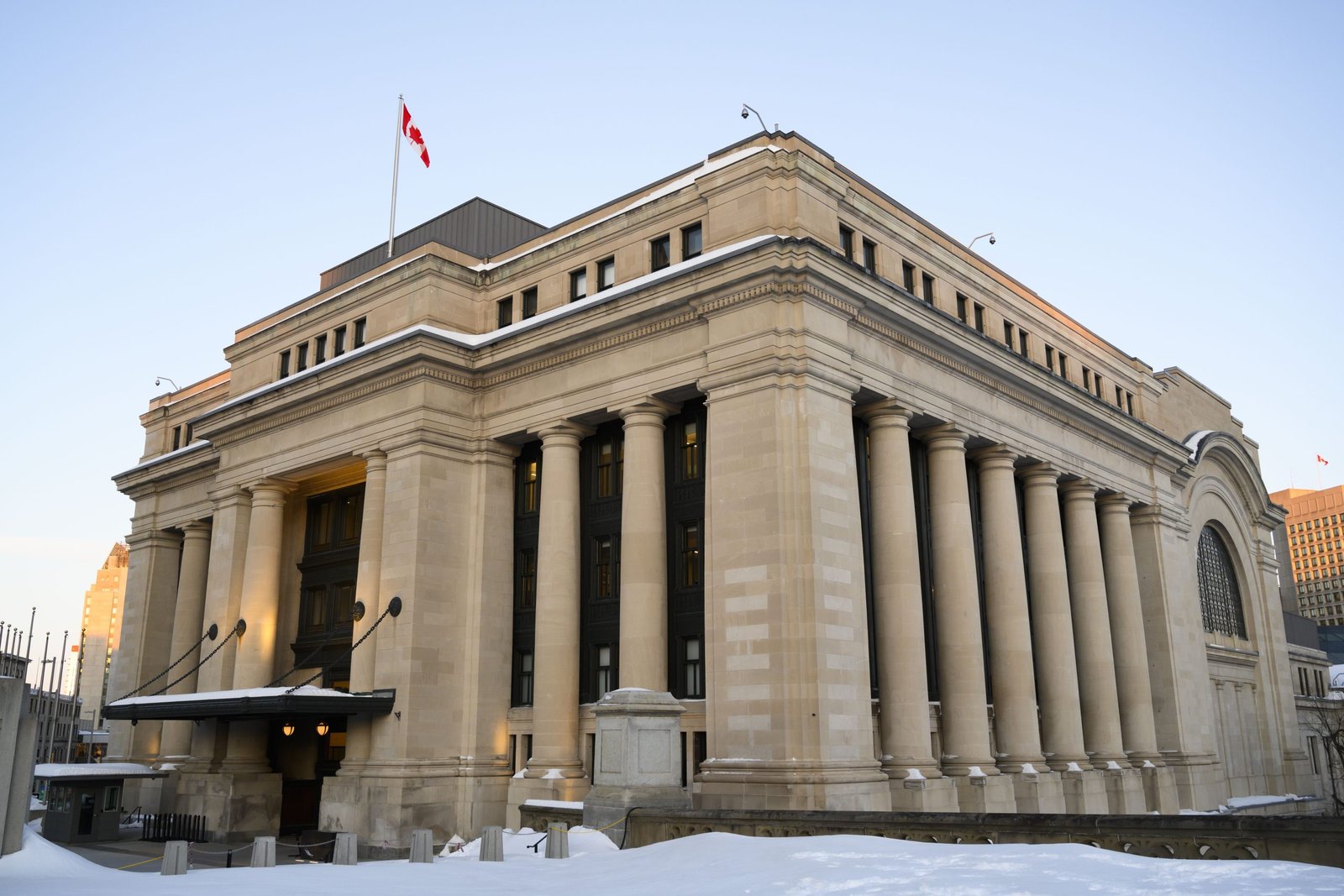
Only three non-supply government bills have become law in the past year. But Senate groups say they’re not to blame for the slow pace in passing bills even though senators decided to wrap up the fall sitting early back in December and only returned to their desks earlier this month.
The Liberal government’s landmark affordability bill could fail to receive royal assent this week after senators began debate on removing a section that would exempt federal political parties from privacy laws.
Any changes would likely prevent the House from taking up the legislation again until mid-March because it doesn’t sit next week, raising new questions on the Senate’s pace in signing off on government bills.
Sen. Bernadette Clement moved an amendment to Bill C-4 at third reading debate in the Senate on Wednesday that would delete the entire section on the privacy regime for political parties.
She said she worried the exemption would “undermine the bond of trust between the voters, their right to vote and the federal parties they vote for.”
Debate on Clement’s amendment is expected to resume on Thursday.
During committee hearings on the bill, senators raised concerns about the changes to privacy rules and questioned why they were placed in legislation that otherwise dealt with tax measures.
Most notably, Bill C-4 cuts the lowest tax rate from 15 to 14 per cent, and eliminates the GST on new homes priced up to $1 million for first-time buyers.
Privacy advocates have pushed back against the bill, warning that political parties amass large swaths of identifying personal data to help micro-target voters and oversight is needed to ensure this information isn’t misused.
Political parties are already exempt from federal privacy laws and C-4 would extend that exemption to provincial laws too.
It only requires parties to come up with their own privacy policies and have one annual meeting with the Chief Electoral Officer.
Parties that fail to comply with their own privacy policies could face administrative monetary penalties from the Commissioner of Canadian Elections, though the maximum fines range from $5,000 for a party to $1,500 for a person.
The bill also provides retroactive exemptions for the parties back to 2000. This is likely because of a 2024 decision by B.C.’s Supreme Court that ruled that the federal Liberal party had to comply with the province’s privacy law.
Canada’s three major political parties have lined up in support of the bill, defending the changes as a way to exert federal jurisdiction and claiming that political parties are unique entities that should be treated differently than corporations.
They argued C-4 aims to create a single, national privacy regime and clarifies that jurisdiction over federal political parties lands with Parliament and not provincial legislatures.
Sen. Clement said the issue isn’t over jurisdiction but that Bill C-4 would bring in a “highly flawed federal regime.”
Bill C-4 was studied by two different Senate committees.
The national finance committee handled the tax changes, while the legal committee studied part four of the bill, which deals with privacy laws for political parties.
The legal committee recommended removing the entire section of the bill or severing it to allow for more in-depth study. It also suggested putting in a sunset provision that would allow for that part of the bill to be automatically repealed in two years.
But the finance committee was responsible for proposing amendments and decided against making any changes. However, the committee’s report flagged concerns about part four and the government’s use of omnibus bills that contain multiple unconnected sections.
Both chambers must agree to pass identical versions of legislation before it receives royal assent and becomes law. If changes are made to the bill in the Senate, the House would have to pass a motion to either accept the amendments or reject them.
If those changes are rejected, the Senate would then have to vote on whether to insist on its amendments. This continues until both chambers are in agreement, though it’s rare for the Senate to insist on its changes after they’ve been rejected by the House.
Scheduling issues
Bill C-4 is hardly the only bill facing scrutiny in the Senate.
Senators are still calling for changes to the government’s contentious border and immigration legislation after it passed committee review with no amendments.
The Senate social affairs, science and technology committee had called for the removal of sections in Bill C-12 dealing with immigration, citing concerns about privacy, executive overreach, refugee ineligibility rules and weakened due process protections.
But the national security committee had final say over recommending amendments and decided against changing the bill in a report made public earlier this week.
It’s unclear when the bill will move to third reading.
Since the opening of the new Parliament last spring, only eight bills have received royal assent. Of those, three were routine supply bills that authorized the government to spend money. There was also a Senate private bill that applied to only one company, and a private member’s bill from the Bloc Quebecois that clarified supply management wasn’t on the table in negotiations with the U.S.
That meant only three non-supply government bills have become law in the past year — the One Canadian Economy or major projects bill, legislation responding to a court ruling to restore citizenship to the so-called Lost Canadians and a bill introduced earlier this sitting that expanded the GST rebate for low-income Canadians.
Senate groups say they’re not to blame for the slow pace in passing bills even though senators decided to wrap up the fall sitting early back in December.
Typically, the Senate sits a week later than the House in the fall. It provides the Upper Chamber the opportunity to dispense with bills passed by the House.
Instead, senators rose on Dec. 11 — the last day the House sat in the fall as well — and didn’t return to their seats until Feb. 3.
Bills C-4 and C-12 were passed by the House on Dec. 11.
In a statement to iPolitics, Sen. Lucie Moncion, facilitator of the Independent Senators Group (ISG), the largest group in the Upper Chamber, said it’s up to the government to set the Senate calendar, though there’s always the opportunity to make changes.
“The legislation was introduced with full knowledge of the parliamentary calendar, and the government has the tools to modify that calendar if required. Our responsibility is to review the bill in a timely manner and through a non-partisan lens,” Moncion said.
The Office of the Government Representative (GRO) in the Senate also defended the work of the Upper Chamber, noting that, C-4, in particular, has “progressed faster” than the average government bill.
But the Senate on Wednesday voted down a motion from a GRO member to extend sitting hours that day past 4 p.m.
ISG Senator Pierrette Ringuette said she objected to the motion because many members sit on committees that were scheduled to meet later that afternoon.
“I understand the urgency that you see in moving Bill C-4 forward. However, each and every one of us has a constitutional duty of providing sober second thought to government bills, and this is a government bill,” she said.
“Even if we accept this motion to extend for two hours, most of us have a committee at 4:15 p.m., and, therefore, we would not be here to listen and maybe even intervene on crucial elements of this government bill, thus depriving us of our privilege of sober second thought. That’s very important.”
Ringuette noted that most senators – including those in the ISG — belong to a group that doesn’t whip votes, meaning they have an individual choice to make on each bill.
When asked by iPolitics Wednesday if the scheduling by the Upper Chamber was slowing down the pace of legislation, Government House Leader Steven Mackinnon said he would “let the Senate speak to its own sitting hours.”
He also noted that since the House was required to pass a ways and means motion for C-4, the bill’s tax measures are already in effect.
with files from Sydney Ko