dailynewsnblog
About 30 seconds after Northrup was run over, Consts. Tony Correa and Scharnil Pais rammed their van into the fleeing BMW, blocking it from leaving. The officers leapt from their vehicle, their weapons drawn while a third car, with Spanish-speaking occupants, broke through the parking barricade to flee in terror.
Soon, the BMW’s driver, a GTA accountant named Umar Zameer was handcuffed and on his knees. His pregnant wife, Aida Shaikh, stood by, distraught. Their son, aged two, wailed in her arms.

Umar Zameer, kneeling, is seen in a still from police body-camera footage shortly after his arrest by plainclothes Toronto police officers, including Const. Tony Correa, right.
Court files / Ramon Ferreira Toronto Star illustration
In that moment, Northrup was dying or already dead. Forbes was with him. More Toronto police officers, some uniformed, rushed to the scene.
At 12:21 a.m., Pais punched the kneeling Zameer in the face, and told him what he had done.
“You just ran over a cop.”
The timeline is central to answering the key questions that perplexed many observers after the Crown closed its case in court earlier this spring. Foremost among them: Why was Zameer prosecuted for murder?
Drawing on more than a dozen interviews with sources close to the police investigation and prosecution, along with a review of court transcripts and decisions, this story reveals how some police leaders within the force were skeptical about the case from Day 1; how the prosecution nonetheless forged ahead based on the accounts of three eyewitness officers — Forbes, Correa and Pais — despite eventually having expert and video evidence that contradicted their accounts; and, for the first time, reveals the trial judge’s scathing written decision, delivered post-verdict, about the “troubling” possibility the officers lied to put themselves in the best light, regardless of the repercussions for Zameer.
The interviews also reveal that, to this day, key figures maintain that the police were justified in bringing the charge and that there was enough evidence to proceed with the prosecution.
Said one police source: If investigators “had not laid the charge, hypothetically, and the Crown dropped it, you would forever be having the (Toronto Police) Association and Northrup’s family saying ‘Hold on a second, these officers said he was standing in front of the car … yet we don’t believe them?’
“The evidence still has to be tested in court.”

Toronto police Const. Jeffrey Northrup was a veteran of 31 years.
TPS, R.J. Johnston/Toronto Star illustration
Since the end of the trial, Toronto police Chief Myron Demkiw has asked the Ontario Provincial Police to conduct a review of officer testimony, conduct procedures, practices and training, in addition to an internal review of all aspects of plainclothes policing. Those investigations are ongoing.
The three principal officers present in the parking garage on that night are prevented from making any public statements, and did not speak to the Star for this story. Similarly, lead prosecutor Mike Cantlon, who faced verbal abuse online and criticism from both defence and prosecution colleagues, declined to be interviewed.
Shortly after Zameer’s acquittal, Cantlon released a short statement to the media, saying: “The events surrounding (Northrup’s) tragic death warranted a trial to determine accountability.”
The minutes after
At 12:21 a.m., Const. Ryan D’Souza arrived to find Zameer with a “fixed stare” as Pais informed him of the initial charge against him — dangerous operation of a motor vehicle.
“We didn’t know you were police. You weren’t wearing your vests,” Shaikh, Zameer’s wife, said after Pais donned a vest with the word POLICE written across the front.
Speaking to D’Souza, Zameer told him he and his family were about to leave the parking garage when a man and woman started hitting the window and door of his BMW. He had no idea they were police. He was scared and trying to get away.
“You didn’t see a badge?” D’Souza asked.
No, Zameer said. If he had known Northrup and Forbes were officers, he would not have gone.

Toronto police Const. Jeffrey Northrup and his partner Const. Lisa Forbes on the night Northrup was killed.
Court files/Toronto Star illustration
A still from video evidence taken that night shows Northrup — a towering, 300-pound man known as the “gentle giant” who often shared homemade chili and brownies with his coworkers — wearing baggy black shorts, an unbuttoned short-sleeved shirt over a camo T, with a faded ball cap. Forbes, his partner, was in jean shorts and a dark hoodie.
It remains unclear whether Northrup was wearing or showing his badge when he approached the Zameer vehicle; it was later recovered from the scene.
Forbes wore hers on a long chain around her neck.
By 12:50 a.m., Zameer was whisked to nearby 52 Division, home base for Northrup and the other officers on duty that night.
Meanwhile, Shaikh and her toddler were taken to hospital for observation.

Umar Zameer is seen here in a Toronto police photo shortly after his arrest.
Court files/ Ramon Ferreira Toronto Star illustration
Forbes was still at the scene and received treatment in a ground-level stairwell vestibule at Nathan Phillips Square. Hyperventilating, she asked to be recorded by an officer equipped with a body camera.
“I was worried about forgetting details and wanted to document them,” Forbes later testified, explaining she feared she might faint.
Amid a mix of background noise, Forbes’ agitated state and her use of an oxygen mask, parts of her statement are difficult to comprehend.
What can be discerned is the following: The vehicle that hit Northrup was likely an SUV, operated by a man with brown skin fitting the description of a stabbing suspect she and her fellow officers were looking for. Displaying her badge, she commanded the driver to halt but he began to move forward, then put the car into reverse and manoeuvred erratically. Her partner was hit around the knee by the vehicle, after which the driver accelerated rapidly. Northrup could not get out of the way. (Forbes’s initial account that Zameer matched the description of a heavy-set, brown-skinned suspect with big hair was later challenged at trial).
Already, while Forbes was giving her statement, the news of a Toronto police officer’s critical injury was circulating within the force. Alerts soon reached then-interim Chief James Ramer and Supt. Glenn Cole, the head of 52 Division. Jon Reid, president of the Toronto Police Association, was also awakened and headed to St. Mike’s hospital.
Homicide Det.-Sgt Terry Browne, who recently retired, and his team, including Dets. Jeff Allington and Trevor Grieve, were on call that night. They gathered at 52 Division while Ramer, Cole and a TPA representative drove to Brampton to notify Northrup’s wife Margaret.
She was woken up by her son around 3:30 a.m.
“He said ‘Mom there’s a whole bunch of police at the front door,’” she later told Global News. “I couldn’t verbalize it, my knees started shaking, and all I could say was “Oh god, oh god.”
By 4 a.m., Northrup was confirmed dead.

Margaret Northrup, the widow of Det. Const. Jeffrey Northrup.
THE CANADIAN PRESS/Christopher Katsarov/ Ramon Ferreira Toronto Star illustration
The morning after
At 8 a.m., Shaikh provided a videotaped statement that echoed her comments at the scene: She and her husband did not know the man and woman outside their vehicle were officers, and her husband locked the doors because they were afraid of being robbed. Shaikh said she saw the woman show what looked like a police badge, but it didn’t look authentic.
“She could have bought that somewhere, that’s what I thought.”
Zameer also gave a videotaped statement, again asserting he was unaware the people knocking on his window were police. He explained that he drove the way he did because he was frightened and believed his family was at risk. He was also unaware their car had struck anyone, let alone a police officer.
Allington, a 25-year veteran, the last six of those years in the homicide squad, was put in charge of co-ordinating the investigation. The team set about securing the scene, conducting witness interviews and gathering evidence — including surveillance video showing the Zameer family out and about that Canada Day night.
Also called into work was Jeff Bassingthwaite, a veteran TPS traffic collision reconstructionist who worked separately from the investigation team.

Toronto police Const. Jeffrey Northrup’s badge, seen here in a police evidence photo.
Court Files / Ramon Ferreira Toronto Star illustration
The mood was sombre; off-duty officers were arriving with cards, flowers and a show of solidarity with Northrup, who’d served for 31 years and had been with the division since 2008. He was known as the type of officer who was always ready to undertake any task, doing so with a smile.
Mayor John Tory was among those who showed up at 52 Division early that Friday, as did police leaders, including Supt. Peter Code, who would later be master of ceremonies at Northrup’s funeral.
Amid all this, the homicide team needed the police witness officers — especially Forbes, Correa and Pais — to give formal videotaped statements.
In her second statement, Forbes described Zameer accelerating and hitting Northrup as he was standing directly in front of the BMW. The impact caused Northrup to go flying back and land on the ground, she said. The vehicle then accelerated and drove over him.
Pais gave his statement at 8:29 a.m., followed by Correa at 8:37 a.m. Similar to Forbes, both officers said Northrup was standing upright, directly facing Zameer’s BMW when he was knocked to the ground and run over.
All emphasized that despite wearing plainclothes, Forbes and Northrup were identifiable as police officers.
But there were discrepancies. Pais said Northrup had his badge out, while the others didn’t see that. He also said he heard Forbes and Northrup shouting, “police, police,” while Correa said he couldn’t make out any words due to loud fan noise in the underground garage.
Umar Zameer was acquittal at the end of his high-profile trial, indicating the jury believed Toronto police Const. Jeffrey Northrup’s death in the parking garage below Nathan Phillips Square early July 2, 2021 was a tragic accident and not a criminal act.
“It was the appropriate charge to lay,” said a senior police source, noting the police collision report that eventually undermined the Crown’s theory was not completed until months later. “This was an officer killed in lawful execution of his duties on that evening, and he was … identifiable as a police officer.”
Or so police believed, based on the officers’ accounts.
Homicide investigators had no choice but to press charges, based on the statements of the three officers, said another law enforcement official. “It’s not up to the investigating officer to weigh the evidence, whether they believe those first responding officers or not, they still have that evidence. That was the problem in that case.”
After Browne briefed Ramer on the decision, the chief sought advice from Meaghan Gray, the longtime Toronto police corporate communications guru, on what to tell the media. (Gray has since left the service to work for the TPA.)
Reporters and photographers were already gathered at the entrance to the Nathan Phillips Square underground lot; Ramer arrived just after 9 a.m.

Toronto police chief James Ramer during a press conference on July 2, 2021, during which he described the death of Const. Northrup as “an intentional, deliberate act.”
Andrew Francis Wallace/ Ramon Ferreira Toronto Star illustration
“During the course of this dynamic event, Const. Northrup was struck by a vehicle. We believe this was an intentional, deliberate act,” he said, with Tory, the TPA’s Reid and others standing nearby.
Back at headquarters, Ramer’s words were heard live on TV, leaving some, including at least two senior officers, shaking their heads in disbelief. Why the rush to say anything beyond confirming that a revered officer had died and a suspect was in custody? Pais and Correa had only just given their formal statements a half-hour earlier.
The scene was secured and there was a ton of evidence to sort through. And there was also the surveillance video — it captured Zameer, his pregnant wife and young son, appearing to innocently wander the downtown core before heading down to the parking garage.

Umar Zameer, with his wife and toddler, in a still from security camera footage shortly before entering the parking garage where Const. Jeffrey Northrup was killed.
Court files/ Ramon Ferreira Toronto Star illustration
Already, the question of motive had no clear answer: Why would this man run down Northrup?
But after Ramer’s public statement, there was “no more discussion, it’s done,” a veteran police officer told the Star.
10 days later
On July 12, 2021, thousands of uniformed officers marched through the city to BMO Field for Northrup’s funeral, joined by Premier Doug Ford, Mayor John Tory, and police leaders from across Canada.
The tributes were heartfelt.
“Northrup made the ultimate sacrifice in the line of duty,” said Ford, speaking near the coffin adorned with the Canadian flag. “He did so as a hero, laying down his life to serve and protect his community.”
Northrup was remembered as a devoted husband and father, who volunteered with his daughter’s Special Olympics T-ball team and coached his son’s lacrosse team.

Const. Northrup’s partner, Det. Const. Lisa Forbes, carries his hat during the funeral ceremony.
Richard Lautens/ Ramon Ferreira Toronto Star illustration
The livestreamed service featured repeated glimpses of Margaret Northrup and her three children seated together, clasping hands, their black COVID masks not concealing their sorrow. (Northrup declined the Star’s interview request.)
That summer
Allington instructed his team to investigate Zameer’s history, including his social media activity. They inquired about the brief encounter the Zameer family had with a man at Nathan Phillips Square and probed why the couple had driven two vehicles downtown that Canada Day. They contacted Canada Border Services for Zameer’s travel details and examined the couple’s employment and educational backgrounds.
Ultimately, the couple’s story was verified. The two-car trip? The couple were renting their second car out on a car-sharing app.
That summer, Mike Cantlon, in charge of one of Toronto’s four Crown attorney’s offices, assigned himself to the case along with Karen Simone, an experienced prosecutor with numerous murder trials under her belt.
They opposed Zameer’s release on bail — a choice that surprised some police insiders who were aware of the weaknesses in the prosecution’s case. The broader public, however, was expecting Zameer to remain behind bars.
A police officer was dead. The chief had said it was an intentional and deliberate act, and this was the prosecution’s position at Zameer’s bail hearing, held over Zoom on Sept. 7, 8, and 9, 2021.
His “attack on the deceased indeed demonstrates a callous indifference to human life. The fact that (Zameer) took off to make good on his escape without checking on the officer, clearly shows this indifference,” Cantlon and Simone wrote in court filings.
Letting Zameer out of jail would “offend the public’s confidence in the judicial system.”
Zameer didn’t have a criminal record, they noted. However, “he is not a Canadian citizen. He continues to have strong ties to his country of birth, Pakistan, as his mother and brother still reside there. He faces a life sentence with no chance of parole for 25 years. Given the seriousness of his charge and potential sentence, there is a risk he will not attend court.”
At the hearing, Toronto defence lawyer Nader Hasan laid out a summary of his case, an unusual move at such an early stage.
This was a tragic accident, he told Justice Jill Copeland. Zameer and his wife did not believe the people who approached them aggressively were police officers, he panicked and was trying to protect his family when he inadvertently ran over the officer.
But, Cantlon told the judge, three key eyewitness officers — Forbes, Pais and Correa — “are telling a consistent story, not identical, but a consistent story about a series of decisions made by Mr. Zameer.”
What about the absence of motive? Cantlon agreed there was none — but stressed police were continuing to investigate. (This was two months after Northrup died, not days, the judge would later note.)
There were also already questions about the officers’ evidence.

A police evidence photo shows the results of police fingerprint analysis on Umar Zameer’s BMW.
Court files/ Ramon Ferreira Toronto Star illustration
Both Correa and Pais did not complete their notes on Northrup’s death until after they had taken time off due to the traumatic event they’d witnessed. After they returned to duty, they went back to the parking garage to walk around the scene together. Then, on Aug. 4, 2021, they sat down with other members of the team — but not Forbes — in the same room at 52 Division and finally wrote up their versions of what they saw. (The trial judge would later refer to this as an “outrageous breach of proper protocol.”)
For his part, Cantlon warned Justice Copeland to consider Shaikh’s evidence cautiously due to her apparent bias as Zameer’s wife. To this, the judge interjected. “The same could be said about the officers … a close colleague, you know, has been killed in front of their eyes,” Copeland said. “Police officers don’t get special treatment in terms of assessment of their credibility and reliability.”
That September, Copeland released Zameer on bail. He had spent three months in jail; missing the birth of his daughter.
However, a standard publication ban meant the public did not learn about the evidence heard at the hearings, nor an explanation of the judge’s logic, until after the verdict, two-and-a-half years later.
In the 53 pages of her reasons, Copeland — who has since been elevated to the Ontario Court of Appeal — described the case for first-degree murder as “weak” more than a dozen times.
The prosecution’s theory that Zameer — “out for a normal family evening with his pregnant wife and young son” — would suddenly and intentionally kill a police officer “runs contrary to logic and common sense,” she wrote.
Her critique foreshadowed what the trial judge would repeatedly tell prosecutors — and ultimately the jury — at Zameer’s trial: There was no evidence to support a murder conviction. However, Copeland did find there was a “reasonably strong” case for manslaughter, which would not require the Crown to prove Zameer knew Northrup was an officer and meant to kill him.
Zameer’s release, under strict house arrest and subject to electronic monitoring, was met with immediate outrage. Ford tweeted, “it was beyond comprehension” and “completely unacceptable” that he would be released on bail. Patrick Brown, mayor of Brampton, called it “disgusting and disturbing.” John Tory, then Toronto mayor, also tweeted, “It is almost impossible to imagine a circumstance in which an accused in a case of first-degree murder would be granted bail.” (He has since apologized.)

On the eve of trial, Umar Zameer’s lawyer gave a rare, prophetic, news conference on the steps of Toronto’s Superior Court — “I promise in due
On the eve of trial, Umar Zameer’s lawyer gave a rare, prophetic, news conference on the steps of Toronto’s Superior Court — “I promise in due
Amid this outrage, Hasan went back to court to ask Copeland to partially lift the publication but the judge declined, reasoning that even partially lifting the ban “is likely to do more harm than good to the fairness and integrity of the trial process.”
Publication bans routinely prevent the reporting of certain arguments or evidence that are otherwise discussed in open court and can be found in court records. Generally speaking, these bans are meant to protect an accused person’s right to a fair trial but do not prevent journalists — or anyone else, including politicians and their staff — from attending hearings or reviewing documents for their own information. (A Star reporter monitored Zameer’s September 2021 bail hearing and was aware of Copeland’s reasons.)
The next year
In March 2022, lawyer Nader Hasan was in his downtown office when the accident report of Toronto police reconstruction expert Bassingthwaite landed in his email inbox.
Hasan had to read it twice. It was entirely consistent with the defence case.
Bassingthwaite reported the BMW first struck Northrup while reversing, causing him to fall to the ground towards the centre of a parking lot laneway. The BMW was momentarily not visible to an underground camera, due to obstruction by a pillar. Northrup was then prone on the ground as the BMW then ran over him. The officer could not have been struck head-on while standing up, as Forbes, Pais and Correa had said.

The hood of Umar Zameer’s BMW. The lack of damage — such as a dent — was cited as evidence against the claim Zameer hit Northrup head on with the front of the car.
Court files/ Ramon Ferreira Toronto Star illustration
The dirt on the car’s front fender was smeared in a manner suggesting it had brushed against the clothing of a person struck as the vehicle moved in reverse, Bassingthwaite noted. Additionally, there were no dents or significant damage on the hood to indicate a direct collision with a large man of six-foot-three.
Bassingthwaite later testified that after submitting his report in the spring of 2022, he did not have any in-depth discussions with the police or prosecutors until the eve of the trial, two years later.
By then, Hasan had hired his own accident reconstructionist, Barry Raftery, who reached the same conclusion as Bassingthwaite: Northrup fell to the ground following glancing contact with the driver’s side fender of the reversing BMW. If he had been hit while standing in front of Zameer, he would have fallen onto the hood and caused damage.
(Prosecutors received Raftery’s report only after they closed their case at the trial.)

Margaret Northrup, left, with Toronto Police Chief Myron Demkiw.
Andrew Francis Wallace/ Ramon Ferreira Toronto Star
The preliminary hearing got underway in February 2023 at Old City Hall. Margaret Northrup was there, supported by members of the Toronto Police Association. At seven days, the hearing was relatively short, but it gave Hasan his first opportunity to cross-examine Forbes, Correa and Pais.
At the end, Hasan told the judge that although the defence had “significant concerns about the credibility and reliability of certain Crown witnesses,” there was sufficient evidence for Zameer to stand trial for murder.
Asked by the Star why he did not fight committal at this stage, Hasan noted that the legal test at a preliminary hearing is whether there is evidence that, if believed, could establish the elements of the offence. The question of whether witnesses may be lying does not enter into the analysis, he explained.
Within prosecution and police circles, Hasan’s decision continues to be regarded as confirmation of their reasoning to move forward.
The trial of Umar Zameer
Ultimately, the trial in the spring of 2024 hinged largely on the accounts of the three police witnesses who said firstly, that Northrup and Forbes had clearly identified themselves as police officers, and secondly, that Northrup was standing directly in front of Zameer’s BMW as he drove forward and fatally ran him over him.
If what the three officers said they saw was true, this was an act of first-degree murder.
In his opening statement, Cantlon explained the nuances to the jury. “The issue in this case is why Mr Zameer chose to make a series of (driving) manoeuvres,” the veteran prosecutor said. “The issue is also whether Mr. Zameer knew or was wilfully blind that officer Northrup was a police officer acting in the execution of his duties.”
The Crown’s theory, he explained, wasn’t necessarily that Zameer intended to kill Northrup, but that he intended to inflict bodily harm and knew the officer’s death was likely.
As the trial proceeded, Cantlon and Simone continued to believe they still had a “reasonable prospect of conviction.”
That standard does not require a “probability of conviction,” law enforcement sources stress. “If the evidence makes out the essential elements of the offence, and there are challenges and inconsistencies between the experts and eyewitnesses … That’s why we have trials,” said one senior legal official.
Some law enforcement officials believe that the pressure on prosecutors to proceed with the trial should not be underestimated, particularly because it involves the death of a revered officer, whose widow had been vocal about her desire for “justice.”
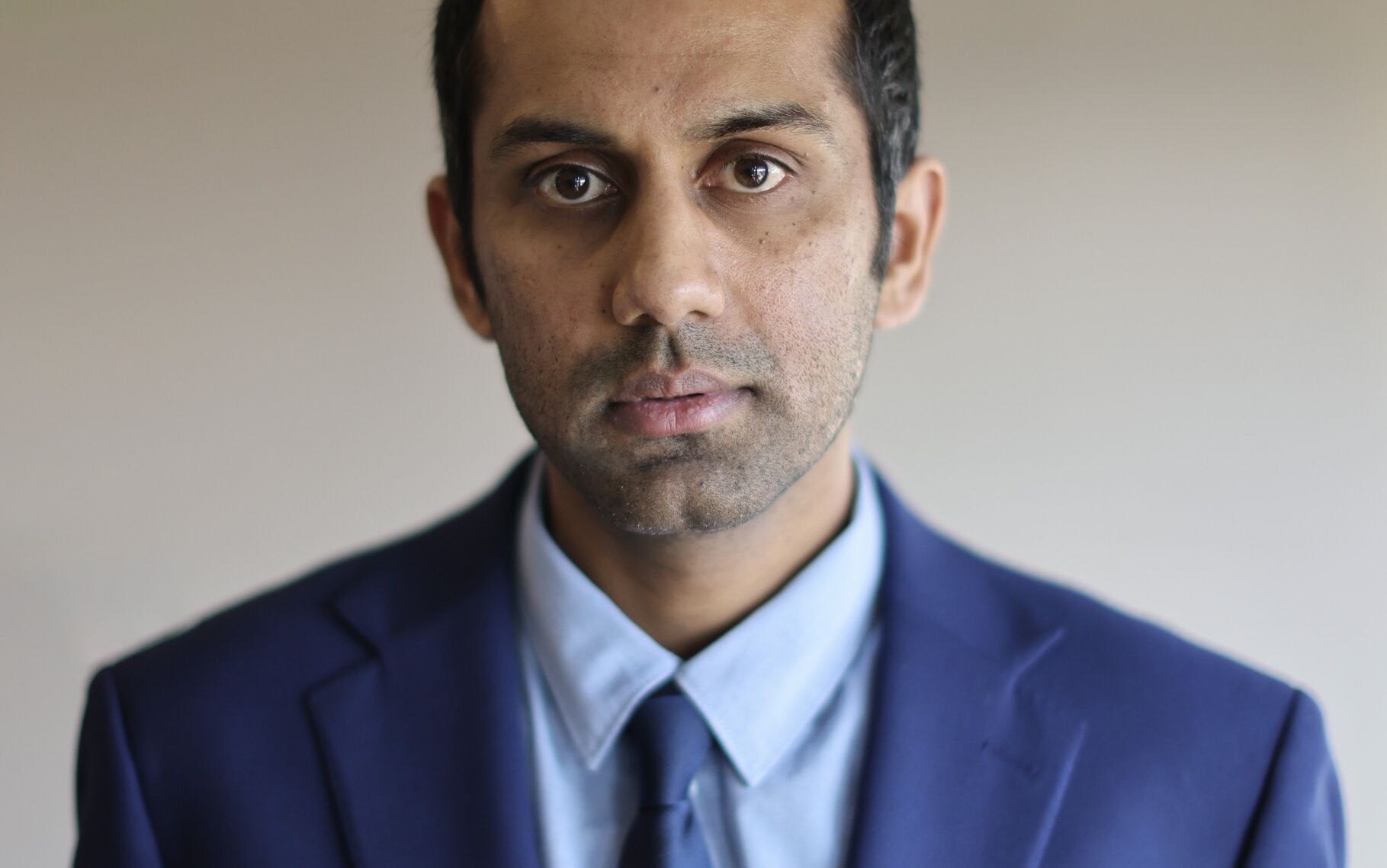
During his trial, Umar Zameer and his wife had told their children their father was busy working on “a project.” On Sunday, they were able to tell
During his trial, Umar Zameer and his wife had told their children their father was busy working on “a project.” On Sunday, they were able to tell
Toward the end of the trial, after the jury had heard all of the evidence, Cantlon and Simone acknowledged the inconsistencies in the accounts of Pais, Correa and Forbes. Simone told the jury to consider whether the officers were not lying, but rather genuinely mistaken that Northrup was hit standing up in the laneway — a reasonable assumption because that is where his body ended up.
Justice Molloy saw it differently. In a remarkably frank written ruling — released after the verdict — the judge summed up her opinion:
“It is possible that Officers Correa and Pais did not see what happened, but decided to back up what Officer Forbes said, honestly believing she must have gotten it right. It is also possible that all three of these officers deliberately made up this story because they did not see what happened and thought that this version was logical. More troubling, it is possible they invented this version to put themselves and Officer Northrup in a better light and were indifferent to the implications for Mr. Zameer.”
Forbes? Her memory could have been affected by the trauma of losing her partner, Molloy wrote.
“The one thing I know for sure … is that Officers Pais and Correa did not see Officer Northrup standing upright while being run down by Mr. Zameer. Further, the fact that their versions dovetail so closely with each other and with Officer Forbes leads me to the inexorable conclusion that they not only lied, but they colluded to lie.”
(At the close of trial, Molloy pointed jurors toward this conclusion, posing the question: “When three versions of an event are wrong, and wrong in the same way, you must also consider whether there has been collusion between those witnesses,” she said — adding, “all of the officers denied collusion.”)
The experts’ evidence received significant media attention during the trial for how it contradicted the Crown’s theory; the prosecutors tried to downplay this discrepancy by reminding jurors that even experts can make mistakes or have shortcomings.

A trail of evidence markers shows the scene on P2 of there underground garage where Const. Northrup was killed
Court files/ Ramon Ferreira Toronto Star illustration
Bassingthwaite, for example, could not explain how Northrup’s body got from the point of contact to where it ended up seconds later. And Raftery’s explanation, that Northrup was pulled or pushed by the BMW, also lacked physical proof — there was no debris or dust movement on that dirty garage floor.
The prosecutors stressed to the jury how improbable it was that Zameer drove over a 300-pound man and he and his wife did not know it. The couple both testified they thought they were driving over a speed bump.
When it came time to deliberate, Zameer’s jury had the option to consider the lesser included offences of second-degree murder and manslaughter. By the end, Cantlon and Simone’s closing arguments pointed more strongly to those lesser charges.
Still, the prosecutors did not concede that there was no reasonable prospect of conviction on the charge of first-degree murder.
According to the Crown Prosecution Manual, when prosecutors ask whether or not they have a reasonable prospect of conviction, they must make “an assessment of the credibility and competence of witnesses, without taking on the role of the trier of fact.”
In other words, they must not take on the role of judge or jury — that’s why trials are held.
On April 21, 2024, Zameer was acquitted.
The jury’s verdict on both murder and manslaughter definitively rejected the Crown’s theory that Zameer had intentionally hit Northrup, knowing he was an officer.

From allegations of perjury to the consequences — if any — of a punch. The acquittal of Umar Zameer continues to raise serious questions.
From allegations of perjury to the consequences — if any — of a punch. The acquittal of Umar Zameer continues to raise serious questions.
“You have my … deepest apologies for what you have been through,” the judge told him. (Those who felt the jury got it wrong believed Molloy should have also addressed Northrup’s widow.)
Within hours of the verdict, Toronto police Chief Myron Demkiw released a statement that was widely condemned for sending a “dangerous” message that risked undermining the justice system. Police had been “hoping for a different outcome,” he said.
The OPP said it cannot speculate on how long the investigation will take or what the outcome will be. “Our mandate in this matter is to thoroughly investigate to determine whether three involved Toronto police officers committed any criminal offences and/or any violation of the Police Services Act,” wrote Gosia Puzio, of the OPP’s corporate communications bureau. OPP investigators must acquaint themselves with the full case, reviewing thousands of pages of court transcripts that will likely take several months.
The Ministry of the Attorney General, meanwhile, has not responded to a request for comment about the criticism directed at Cantlon and Simone — some of it intense and vitriolic — in the aftermath of the trial. Nor has the ministry explained how the prosecution properly exercised their discretion in this case.
Ultimately, critics and law enforcement sources remain divided on whether prosecutors should have pulled the plug, either before or during the trial, as the evidentiary challenges of the case mounted.
“Zameer got a fair trial and a just verdict,” said a prosecutor who watched the case from the sidelines. “The justice system worked as it should.”
The family “is doing very well,” Hasan wrote in an email last week. “Aaida and Umar are happy and focused very much on their three young children.”