dailynewsnblog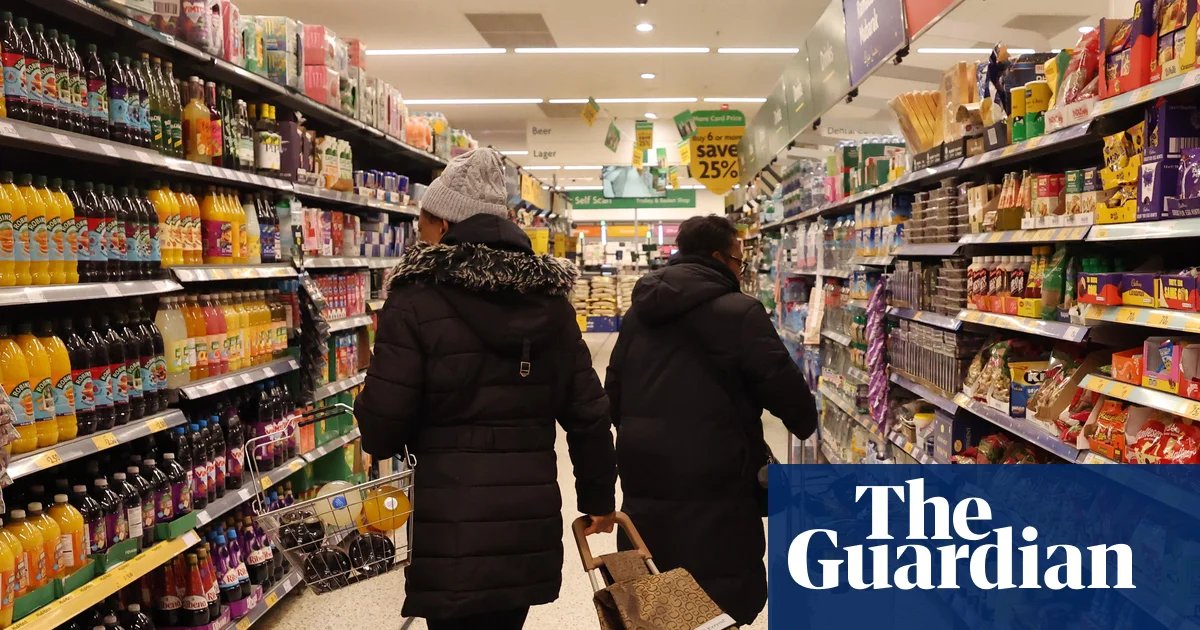
Shoppers faced a surprise jump in grocery inflation last month after four successive months of falls, as experts warned there is worse to come if there is prolonged war in the Middle East.
In a blow to households struggling with the cost of living, grocery price inflation rose to 4.3% in the four weeks to 22 February, after falling to 4% in January from 4.7% in December, according to the market research company Worldpanel by Numerator.
Meanwhile, the European Central Bank’s chief economist warned prolonged war in the Middle East could lead to lower oil and gas supplies from the region, causing a “substantial spike” in inflation and a “sharp drop in output” in the eurozone.
The crisis has already driven oil and gas sharply higher, threatening to push up prices at the pump for UK drivers and increase household gas and electricity bills.
In an interview with the Financial Times, Philip Lane said “directionally, a jump in energy prices puts upward pressure on inflation, especially in the near term”, and that such a development would be “negative” for growth. This would also apply to the UK.
Fraser McKevitt, the head of retail and consumer insight at Worldpanel, said: “Looking ahead to Easter, shoppers will notice that chocolate prices remain high, up 9.3% year on year.
“While this is still a significant rise, the pace of inflation in the category is beginning to ease and is now at its lowest level since September 2025.”
However, Greggs said “easing inflationary pressures” should boost stronger consumer spending, as it revealed a near-18% drop in pre-tax profits £167.4m in the year to 27 December.
The Worldpanel report showed shoppers splashed out on recent celebrations. Pre-made pancake mixes were up 114% from the previous week in the seven days leading up to Shrove Tuesday, while those making their own batter paid 42p or almost 6% more than last year as the cost of key ingredients reached £7.77.
Nonetheless, sales of ingredients surged, with flour up 34%, sugar rising by 17% and lemons jumping by 70%.
Many shoppers left Valentine’s Day spending until the last minute, with almost 12% of households picking up a premium meal deal on Friday night alone, according to Worldpanel.
Steak buyers sprang into action later in the week, with sales peaking on Friday and Valentine’s Day itself. Chocolate lovers also left it late, with Friday the single biggest day of purchasing of Valentine’s Day chocolate.
However, people splashed out on premium dine-in experiences. In total, they spent £39m on high-end meal deals priced at £10 or more in the week leading up to Valentine’s Day, seven times higher than the previous week.
More people have been doing their grocery shopping online, with sales made through the internet up 9.7% year on year. More than 18 million orders were placed over the four weeks, which meant online shopping made up 13% of total grocery sales, the highest level since July 2021.
McKevitt said: “More affluent families in London and the south-east of England are still the most likely to shop for groceries online. However, the channel’s appeal is broadening, with shoppers from a wider range of economic backgrounds increasingly drawn to its convenience.”
The online retailer Ocado was once again the fastest-growing grocer over the 12 weeks to 22 February, clinging to that spot since September, with 15.1% sales growth and a 2.1% share of the market. The discounter Lidl recorded double-digit sales growth for the 12th consecutive month, up 10% and 7.8% market share.
Tesco, the biggest supermarket chain, increased sales by 4.5% to raise its market share to 28.5%, while Sainsbury’s upped its market share to 16.1% as sales rose by 5.2%.
Sales at Waitrose, part of the John Lewis Partnership, achieved its highest rate of growth at 5.6% since March 2021 to reach market share of 4.8%, a three-year high.
Asda once again recorded a dip in sales year on year, this time by 2.6%, while Co-op’s sales were down 1.6%.