dailynewsnblog
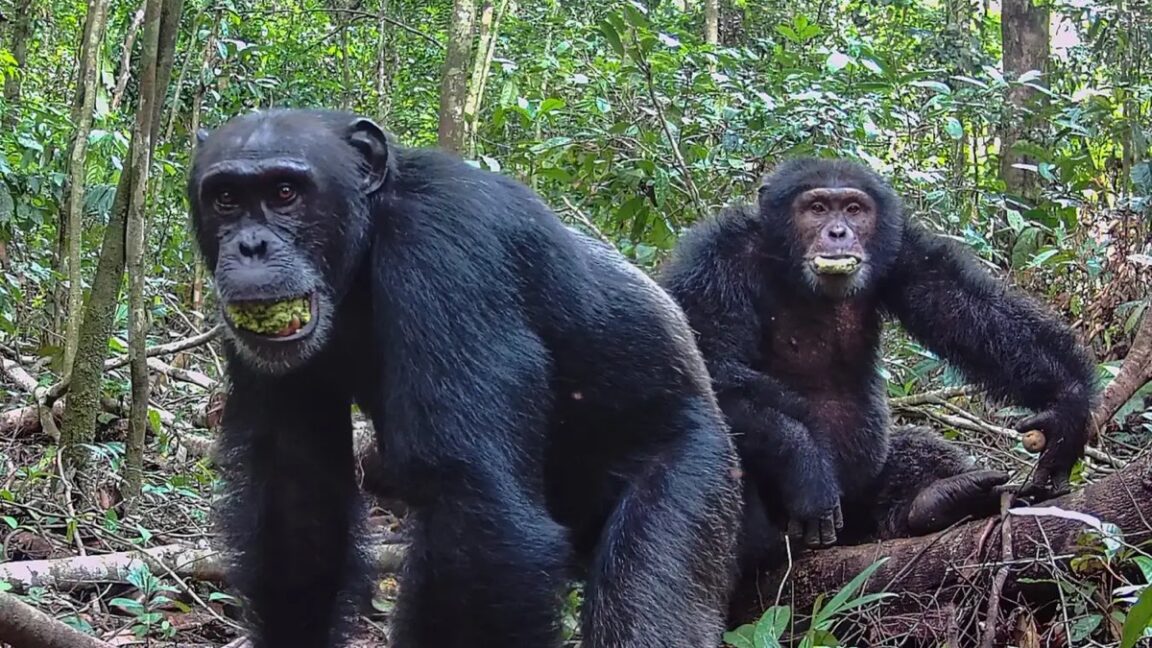
Even those factors might not have been sufficient, but the authors also identified three possible catalysts. In 2014, five adult males and one adult female died of unknown causes, although several had shown signs of illness. Those losses likely disrupted the social network by weakening social ties across clusters. There was also a new alpha male from the western cluster the following year, coincidentally, the same time when the first sustained separation occurred. The two prior alphas had been from the central cluster, so that change in the dominance hierarchy may have exacerbated inter-group tensions.
Finally, there was a respiratory outbreak in January 2017 that killed 25 chimps, which could have sped up the final separation. “Taken together, these events suggest how networks may fracture in the face of multiple demographic and social changes,” the authors concluded.
“A hostile split among wild chimpanzees is a reminder of the danger that group divisions can present to human societies,” Brooks wrote in his perspective. “However, humans also engage with, bond, and cooperate at multiple levels across intersecting groups. The group relationships of humans are nuanced, diverse, and flexible. This flexibility enables deep cooperation but also underlies acts of violence. Humans must learn from studying the group-based behavior of other species, both in war and at peace, while remembering that their evolutionary past does not determine their future.
“If relational dynamics alone can drive polarization and lethal conflict in chimps without language, ethnicity, or ideology, then in humans, those cultural markers might be secondary to something more basic,” said Sandel. “If that’s true, then we may have the potential to reduce societal conflicts in our personal lives, and that gives me hope. As our paper concludes, it may be in the small, daily acts of reconciliation and reunion between individuals that we find opportunities for peace.”
Science, 2026. DOI: 10.1126/science.adz4944 (About DOIs).