dailynewsnblog
Congress appropriated about $144.7 billion for Afghanistan reconstruction from 2002 to 2021, but the U.S. failed to transform the country into a democracy, in part because of corrupt allies and the lack of a clear plan, according to the final report from the special inspector general for Afghanistan reconstruction, or SIGAR.
The report, released earlier this week, is a collection of the inspector general’s previous work, which taken together, “highlights serious systemic issues with reconstruction and paints a picture of a two-decade long effort fraught with waste,” acting inspector general Gene Aloise wrote at the beginning of the report.
“We were seeing what was happening all along. This was not what winning looked like,” Aloise told reporters at a session of the Defense Writers Group earlier this week.
“The biggest thing throughout the whole 20 years was corruption affected everything,” Aloise said, describing Afghanistan’s government as “essentially a white-collar criminal enterprise.”
He told reporters that since about 2012, the inspector general’s quarterly reports showed systemic weaknesses, especially regarding the Afghan National Security and Defense Forces, but more and more, the U.S. government wanted to classify sections of the reports.
Scott Olson / Getty Images 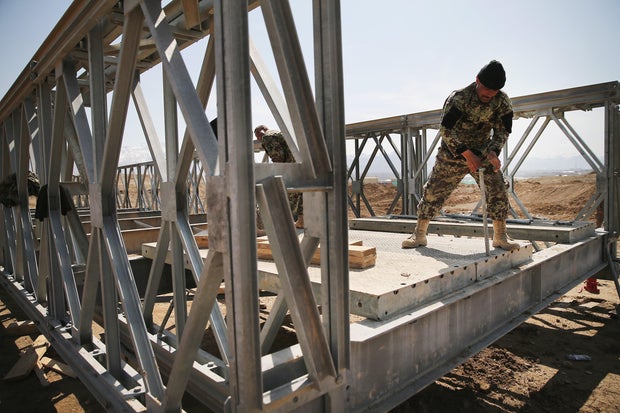
“There were a lot of people on the Hill who were concerned, but every time we came out with some of these statistics, we were slapped down, and they were classified,” Aloise said.
The report does not specifically look at the withdrawal in 2021 but does give an estimate of what the U.S. left behind. The U.S. left about $38.6 billion behind in military equipment and infrastructure built by the U.S.
SIGAR has not been contacted for any contribution to the Pentagon’s current review of the withdrawal, ordered in May by Defense Secretary Pete Hegseth, according to Aloise.
Aloise told reporters that after the withdrawal, the Biden administration stonewalled his office for about a year, claiming SIGAR’s jurisdiction ended when the troops left Afghanistan, even though there was still money flowing to the country. It took pressure from Congress for the Biden administration, mostly the State Department and USAID, to resume cooperation.
SIGAR was established in 2008 by Congress and will close Jan. 31. Over the course of its reports and investigations, it generated more than $4.6 billion in cost savings for the taxpayer and identified at least $26 billion in waste, fraud, and abuse.
Aloise told reporters the losses could’ve been much higher, had the inspector general’s office not existed.
“The deterrent effect of SIGAR was huge,” Aloise said. “We just keep thinking – if we’re going into Gaza or we’re going into Ukraine, and you don’t have something like a SIGAR, you know, it’s, it’s not gonna work out well – for at least the United States taxpayer.”