dailynewsnblog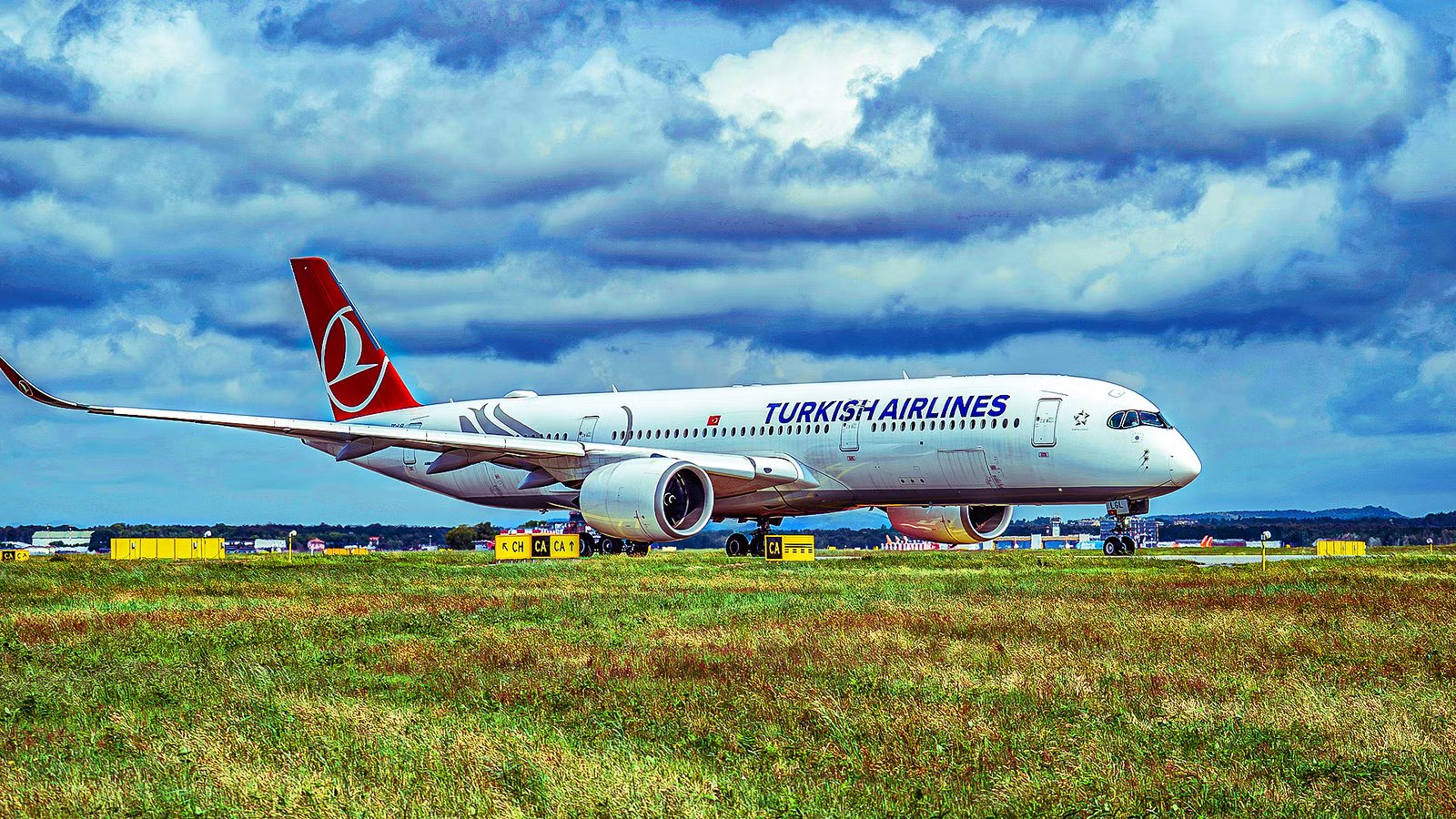
 Turkish Airlines has shared its 2025 full-year financial results with the world, having achieved a $2.2 billion profit from its main operations last year. The fourth quarter was especially strong, with its revenue up by 12% year-on-year and profit being 23% higher than Q4 of 2024. These results represented an improvement on the carrier’s operations going into the year, despite 2025 seeing the airline industry suffer from supply chain issues.
In order to give context to the carrier’s results, and learn more about what made the airline tick in 2025, Simple Flying had the chance to conduct an exclusive interview with Professor Ahmed Bolat, who serves as Turkish Airlines’ Chair of the Board and Executive Committee. Bolat’s commentary also offered an insight into what the future holds for the Turkish flag carrier, and how it is responding to the challenges posed by the 2026 Iran Crisis.
Exceeding Expectations

While 2025 was a successful year for Turkish Airlines, it wasn’t without its challenges, with Bolat noting that “significant supply-chain constraints continued to affect the aviation industry” last year. Despite this, Turkish Airlines’ Chair was pleased to report that “our 2025 results exceeded our operational expectations,” citing “the strength and resilience of our global business model” as having been a driving force behind this success.
Many factors contributed to this success, such as disciplined capacity growth (7.5%) and balancing this growth with profitability. Turkish Airlines was also able to leverage “strong international and premium demand in the passenger segment” to grow sustainably, with “prudent capital allocation approach enabling [investment] in fleet expansion, infrastructure, and strategic initiatives without compromising financial stability.” Bolat adds that:
“Although aircraft delivery delays and engine-related constraints created challenges across the industry, our operational efficiency and capacity prioritization for fleet optimization supported the resilience of our results.”
Fleet & Network Growth Was Complemented By Strong Performance By Other Divisions

In 2025, Turkish Airlines’ fleet experienced net growth of 24 aircraft, with 33 retirements offset by the delivery of 57 new planes. This year looks to be an even bigger one on this front, with Bolat noting that 90 deliveries are expected in 2026. Offset against planned retirements, he adds that the fleet “is planned to grow from 516 aircraft in 2025 to well over 560 aircraft in 2026, enabling both capacity growth and the expansion of our global network.”
As far as this network expansion is concerned, Bolat cites “Ohrid in North Macedonia, Seville in Spain, Port Sudan in Sudan, and Phnom Penh in Cambodia” as being among the airline’s most significant new routes in 2025. These tie into its wider strategy of flying to underserved markets as part of its long-term growth plan. Elsewhere, Turkish Airlines also resumed flights to “Benghazi, Damascus, Aleppo, Misrata, and Sulaymaniyah.”
While Turkish Airlines’ mainline operations dominate the facts and figures, its other arms also played an important role in making 2025 a good year. Indeed, AJet, its low-cost division, saw passenger traffic rise by 16% to an annual total of 23.4 million guests across around 144,000 flights. As for Turkish Cargo, the carrier’s airfreight arm saw an 8.4% increase in cargo volume, having transported 2.2 million tons around the world in 2025.

Turkish Airlines Hits 500: New A350 Livery Unveiled
The carrier took the aircraft for a special spin yesterday.
What Does The Future Hold Amid The Ongoing Middle East Crisis?

Recent events tied to the Middle East conflict have caused considerable uncertainty in the aviation sector. Turkish Airlines is not immune to these issues, and, while they have not impacted its Istanbul operations, it has had to “pause all of [its] Middle East flights except Saudi Arabia and Oman, constituting 6% of [its] capacity and revenue.” Bolat adds that “to offset the impact of paused flights, we are adjusting our capacity dynamically.”
In the long run, however, the carrier could stand to benefit from shifting demand, with its Istanbul base serving as a useful alternative transit hub to those in the Middle East. To this end, Bolat notes that Turkish Airlines has seen a “demand uptick from the routes in the Far East, Central and South Asia, and Africa,” with the carrier remaining “cautiously optimistic” due to the fact that demand often returns swiftly upon a conflict coming to an end.
For 2026 as a whole, the outlook remains positive, with, as noted, further fleet growth planned. On the network side of things, “Yerevan (Armenia), Timișoara (Romania), Monrovia (Liberia), Bissau (Guinea-Bissau), Urumqi, and Chengdu (China)” will be among its new routes this year, with flights to London Stansted and Tirana also resuming. This growth, combined with sustainable financial management, stands the airline in good stead for 2026.