

 dailynewsnblog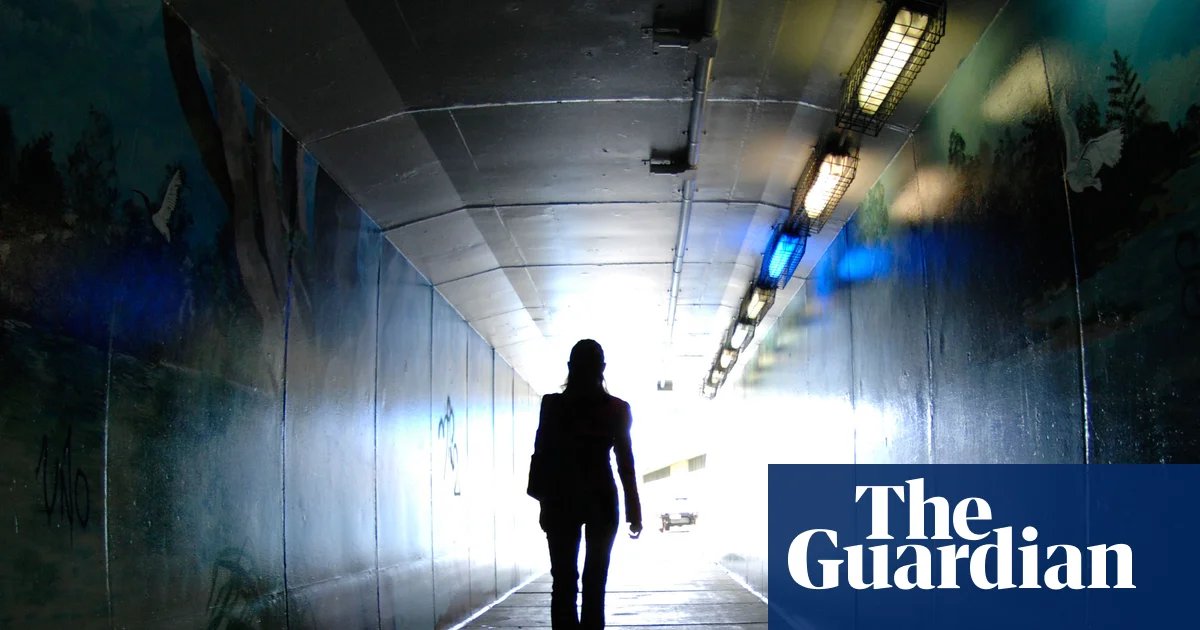
Good morning. Disturbing new data shows that stalking offences recorded by police in England and Wales have surged over the past decade, with sharp rises in every region. The number of cases charged by the Crown Prosecution Service has also climbed to the highest level on record.
But those figures only tell part of the story. Stalking is not a single incident but a pattern of behaviour – one that can leave victims living in constant fear, reshaping every aspect of their lives.
For today’s newsletter, I spoke to Hannah Al-Othman, the Guardian’s north of England correspondent, about what is driving the rise, who is most affected, and whether the criminal justice system is keeping pace. First, the headlines.
Five big stories
-
NHS | Wes Streeting has accused resident doctors of “torpedoing” their own pay rises and training jobs by walking out on strike again, as tens of thousands of doctors began a six-day stoppage in England.
-
Middle East | Diplomatic negotiations aimed at halting the war in the Middle East appeared to be faltering a day before a deadline imposed by Donald Trump with a threat to destroy Iran’s bridges and attack its power plants.
-
UK News| Children are reporting online sextortion attempts in record numbers in the UK, as campaigners urge tech companies to do more to stamp out the crime.
-
Space | Artemis II astronauts broke Apollo 13’s distance record, hugging each other in the cramped capsule as they made history by being the four humans to travel the farthest from Earth.
-
Weather | Parts of the UK are forecast to experience the warmest temperatures of the year so far in the wake of Storm Dave, which caused widespread damage and disruption over the Easter weekend.
In depth: ‘Victims are constantly looking over their shoulder’
The number of stalking offences recorded by police has soared over the past decade. House of Commons Library data showed more than 135,000 offences were recorded last year, up from just less than 3,000 a decade. In 2024-25, the Crown Prosecution Service (CPS) said the number of offences leading to charges rose to 6,790. A few years earlier, that number stood at 2,305.
When stalking makes headlines, it is often because a high-profile figure – an MP or TV presenter – has been targeted by a stranger. But that, Hannah Al-Othman tells me, is far from the experience of most victims.
What is behind the rise in the figures?
So what explains the sharp increase in recorded offences?
“I think two things are happening at once,” Hannah says. “There’s definitely better awareness – from the public and from police – and more recognition of behaviours like coercive control.” That has led to more reporting, and in some cases better investigation and prosecution.
But another factor is at play: technology. “As more of our lives are lived online, perpetrators have more ways to track and monitor victims,” Hannah says. “This is something I’ve seen coming up again and again in court cases.” That can include devices such as trackers hidden in cars or linked to phones without a victim’s knowledge. Campaigners warn the problem is evolving rapidly.
Recent cases reported by domestic abuse charities detail perpetrators using smartwatches and fitness trackers to monitor victims’ movements, accessing shared cloud accounts to track their locations and using smart home devices to control lights and heating remotely.
There are also growing concerns about the use of artificial intelligence tools – from impersonating victims using spoofed audio or video, to generating fake documents designed to manipulate or intimidate. Women are also more likely to be the victims of increasingly sophisticated cyberstalking campaigns, like the one recounted by Carole Cadwalladr for the Observer last year.
As Hannah puts it: “It’s not just that we’re recording it better – it may also be happening more.”
Who is most affected?
While anyone can be a victim of stalking, the pattern is clear. “It is overwhelmingly women and girls who are affected, and men who are the perpetrators,” Hannah says. In 2024 the Office for National Statistics published figures, based on the Crime Survey for England and Wales, that suggested one in five women and around one in 11 men aged 16 years and over have been a victim of stalking.
In most cases, the perpetrator is not a stranger. “There’s a perception,” Hannah says, “that stalking is someone you don’t know following you home. But actually, it’s often someone already in your life – and very often an ex-partner.”
That reflects wider patterns seen in domestic abuse, particularly after relationships end.
What is the impact on victims?
The effects can be all-consuming, she explains. “It can affect every single part of someone’s life. They don’t feel safe at home, they don’t feel safe at work – they’re constantly looking over their shoulder.”
Hannah spoke with one recent victim, a woman forced to uproot her life entirely. “She had to move house with her children. It affected her finances, her credit, her ability to live day-to-day,” she says. “Even when she thought she had taken steps to protect herself, her ex-partner would still turn up – she didn’t know how he was tracking her.”
And stalking can be relentless. Research into victims’ experiences found cases stretching over months and, in some instances, years. The former BBC broadcaster Emily Maitlis’s ordeal, for instance, has lasted more than three decades.
“With a burglary, you can take steps to improve your home security, and it is an event that is over and done. But stalking is not something you can move on from,” Hannah adds. “It’s ongoing.”
Many of the victims, she notes, have children, whose lives can also be upended.
There is also evidence that stalking can escalate. Research suggests it can be linked to serious violence and, in some cases, homicide – particularly when the perpetrator is a current or former partner, and where patterns of coercive control are already present.
Is the criminal justice system fit for purpose?
There are signs that the system is beginning to respond. Charging rates have increased, and the Crown Prosecution Service has launched an action plan focused on stalking.
But challenges remain. Campaigners argue that tech companies have been too slow to design products with abuse in mind, warning that safety is often treated as an afterthought.
Victims also point to persistent problems in how stalking is handled. A 2024 qualitative study by the Independent Office for Police Conduct into victims’ experiences found that cases were still frequently misidentified. Even when reports were made, victims often described poor communication and a lack of consistent support and said they were sometimes left to gather evidence themselves, while cases moved slowly through the system, allowing behaviour to escalate.
“I do think there has been a shift in how seriously this is being taken,” Hannah says. “There’s more awareness, more focus – but it’s not perfect.”
Campaigners argue more needs to be done earlier, with the Liberal Democrats proposing an emergency stalking protection notice – similar to those used in domestic violence cases – that would allow police to act more quickly.
That question of early intervention is also likely to be a focus later this month, when the Suzy Lamplugh Trust leads National Stalking Awareness Week, highlighting the links between stalking and more serious violence – and the need to identify risks sooner.
“There’s definitely progress,” says Hannah, “but there’s still a long way to go.”
What else we’ve been reading
-
I was cheered by this amazing story about how Beau, a lovely black labrador (pictured above), saved her owner’s life. It has everything: grief, drama and hope. Patrick
-
I am team sceptic, but I do love a ghost story. “Bloody hell, Ken” became Danny Robins’s calling card as his spooky Uncanny podcast took off. Now he and the team are expanding into cold cases with their Uncanny YouTube channel. Hollie Richardson speaks to them. Martin
-
Bim Adewunmi is funny writing about the American snacks she misses after moving back to London after a decade in New York. Although if you are feeling like me after this Easter, the snacks might have to be hidden from sight for a couple of days. Patrick
-
Worth bookmarking from James Cridland: an updated guide on how to listen, legally, to BBC Radio outside the UK. Martin
-
Patrick Radden Keefe is finally back with another investigative tale. This time, the journalist behind bestselling books about the Northern Ireland Troubles and the US opioid epidemic has written about a mysterious death in London. I cannot wait to read it. He spoke with Anna Moore. Patrick
Sport
Football | Ipswich scored twice in four minutes before half-time to win 2-1 against Birmingham, who had an equaliser controversially ruled out for going out of play. Coventry crept closer to promotion to the Premier League despite an off-colour display in a goalless draw at Hull. Oscar Schwartau climbed off the bench to fire Norwich to a 2-1 win against Millwall – and do their fierce rivals Ipswich a big favour. Full Championship roundup
Women’s FA Cup | Verle Buurman’s wonderful drive and strike earned Chelsea a 2-1 win in an end-to-end battle with Tottenham, securing a place in the FA Cup semi-finals.
County Cricket | Sussex beat Leicestershire while Yorkshire draw against Glamorgan. Results summary
The front pages
“Trump says Iran ‘can be taken out in one night’ as peace talks falter” is the splash headline in the Guardian print edition today. The Telegraph has “Trump: I could wipe out Iran tonight” and in the Times it’s “Trump threatens to bomb Iran ‘into the Stone Age’”. The Financial Times dials it down only a little bit: “Iran threatens ‘crushing’ reprisals as Trump’s deadline on Hormuz looms”. The i paper commendably looks beyond the president’s ravings for a hook, going with “UK will refuse Trump access to British bases for strikes on Iran’s bridges”. The Mail leads with “£3 billion cost of doctors’ strikes” and the Express is similarly inclined with “Doctors ‘hold patients hostage’ with strikes”. “E-mergency: Bike fires soar” – that’s the Metro.
Today in Focus
George Monbiot on our fragile food system
The Guardian columnist speaks about why we need to tackle global food insecurity
Cartoon of the day | Nicola Jennings
The Upside
A bit of good news to remind you that the world’s not all bad
The eastern lowland gorilla, often known as the Grauer’s, is among the most critically threatened primates in the world. A few thousand remain after a rapid decline, driven by war in the eastern Democratic Republic of the Congo that has brought widespread human tragedy. But even in the bleakest of situations, conservationists are working hard to protect what remains. Tam Patachako has written a moving profile of Dominique Bikaba (pictured above), the founder and executive director of Strong Roots Congo, who has dedicated his life to looking after the gorillas that are left.
Sign up here for a weekly roundup of The Upside, sent to you every Sunday
Bored at work?
And finally, the Guardian’s puzzles are here to keep you entertained throughout the day. Until tomorrow.


