dailynewsnblog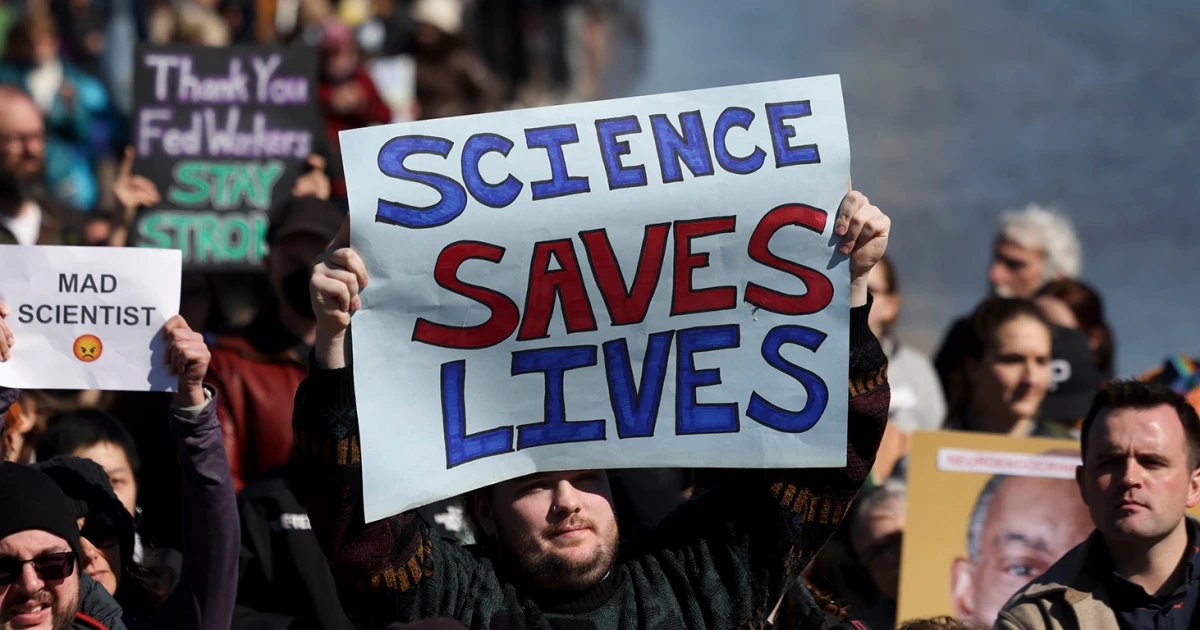
About a year ago, it seemed the sky was falling for American scientific research.
The Trump administration last February cut thousands of workers at federal science agencies, squeezed the flow of grant money to universities and tried to slash funding for the overhead costs of research. In the months that followed, it targeted elite universities over allegations of antisemitism; clawed back grants on topics it saw as related to diversity, equity and inclusion; and proposed a budget with drastic cuts to agencies like NASA and the National Science Foundation (NSF).
To many, science appeared under assault. The model the federal government had used to outsource research to universities since World War II seemed to be collapsing.
“That partnership is now being broken,” Holden Thorp, the editor of the Science journals, wrote last February, describing some of the cuts as an “unforeseen and immediate hit” and a “betrayal of a partnership that has enabled American innovation and progress.”
But a year later, the worst of those fears hasn’t come to pass, thanks to several successful legal challenges and Congress’ recent rejection of many of President Donald Trump’s requested cuts for this year.
An alphabet soup of science, education and civil liberties organizations — the ACLU, the APHA, the AAU, among others — have beaten back some of the Trump administration’s most significant policy changes in court, preserving billions in science funding. And the funding package that Congress has approved, piece by piece, over the past three weeks keeps federal funding for science agencies roughly flat compared with last year.
On Tuesday, the House followed the Senate in passing a funding package that includes a modest increase for research through the National Institutes of Health (NIH), rebuffing Trump’s request to slash its funding by more than 40%. Trump signed the bill Tuesday night.
“Congress has essentially rejected the president’s very dramatic cuts,” said Joanne Padrón Carney, chief government relations officer for the American Association for the Advancement of Science (AAAS). “In past years, we might not consider flat funding to be a success, but considering how we’re operating this past year, I think we’re quite pleased.”
To be clear, the scientific research field didn’t entirely avoid Elon Musk’s chain saw. The National Oceanic and Atmospheric Administration and NASA together lost thousands of employees. The leadership of many NIH divisions has been cleared out. The administration has cut work on key climate reports, and the National Weather Service still isn’t flying a full arsenal of weather balloons.

Padrón Carney said AAAS expects the Trump administration to continue to try to defund science on topics it doesn’t favor. She also pointed to an executive order requiring approval from senior political appointees for many grants.
Nonetheless, after a year when it looked like the roof was caving in, “science is enduring as best it can,” she said.
The White House did not respond to a request for comment on Congress’ science funding decisions, but the administration praised the bill before it passed.
“The Administration is pleased that the Congress is advancing the appropriations process in a manner that avoids a bloated omnibus package and adheres to a fiscally responsible topline agreement that decreases overall discretionary spending, while making key investments in Administration priorities,” the White House Office of Management and Budget said in a statement.
One of the science community’s biggest concerns has been disruptions in the flow of grant funding to universities and institutes from the NIH, the agency responsible for funneling federal dollars into biomedical and life sciences research.
As the Trump administration sought more control over the agency, thousands of grants were stalled, delayed or terminated. The administration also shocked the system when it tried to limit what universities can charge the NIH for indirect costs like equipment, building maintenance and utilities. Its proposed 15% cap, the administration estimated, could save the government $4 billion annually. But university associations and states revolted, arguing the move violated Congress’ directions and the NIH’s own policies.
In the end, funding began to flow again, in part because of a few key legal decisions.
Last month, an appeals court affirmed a ruling that the Trump administration can’t cap indirect research costs. And the American Civil Liberties Union reached a partial settlement in December in a case challenging what it described as NIH’s “ideological purge” of research grants and its stalling of grant review processes. The settlement required the NIH to restart reviewing specific grants it had put on pause. (Another part of the lawsuit, over canceled grants that involved issues like diversity, equity and inclusion, is still being litigated.)
“The lawsuits have been a very important check,” said Olga Akselrod, an ACLU attorney on the grants lawsuit. “But I think that public health research remains at threat.”
The NIH declined to comment about the lawsuits.

Many other lawsuits challenging the Trump administration’s attempts to restrict grant funding continue and are working their way through appeals. The Health Policy and the Law Initiative at Georgetown University, which tracks important legal cases in health and science, is following 39 cases related to funding complaints. A year ago, the number was zero.
“It exploded,” said Katie Keith, the organization’s director.
She characterized the overall results as mixed so far.
For example: A judge ruled against the Trump administration after it slashed $2.2 million in grants at Harvard, but a different judge tossed out a similar case led by faculty unions to restore about $400 million in grants at Columbia University. (Both of the cases are under appeal. Columbia, meanwhile, paid a $200 million settlement to the government to reinstate grants after it was alleged to have violated anti-discrimination laws. Trump said Monday that his administration will seek $1 billion from Harvard.)

By the end of the 2025 fiscal year, the NIH’s overall spending had caught up to normal levels — a stark change from its pace in the spring, when the agency had delayed or canceled so many grants that it seemed unlikely to spend the full $36 billion Congress had allocated for outside grants.
“NIH was getting way behind” on spending, said Jeremy Berg, a University of Pittsburgh professor of computational and systems biology, who tracks NIH spending.
But over the summer, Republican senators demanded that the NIH spend the money Congress had awarded, saying the slowdown “risks undermining critical research.”

The agency then shifted its typical practices to race money out the door. It began distributing funding for the entire length of grants — typically four or five years — rather than year by year.
“That is really mostly an accounting trick,” Berg said, adding that the agency funded roughly 5% to 10% fewer projects in 2025.
Still, money flowed into laboratories across the country.
Amid the battles over grant money, the science community has leaned on a powerful ally: Congress.
In its budget request last spring, the Trump administration came out swinging against science funding, proposing dramatic cuts to many agencies. The administration asked to cut the National Science Foundation by nearly 57%, NASA by 24% and the NIH by more than 40% in fiscal year 2026. Overall, it sought a nearly 36% cut to non-defense-related science research and development funding, according to AAAS.
But Congress has largely rebuffed Trump and kept science funding mostly consistent in spending bills negotiated between Republicans and Democrats. The NIH is scheduled to receive $48.7 billion — a $415 million increase over 2025, according to a bill summary from Sen. Patty Murray, D-Wash,, vice chair of the Appropriations Committee. Roughly three-quarters of that money will go to outside research grants. NASA’s budget is set for just a 1.6% cut, according to AAAS, and the NSF will take a 3.4% cut.

At the NIH, Congress increased funding for cancer research by $128 million, added $100 million to the budget for Alzheimer’s disease and boosted ALS research by $15 million.
Lawmakers even added language designed to prevent the administration from again trying to cap spending on indirect research costs.
The legislation also requires NIH to report monthly to Congress about grant awards, terminations and cancellations so Congress can better track its spending.
“It illustrates that there’s still strong bipartisan support for the federal government playing a critical role in supporting research,” said Toby Smith, the senior vice president for government relations and public policy at the Association of American Universities.

But questions remain about how the NIH will operate with less staff and about how much political influence the Trump administration will exert over it. About half of the NIH’s 27 institute and center director positions — which oversee operations — aren’t permanently filled.
“Yes, we’ve got the money now from Congress. Will they move it out the door? Will they have the staff to do that effectively?” Smith said.
Even without a major disruption in funding this year, the uncertainty left in the wake of the second Trump administration’s first year could ripple through science communities for years.
More than 10,000 doctorate-trained experts in science and other fields have left the federal government, according to a recent report by Science magazine. A study published in the journal JAMA Internal Medicine found that grant terminations had affected clinical trials involving 74,000 participants. And the pipeline of young scientists training at U.S. universities has been narrowed.

At the University of Washington, a top public university for biomedical research that relies on NIH money, administrators last year implemented a hiring freeze, travel restrictions and furloughs.
The number of doctoral students who started classes at the university’s schools of medicine in the fall dropped by a third, largely because lead scientists were unsure whether they would continue to receive grant funding.
“I wake up sometimes at night and just can’t sleep,” said Shelly Sakiyama-Elbert, the vice dean for research and graduate education and a professor of bioengineering at the UW School of Medicine. “How am I going to fund my lab?”
The only constant of 2025, she said, was “whiplash.”
Sakiyama-Elbert said that the university now has fewer faculty positions open and that doctoral student applications were down by about 5%.
“The uncertainty just really distracts folks from doing their work, doing the science,” she said.