dailynewsnblog
WASHINGTON – Trump administration officials are in discussion with Kurdish leaders in northern Iraq and northwestern Iran about potentially arming groups opposed to the Iranian regime, according to three people with knowledge of the discussions and an Iraqi Kurdish official.
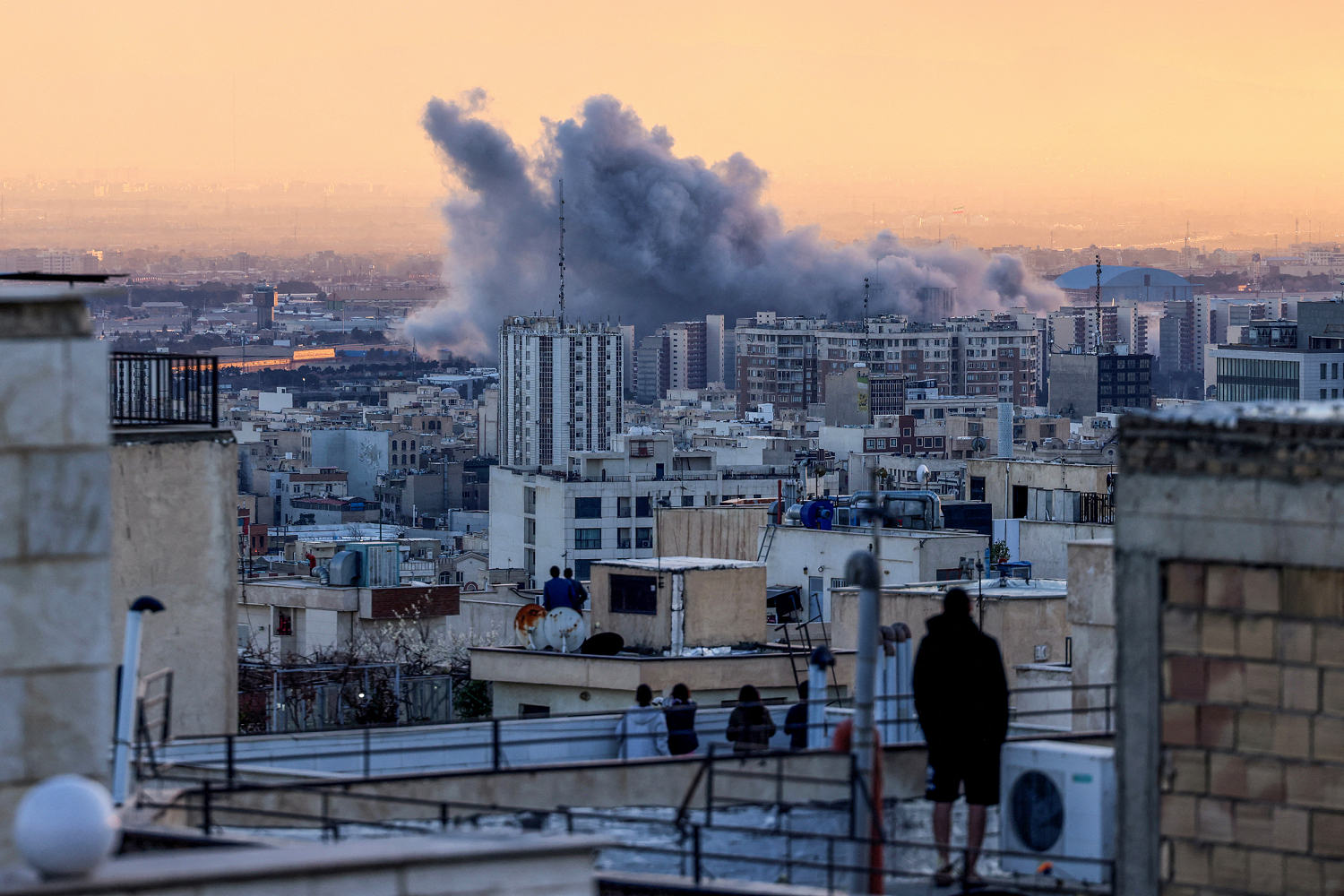
The discussions are taking place as Washington explores ways to increase pressure on Tehran following U.S. strikes on Iranian targets that began over the weekend. They are aimed at testing the possibility of the U.S. using Kurdish opposition groups to help topple the regime in Iran, which has so far held on despite the assassination by Israel and the U.S. of Ayatollah Ali Khamenei on Saturday, the people with knowledge of the discussions said.
President Donald Trump called Kurdish leaders in Iraq on Sunday to discuss the matter, according to a U.S. official, just one day after the U.S. began its military campaign in Iran.
Asked about Trump’s conversations with the Kurds and discussions by U.S. officials, White House press secretary Karoline Leavitt said, “President Trump has been in contact with many allies and partners in the region throughout the past several days.”
Trump administration officials have yet to outline a strategy for how military air power alone could cause the Iranian regime to collapse.
Trump, who has not ruled out sending U.S. ground troops into Iran, has said several of the individuals the U.S. viewed as potential options for replacing Khamenei have been killed. He also said Tuesday that the worst outcome would be for a leader to take over who is equally as hardline as Khamenei.
“I guess the worst case would be, we do this and then somebody takes over who’s as bad as the previous person, right?” Trump told reporters. “That could happen. We don’t want that to happen.”
“So, we’d like to see somebody in there that’s going to bring it back for the people,” he added.
Trump’s conversations with Kurdish leaders were first reported by Axios.
No action has yet been taken on a possible plan to ship weapons to Iranian opposition groups, and the idea still remains under consideration, the people with knowledge of the discussions said. It was not clear if the U.S. was considering providing air power to back up opposition groups if they staged attacks on the regime.
U.S. and Western governments for years have assessed that while the Iranian regime has become increasingly unpopular inside of Iran, a coherent, organized political opposition has yet to emerge. No viable armed opposition group has formed that could pose a serious threat to the government.
Former intelligence officers say the CIA over the years has provided small arms to groups opposed to the regime in ethnic areas where there is deep resentment of the central government in Tehran, including Kurdish region in the north and predominantly Arab provinces in the south.
The CIA declined to comment.
Bilal Saab, a defense official in the first Trump administration and now a senior managing director of the Washington, D.C.-based consulting firm TRENDS US, said that arming the Kurds aligns with the president and his advisers’ objective of toppling the regime. Saab said toppling the regime would be required to achieve that goal, and if the U.S. is not going to deploy ground troops into Iran to achieve that, “this is the alternative.”
Before the U.S. and Israel launched an attack on Iran, the CIA concluded that if Khamenei was killed in the assault, he could be replaced by equally hardline officials from within the regime, including from the country’s Revolutionary Guard corps, according to two people with knowledge of the matter.
The assessment, which was conducted in the weeks leading up to Saturday’s attack on Iran, laid out various scenarios — including the possibility that opposition figures outside the regime could rise to power, these people said. They said it did not forecast which scenario was more likely.
Trump has said publicly, speaking directly to the Iranian people, “When we are finished, take over your government. It will be yours to take.”