dailynewsnblog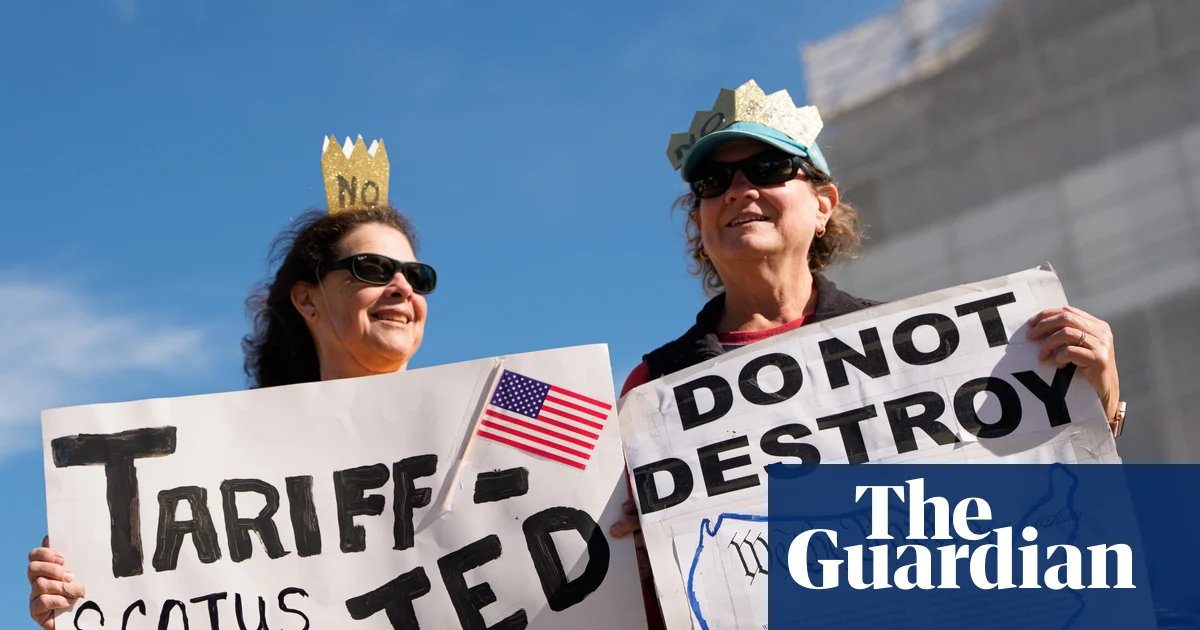
The US supreme court declared many of Donald Trump’s tariffs illegal on Friday, in a sharp rebuke that topples a key pillar of the president’s aggressive economic agenda.
In a 6-3 ruling, the court decided that a 1977 law designed to address national emergencies did not provide the legal justification for most of the Trump administration’s tariffs on countries across the world. It is the first time the court has overruled one of Trump’s second-term policies.
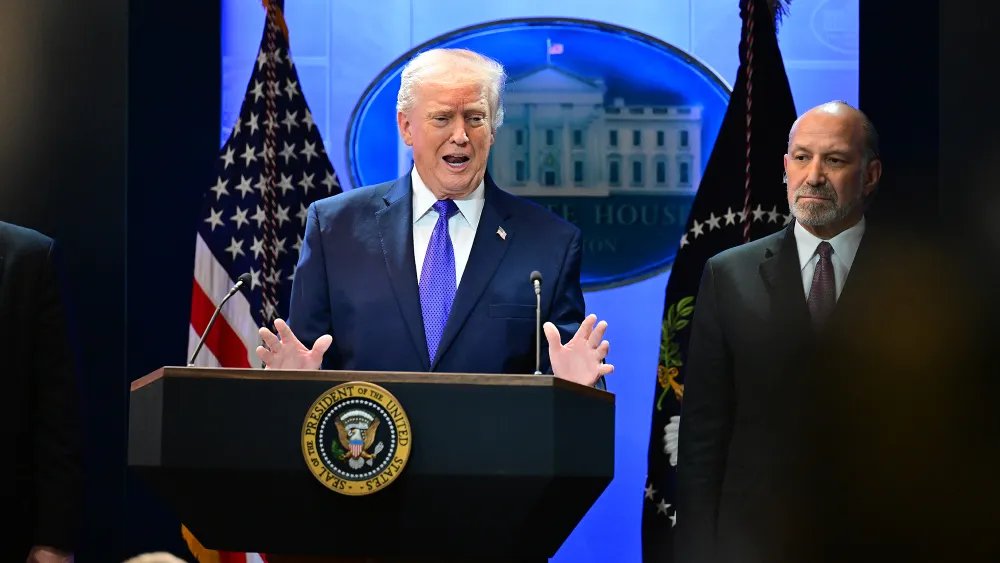
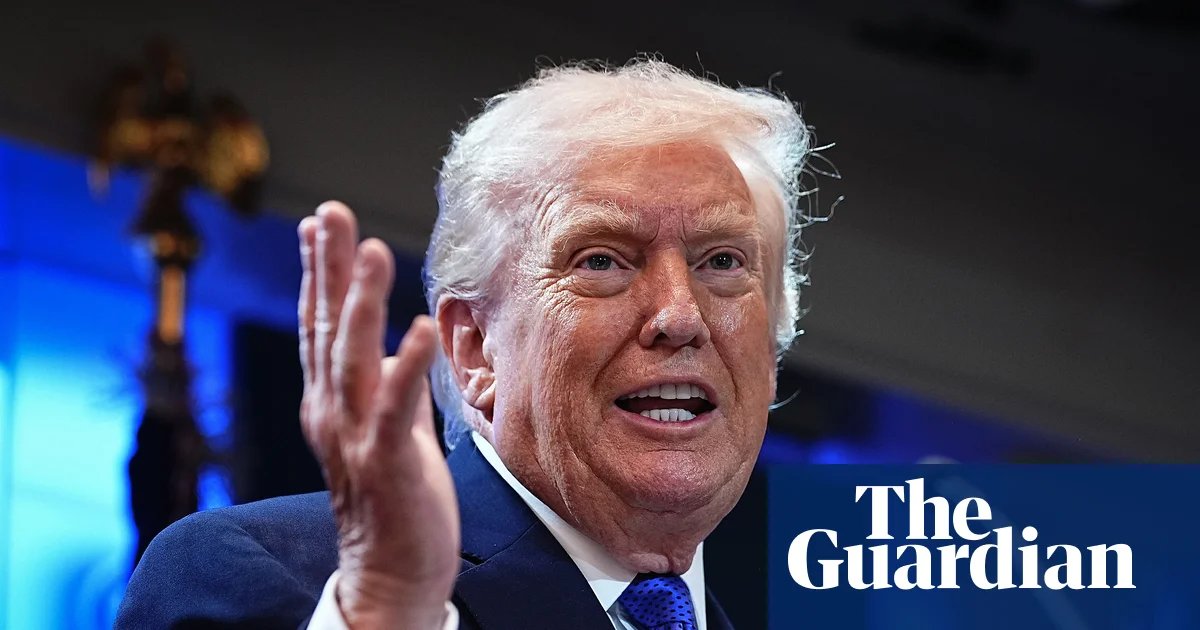
Trump blasted the justices who ruled against him at a press conference, calling them “a disgrace to the nation” and said the ruling has emboldened him to enact “very powerful alternatives” to the tariffs declared illegal.
The president promptly announced he will enact a new 10% global baseline tariff under Section 122 of the Trade Act of 1974, which allows the president to impose tariffs for 150 days. Trump said that the administration would initiate investigations into unfair trading practices that could lead to permanent tariffs.
“While I am sure that they did not mean to do so, the Supreme Court’s decision today made a President’s ability to both regulate trade and impose tariffs, more powerful and more crystal clear, rather than less,” he said. “There will no longer be any doubt that the income coming in and the protection of our companies and country will actually increase because of this decision.”
The ruling was a significant blow for one of Trump’s boldest assertions of executive power since his return to the White House. Trump has used tariffs to aggressively reshape US trade policy, upending decades of agreements and collecting tens of billions of dollars from companies importing foreign goods.
Tariffs typically need to be approved by Congress, which has sole authority under the constitution to levy taxes. Trump argued that he had the right to impose tariffs on trading partners under the International Emergency Economic Powers Act, or IEEPA, which in some circumstances grants the president authority to regulate or prohibit international transactions during a national emergency.
But in its majority opinion, the court said the ability to enact tariffs during peacetime does in fact belong to Congress.
The court cited the creators of the constitution, who “recognized the unique importance of this taxing power – a power which ‘very clear[ly]’ includes the power to impose tariffs”.
“And they gave Congress ‘alone … access to the pockets of the people,” the opinion reads. “The Framers did not vest any part of the taxing power in the executive branch.”
The court also cited what’s known as the “major questions doctrine”, a principle under which the executive branch cannot rely on ambiguous language in laws passed by Congress to justify consequential action.
“These considerations apply with particular force where, as here, the purported delegation involves the core congressional power of the purse,” the court said. “When Congress has delegated its tariff powers, it has done so in explicit terms and subject to strict limits.”
Because of this, the president “must ‘point to clear congressional authorization’ to justify his extraordinary assertion of that power”, the court said. “He cannot.”
The court also pointed out that the White House conceded that the president “enjoys no inherent authority to impose tariffs during peacetime”, which is why it used the IEEPA to pass its tariffs.
Voting to strike down the tariffs were the court’s liberal bloc – Justices Sonia Sotomayor, Elena Kagan and Ketanji Brown Jackson. Joining them were Chief Justice John Roberts, along with Neil Gorsuch and Amy Coney Barrett, who were both appointed by Trump during his first term.
In a dissenting opinion, Justice Brett Kavanaugh argued that the court’s opinion “is not likely to greatly restrict presidential tariff authority going forward” because the court essentially ruled that Trump just “checked the wrong statutory box by relying on IEEPA” instead of other laws to pass his tariffs.
Instead, the ruling will “likely generate other serious practice consequences in the near term”, including whether refunds will be issued on the tariffs.
“Refunds of billions of dollars would have significant consequences for the US Treasury. The Court says nothing today about whether, and if so how, the government should go about returning the billions of dollars that it has collected from importers,” Kavanaugh wrote. “That process is likely to be a ‘mess’, as was acknowledged at oral argument.”
While the president has claimed that tariffs would fill US federal coffers, revitalize the country’s industrial heartlands and make the world economy more “fair” to the US, economists have repeatedly warned they risk raising prices further for Americans after years of heightened inflation.
In a post on X, Chuck Schumer, the Senate minority leader, called the decision a “victory for the wallets of every American consumer. Trump’s illegal tariff tax just collapsed – He tried to govern by decree and stuck families with the bill. Enough chaos. End the trade war.”
The US’s major trading partners reacted cautiously to the news. William Bain, head of trade policy at the British Chamber of Commerce, said: “While this decision gives clarity on the president’s executive powers to raise tariffs it does little to clear the murky waters for business.”
The ruling relates to Trump’s use of the IEEPA, said Bain. “Different legislation has been used for other US tariffs, such as for steel and aluminium, and the president also has other options at his disposal to retain his current regime … For the UK, the priority remains bringing tariffs down wherever possible.”
Mexico’s president, Claudia Sheinbaum, said her administration was reviewing the decision. “Not only are we the largest exporter to the United States, but we are also the largest buyer of US products,” she said at her daily morning conference. “What that shows is that beyond a particular policy of greater protectionism, it is very important for both countries to maintain the trade agreement.”