dailynewsnblog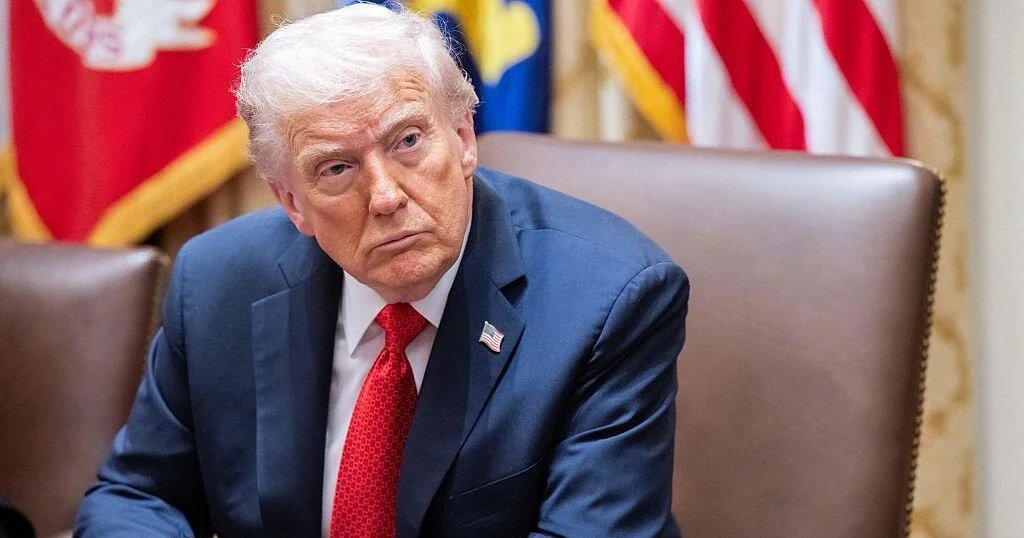
Washington — President Trump has grown increasingly frustrated with what aides describe as the limits of military leverage against Iran, according to multiple sources familiar with the matter who spoke to CBS News under condition of anonymity to discuss national security issues.
Unlike previous targeted operations, including the recent one removing Venezuelan leader Nicolás Maduro from power, Mr. Trump has been told that any strike on Tehran’s assets would almost certainly not be a singular, decisive blow. Instead, limited strikes could open the door to a wider confrontation — one that risks drawing the United States into a protracted conflict in the Middle East.
Axios first reported details of the president’s frustrations.
President Trump, in a social media post refuted any reports that Gen. Dan Caine, the chairman of the Joint Chiefs of Staff, “is against us going to War with Iran.” Caine, he said, “would like not to see War but, if a decision is made on going against Iran at a Military level, it is his opinion that it will be something easily won.”
Mr. Trump said Caine “has not spoken of not doing Iran, or even the fake limited strikes that I have been reading about, he only knows one thing, how to WIN and, if he is told to do so, he will be leading the pack.”
A senior military official told CBS News that military planners are providing unbiased advice. The White House referred CBS News to the president’s social media post.
At the heart of the president’s impatience is a desire for a forceful action that would reset the diplomatic table. He has pressed advisers for options that would deliver a punishing strike — one substantial enough, in his view, to compel Iranian leaders to return to negotiations under more favorable terms for Washington. But military planners have cautioned that such an outcome cannot be guaranteed.
The Free Press: Donald Trump’s Iran Trap
In private meetings, Caine has advised Mr. Trump that a sustained military campaign against Iran could carry significant repercussions, such as retaliation from Tehran and its proxies against U.S. forces and allies, and it could spiral into a drawn-out engagement requiring additional American troops and resources.
Over the weekend, special envoy Steve Witkoff told Lara Trump in an interview on Fox News that Mr. Trump is “curious” about why Iranians “haven’t capitulated.”
“Why, under this sort of pressure, with the amount of sea power, naval power that we have over there, why they haven’t come to us and said, ‘We profess that we don’t want to be — we don’t want a weapon. So, here’s what we’re prepared to do.’ And yet, it’s hard to sort of get them to that place,” Witkoff said.
In recent weeks, the U.S. has greatly expanded its military posture across the region. The USS Gerald R. Ford carrier strike group and its flotilla of warships are expected to position themselves within range of Iranian territory, joining the USS Abraham Lincoln carrier strike group and other aircraft squadrons stationed at bases throughout the Persian Gulf. Patriot and Terminal High Altitude Area Defense systems have been reinforced to protect American troops and regional allies from potential retaliation.
Pentagon officials say the deployments are defensive and designed to deter escalation, yet the scale and tempo of the build up underscore that any strike in Iran would almost certainly trigger a response whether through missile attacks, maritime harassment in the Strait of Hormuz, or proxy forces operating in Iraq, Syria and elsewhere.
The meetings unfolding inside the White House regarding Iran reflect a broader tension between political objectives and military realities. While the president seeks a dramatic show of force to strengthen his hand in negotiations, senior commanders have emphasized that wars rarely unfold according to script and that even carefully calibrated strikes can produce unpredictable consequences.
For now, the buildup of U.S. military hardware continues as contingency plans are refined. Whether it culminates in a limited strike or remains a posture of deterrence may depend less on the president’s frustration than on Tehran’s next move and ultimately on how much risk Washington is prepared to bear.