dailynewsnblog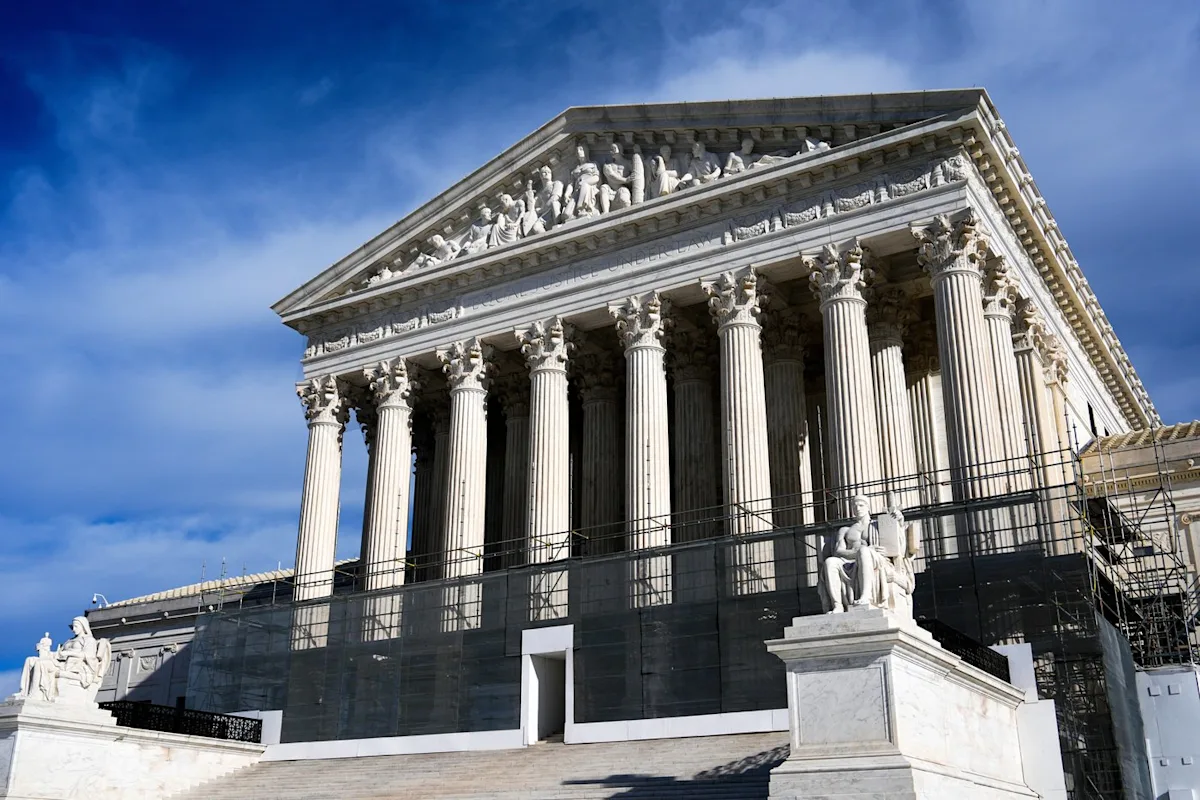
The Supreme Court struck down President Donald Trump’s far-reaching global tariffs on Friday, handing him a significant loss on an issue crucial to his economic agenda.
The 6-3 decision centers on the tariffs Trump unilaterally imposed under an emergency powers law, including the sweeping “reciprocal” tariffs levied on nearly every other country.
It’s the first major piece of Trump’s broad agenda to come squarely before the nation’s highest court, which he helped shape with the appointments of three conservative jurists in his first term.
The majority found that the Constitution “very clearly” gives Congress the power to impose taxes, which include tariffs. “The Framers did not vest any part of the taxing power in the Executive Branch,” Chief Justice John Roberts wrote.
“The tariffs at issue here may or may not be wise policy. But as a matter of text, history, and precedent, they are clearly lawful,” Kavanaugh wrote in the dissent.
The Latest:
Wall Street keeps calm after the ruling
The S&P 500 was 0.1% higher in midday trading. It had been flipping between small gains and losses before the court’s ruling, following discouraging reports showing slowing growth for the U.S. economy and faster inflation.
The Dow Jones Industrial Average was down 125 points, or 0.3%, as of 12:30 p.m. Eastern time, and the Nasdaq composite was 0.3% higher.
Many on Wall Street were likely expecting such a ruling from the Supreme Court, according to Brian Jacobsen, chief economic strategist at Annex Wealth Management. That likely led to the relatively muted reactions across financial markets, and trading remained tentative as investors tried to suss out the long-term effects.
Tariff decision likely to have small impact on inflation
Consumers probably won’t see much reduction in overall prices as a result of the Supreme Court’s decision.
Inflation did not rise by as much as many economists expected when Trump announced his most sweeping tariffs in April. That’s partly because many of the “Liberation Day” duties were later rolled back, delayed, or negotiated downward. Trump also exempted products such as beef, coffee, and auto parts from his tariffs. And many large companies have eaten much of the cost, rather than pass them to consumers.
Still, the Federal Reserve estimates that inflation is about a half-percentage point higher than it would be without the tariffs. Its preferred inflation gauge is still elevated, coming in at 2.9% in December from a year earlier. Over time, the decision could slightly reduce prices for cars, furniture, clothes, and other items, where prices did rise after duties were imposed.
For some industries, the Supreme Court’s decision provides relief for some products but not for others
In a memo to its members Friday, the Home Furnishings Association noted that the decision leaves many Trump administration tariffs in effect, including those on steel, upholstered furniture, kitchen cabinets and bathroom vanities. Certain tariffs on products from China also remain in place, the association said.
“As always, our advocacy is focused on promoting trade policies that provide stability, predictability, and fairness—protecting retailers from unnecessary financial burdens while supporting strong, competitive supply chains that benefit businesses and consumers alike,” said the association, which represents 15,000 furniture stores in North America.
Michigan business associations welcome decision
Glenn Stevens Jr., executive director of MichAuto, a state auto industry association, said that Michigan’s automotive and manufacturing sectors are “disproportionately negatively impacted” by tariffs.
In a statement, Stevens said MichAuto and the Detroit Regional Chamber of commerce support tariffs to “ensure a level playing field” on the global scale, but not when used to target North American trading partners.
“It remains our focus and objective that the governments of the United States, Canada, and Mexico extend the USMCA this year,” he said.
Louisiana Gov. Jeff Landry says tariff ruling overshadowed breakfast with Trump
Landry, a Republican, was among a group of governors meeting with the president when the Supreme Court’s ruling on tariffs came down Friday.
“I think it was unfortunate that the Supreme Court came out with a bad ruling at that time because I think we’re going to have a great meeting,” Landry told reporters after.
Landry said the ruling “completely overshadowed” what was “getting ready to be a very productive meeting with the president.”
Democratic senator calls on Trump administration for tariff refund plan
Friday’s Supreme Court decision did not address whether businesses could get refunded for the billions they have collectively paid in IEEPA tariffs imposed by Trump. U.S. Senator Maria Cantwell, a Democrat from Washington state, is asking Treasury Secretary Scott Bessent for a plan.
“Many American businesses, especially small and medium-sized businesses, have struggled to pay these illegal tariffs and, for some, the financial strain has placed them on the brink of bankruptcy,” Cantwell wrote in a letter published Friday addressed to Bessent. “It is essential Treasury implement an expeditious and transparent process to remediate the financial harm that resulted from these illegal tariffs.”
Trump to speak about tariff ruling
White House press secretary Karoline Leavitt said on social media that the president would hold a news conference about the ruling at 12:45 p.m.
United Steelworkers union urges Congress to revamp the US trade system
The United Steelworkers, the labor union whose members work at U.S. Steel and Cleveland-Cliffs plants, urged Congress to revamp the U.S. trade system by using tariffs “strategically.”
It said tariffs should be used to protect American workers, not to punish allies like Canada. It also called on Congress to restore funding to programs to help American workers who lose their jobs because of unfair foreign trade.
“It’s an excess of short-term thinking and free trade ideology that got us into this mess. Now, we need sustainable solutions,” the union said in a statement.
The U.S. steel industry has enjoyed a period of expansion under tariffs adopted by the Biden and Trump administrations, analysts say.
Behind the case is a nonprofit that typically allies with conservative causes.
The Liberty Justice Center, which represented the businesses challenging Trump’s tariffs, is a libertarian-leaning public interest law firm with about $3 million on hand. Sara Albrecht, the group’s chairman, pledged to help small businesses navigate the refund process in a statement posted on X.
“The Liberty Justice Center’s work is just beginning,” she said.
The Supreme Court previously sided with the Liberty Justice Center in 2018 when the justices ruled that public-sector unions could not require non-member employees to pay collective bargaining fees. The group has also challenged “critical race theory” teachings in school districts and defended state school choice initiatives.
Among its donors are the Walton Family Foundation, the Republican Governors Public Policy Committee and the NRA Civil Rights Defense Fund. Other funders include the Club for Growth, an influential anti-tax group, and the State Policy Network, a conservative nonprofit coalition linked to Charles and David Koch.
Major technology trade groups hail the Supreme Court decision
They predicted the decision will help minimize price increases and disruptions in the intricate supply chains for the computers, smartphones, televisions and other gadgets ingrained in modern life.
“Innovation thrives on predictability, and this common-sense decision brings much-needed clarity for American businesses and consumers,” said Gary Shapiro, CEO of the Consumer Technology Association, which represents more than 2,000 companies. “Now, the government must act quickly to refund retailers and importers without red tape or delay.”
The Computer & Communications Industry Association, which represents a spectrum of technology companies employing more than 1.6 million people, also expressed hope that the decision will ease the trade tensions that have been tormenting tech.
“This Supreme Court decision caps a year of turbulence in trade policy that we are all working to adapt to. With this decision behind us, we look forward to bringing more stability to trade policy,” said Jonathan McHale, the Computer & Communications Industry Association’s vice president for digital trade.
Tariff elimination on distilled spirits could provide needed certainty for American spirits exporters
Chris Swonger, president and CEO of the Distilled Spirits Council urged the Trump administration to use the Supreme Court ruling as an opportunity to return to “zero-for-zero tariffs” on spirits products with major trading partners including the United Kingdom and European Union.
“The elimination of tariffs on distilled spirits would provide much needed certainty for American spirits exporters while helping ease financial pressures on bars, restaurants and retailers at a time when affordability remains a major concern for consumers.”
Soybean farmers hope Trump will refrain from imposing new tariffs on the things they need
Soybean farmers hope that they might get some relief from rising costs as a result of Friday’s ruling. The price of fertilizer, seeds, pesticides and tractors and parts have been steadily increasing starting even before Trump’s tariffs.
American Soybean Association President Scott Metzger, who farms in Ohio, said farmers hope Congress and the administration will work to open additional markets for their crops.
“Moving forward, certainty and dependable market access are essential for U.S. soy to remain competitive globally. Because farmers are caught in a cost-price squeeze and ag input costs remain high, we urge the President to refrain from imposing tariffs on agricultural inputs using other authorities,” Metzger said.
Many Americans felt Trump had overstepped on tariffs: poll
About 6 in 10 Americans said Trump had “gone too far” on imposing new tariffs on other countries, according to an AP-NORC poll from January.
About 9 in 10 Democrats and roughly 6 in 10 independents said Trump had overstepped, compared to 25% of Republicans.
The tariffs have been unpopular for much of Trump’s first year back in office. Roughly half of U.S. adults said they were opposed to imposing tariffs on all goods brought into the U.S. in an AP-NORC poll from last April. Only about 3 in 10 favored them, and roughly 2 in 10 were neutral.
Possibly more worrisome for a president elected on the promise of fixing Americans’ affordability concerns, 76% in the April poll thought Trump’s tariff policies would increase the cost of U.S. consumer goods.
Which of Trump’s tariffs are being struck down by the Supreme Court?
Friday’s decision upends a core set of tariffs that Trump imposed using the 1977 International Emergency Economic Powers Act, or IEEPA. That includes the “Liberation Day” tariffs the president slapped on nearly every country in the world last spring — as well as and other IEEPA-based levies he imposed on Canada, Mexico and China. Trump also cited IEEPA to impose additional tariffs on Brazil over the trial of former President Jair Bolsonaro, and on India over its purchases of Russian oil.
Despite Friday’s ruling, other sweeping levies remain in place. Trump used another law — Section 232 of the 1962 Trade Expansion Act — to slap sectoral tariffs on steel and aluminum, cars, copper, lumber and products like kitchen cabinets worldwide. And the president has plenty of other options to keep taxing imports aggressively.
Trump still has other tariff options to tax imports
President Trump still has options to keep taxing imports aggressively even after the Supreme Court struck down the tariffs he imposed last year on nearly every country on earth.
The Justices didn’t buy the president’s sweeping claims of authority to impose tariffs as he sees fit. But Trump can re-use tariff powers he deployed in his first term and can reach for others, including one that dates back to the Great Depression.
“It’s hard to see any pathway here where tariffs end,” said Georgetown trade law professor Kathleen Claussen. “I am pretty convinced he could rebuild the tariff landscape he has now using other authorities.”
▶ Read more
US ambassador calls the tariff decision a ‘victory for the Constitution’
Norm Eisen, a former U.S. ambassador to the Czech Republic who was a legal adviser to Democrats during Trump’s first impeachment, called the tariff decision a “victory for the Constitution and for Congress’ Article I authority over taxes and tariffs. The International Emergency Economic Powers Act provides limited authority to the President to take actions to regulate imports to respond to unusual and extraordinary threats.”
Eisen, the executive chair of the Democracy Defenders Fund, said in a statement that the administration had tried to distort the emergency powers act to address routine trade deficits and disagreements “and the Supreme Court correctly smacked that down.”
Economist: Tariff ruling to provide modest benefit to businesses
Sarah House, a senior economist at Wells Fargo, said the ruling will provide some additional certainty for companies, many of which have already adjusted to the tariffs, by shifting their supply chains to lower-tariffs countries.
The additional certainty could lead to modestly higher investment and job creation by businesses, after they slammed the brakes on hiring last year in part because of tariff uncertainty. The economy added less than 200,000 jobs in 2025, the government said last week, the fewest since the pandemic.
“Uncertainty hasn’t gone away,” she cautioned. “There are still a lot of questions out there: What about refunds? What other statutes will the administration use to impose the tariffs? Will your products fall under those?”
Mexico’s president on tariff ruling: ‘We’re going to wait and see its reach’
In Mexico, which has been vigorously negotiating on tariffs with the administration, President Claudia Sheinbaum noted the ruling in her morning press briefing, saying “We’re going to wait and see its reach.”
Mexico, whose biggest trading partner is the U.S., has been able to dodge the brunt of the tariffs by more aggressively going after drug cartels under pressure from the Trump administration. The country recently stopped sending oil to its ally Cuba around the same time Trump threatened to impose tariffs on countries that sent gas to the island.
Mexican President Claudia Sheinbaum speaks at the National Palace in Mexico City, Nov. 7, 2025. (AP Photo/Marco Ugarte, File)
While uncertainty simmered in Latin America, Gabriella Siller, analyst for the Mexican financial group Banco Base, said that the order was “good news” for Mexico. The Mexican pesos jumped Friday morning.
Siller added that Trump can still use other tariff measures and pull other political levers to pressure Mexico, especially in the lead up to renegotiations of the United States-Mexico-Canada Agreement.
“It’s a pressure cooker. We’ll see how Trump responds. His responses are usually strong and aggressive, and could trigger a new episode of high volatility” for Mexico, Siller said.
British government expects its ‘privileged trading position’ to continue
The British government said it expects the U.K.’s “privileged trading position” with the U.S. to continue after Trump’s tariffs were struck down by the country’s Supreme Court.
The U.K. received the lowest reciprocal tariff rate of 10% from the U.S. A subsequent deal saw further carve-outs for Britain’s steel industry and car manufacturers.
“The U.K. enjoys the lowest reciprocal tariffs globally, and under any scenario we expect our privileged trading position with the U.S. to continue,” a government spokesman said. “We will work with the Administration to understand how the ruling will affect tariffs for the U.K. and the rest of the world.”
Trump reacts to SCOTUS decision in real time
President Trump described the Supreme Court decision as “a disgrace” when he was notified in real time during his morning meeting with several governors.
That’s according to someone with direct knowledge of the president’s reaction, who spoke on the condition of anonymity to discuss the private conversation. Trump was meeting privately with nearly two dozen governors from both parties when the decision was released.
Trading partners are prepared and are unlikely to walk away from recent deals, says a former trade official
Wendy Cutler, a former U.S. trade negotiator, said U.S. trading partners were aware of the risks Trump faced in using the emergency clause to impose tariffs.
“Nevertheless, they chose to conclude deals with Washington, convinced that other statutes would be utilized to keep the tariffs in place,” said Cutler, now vice president of the Asia Society Policy Institute.
“They are waiting to see the Administration’s Plan B,” she said. “Walking away from the deals announced in recent months does not seem to be in the cards.”
The Trump administration this month signed trade deals with Taiwan and Indonesia.
Neal Katyal, who argued the case at SCOTUS, calls decision ‘complete and total victory’
Katyal, the former Acting Solicitor General of the United States, told The Associated Press: “the decision today is everything we asked the Supreme Court to do.”
“It is a complete and total victory for the challenge to President Trump’s tariffs. It’s a reaffirmation of our deepest constitutional values and the idea that Congress, not any one man, controls the power to tax the American people.
Canada’s Chamber of Commerce CEO says this is not a reset of US trade policy
“The Supreme Court’s decision to strike down the use of IEEPA tariff powers is a legal ruling, not a reset of U.S. trade policy. This is certainly not the last chapter of this never-ending story,” Candace Laing, the President and CEO of the Canadian Chamber of Commerce said in a statement.
“Canada should prepare for new, blunter mechanisms to be used to reassert trade pressure, potentially with broader and more disruptive effects,” Laing said.
Cornell economist expects the ruling to weaken Trump’s hands in trade talks but not to fundamentally alter the process
Eswar Prasad, an economist at Cornell University, said the the decision will create procedural delays and complicate the process of imposing tariffs. But, it is unlikely to alter the course, he said.
“The ruling sharply constrains the Trump administration’s aggressive use of tariffs without Congressional approval. Still, it is unlikely to deter the administration from pursuing other avenues to impose tariffs,” he said, noting the Trump administration has made it clear that it is prepared to re-impose similar levels of tariffs using other tools.
Senate Democratic Leader Schumer says tariff ruling is ‘win for the wallets’ of American consumers
Senate Democratic Leader Chuck Schumer said in a statement that the Supreme Court’s ruling striking down President Donald Trump’s tariffs on Friday will “finally give families and small businesses the relief they deserve” and that Trump should end “this reckless trade war for good.”
He said the president’s “overreach failed.”
“We’ve said from day one: a president cannot ignore Congress and unilaterally slap tariffs on Americans,” Schumer said.
What’s next for tariffs
Experts say tariffs in some form are likely to be here to stay, and a refund process to refund the tens of billions of dollars collected under the tariffs might be cumbersome.
“That refund process could be easy, but it appears more likely that more litigation and paperwork will be required – a particularly unfair burden for smaller importers that lack the resources to litigate tariff refund claims yet never did anything wrong,” said Scott Lincicome, vice president of general economics at libertarian think tank Cato Institute.
He said Congress should provide lasting protection against tariffs.
“The tariff beatings will continue until Congress reclaims some of its constitutional authority over U.S. trade policy and checks the administration’s worst tariff impulses.”
The Associated Press