dailynewsnblog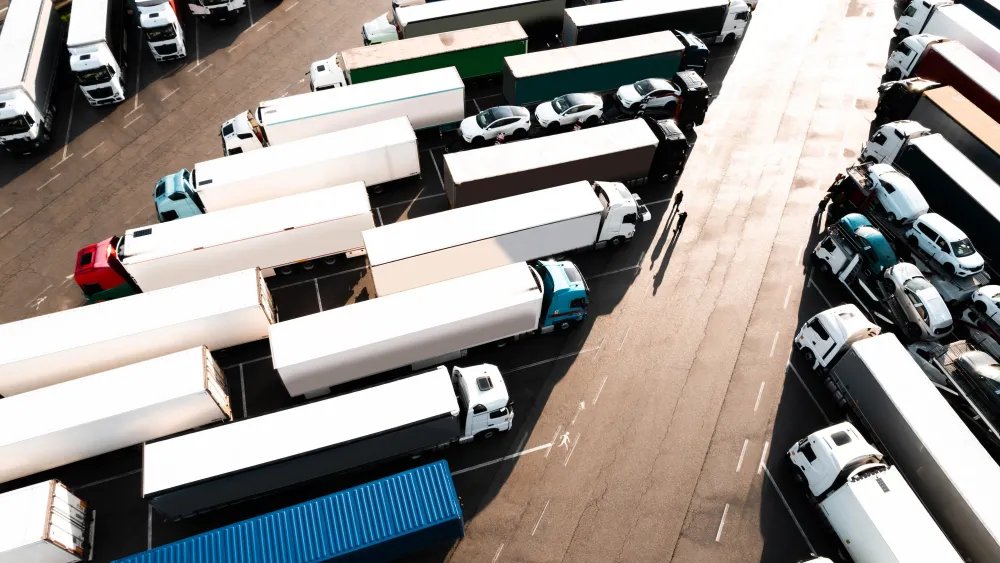
Truck drivers and farmers set up highway blockades throughout more than 20 Mexican states on Monday and Tuesday, disrupting transportation and cargo movement across the country.
The National Association of Transport Drivers (ANTAC) and the National Front for the Rescue of the Mexican Countryside (FNRCM) are partaking in the nationwide protest due to a lack of security on the road. The parties have called the strike “indefinite” until Mexico’s government can provide real guarantees of safety on the country’s most dangerous roads.
Truckers have called on the government to take action to curb assaults, kidnappings, extortion and murders on the country’s highways, as well as offer immediate support for widows and orphans of murdered drivers.
Additionally, ANTAC is demanding a permanent presence of the National Guard at roadside stops to replace municipal and state police officers, and also wants the government to deactivate certain checkpoints that function as extortion points.
Beyond the safety concerns, ANTAC is seeking modernization of highway infrastructure like toll booths, and wants to eliminate a federal excise tax on diesel fuel.
This is the second such blockade in five months related to these issues, when truckers and farmers protested for multiple days in November.
Supply chain risk intelligence provider Overhaul recommended in a Tuesday advisory that all shipments traveling through affected areas should route around city centers where protest activity will be heaviest.
“Additionally, every effort should be made to eliminate stationary and unattended shipments in affected cities,” the advisory read. “Law enforcement attention will be spread thin, a fact that has historically been exploited by area criminals.”
In an interview with Mexico City-based radio station El Heraldo Radio, ANTAC president David Estévez Gamboa said the association’s members are maintaining blockades in 21 states across the country.
According to Estévez, the current mobilizations are a pilot test for future protests that would occur in June if the association’s demands are not met.
A Tuesday report from Nuevo Laredo-based newspaper El Mañana indicated that a resolution seems “distant.” However, the union expects a meeting on Friday at Mexico’s Ministry of the Interior.
While Estévez explained that some of the blockades have been eased to facilitate dialogue, the protest remains active in several locations.
Reports from Tuesday morning indicate that there are partial and total closures across major highways and toll plazas including Federal Highways 110, 136 and 2D, Arco Norte Highway, Siglo XXI Highway and Contepec Toll Plaza.
Given the ongoing blockades, the government advised the public to avoid using the toll highways unless necessary.
“Drivers should also maintain communication with dispatch and/or their remote monitoring center when traveling through or stopping in a high-risk area,” Overhaul said. “An immediate escalation with a path to effective law enforcement engagement is critical to driver safety and recovering stolen cargo.”
The National Chamber of Freight Transportation (CANACAR) rejected the highway blockades, instead calling for institutional dialogue to address the demands of the transportation sector.
“The impact is both internal and external: the movement of goods is slowed, and the daily lives of thousands of people are complicated,” said CANACAR president Augusto Ramos Melo.
According to data from the Secretariat of Security and Civilian Protection of Mexico, 6,263 investigations into cargo truck robbery cases were opened in 2025, down 46 percent from the year prior.
Economic losses from cargo theft across Mexico exceed 7 billion pesos ($386 million), according to the Mexican Association of Private Security and Satellite Industry Companies (AMESIS).
“Cargo theft is influenced by global risks; in Mexico it is linked to the economic crisis, social erosion, cybercrime, and drug trafficking,” said Raymundo Mancera Sandoval, president of AMESIS, in a statement.
Protests haven’t been the only factors holding up freight movement in Mexico this year. In February, Mexico contended with roadblocks that took place primarily in the western part of the country. Those transportation interruptions stemming from the capture and killing of the country’s most wanted cartel boss, Nemesio Oseguera Cervantes.