dailynewsnblog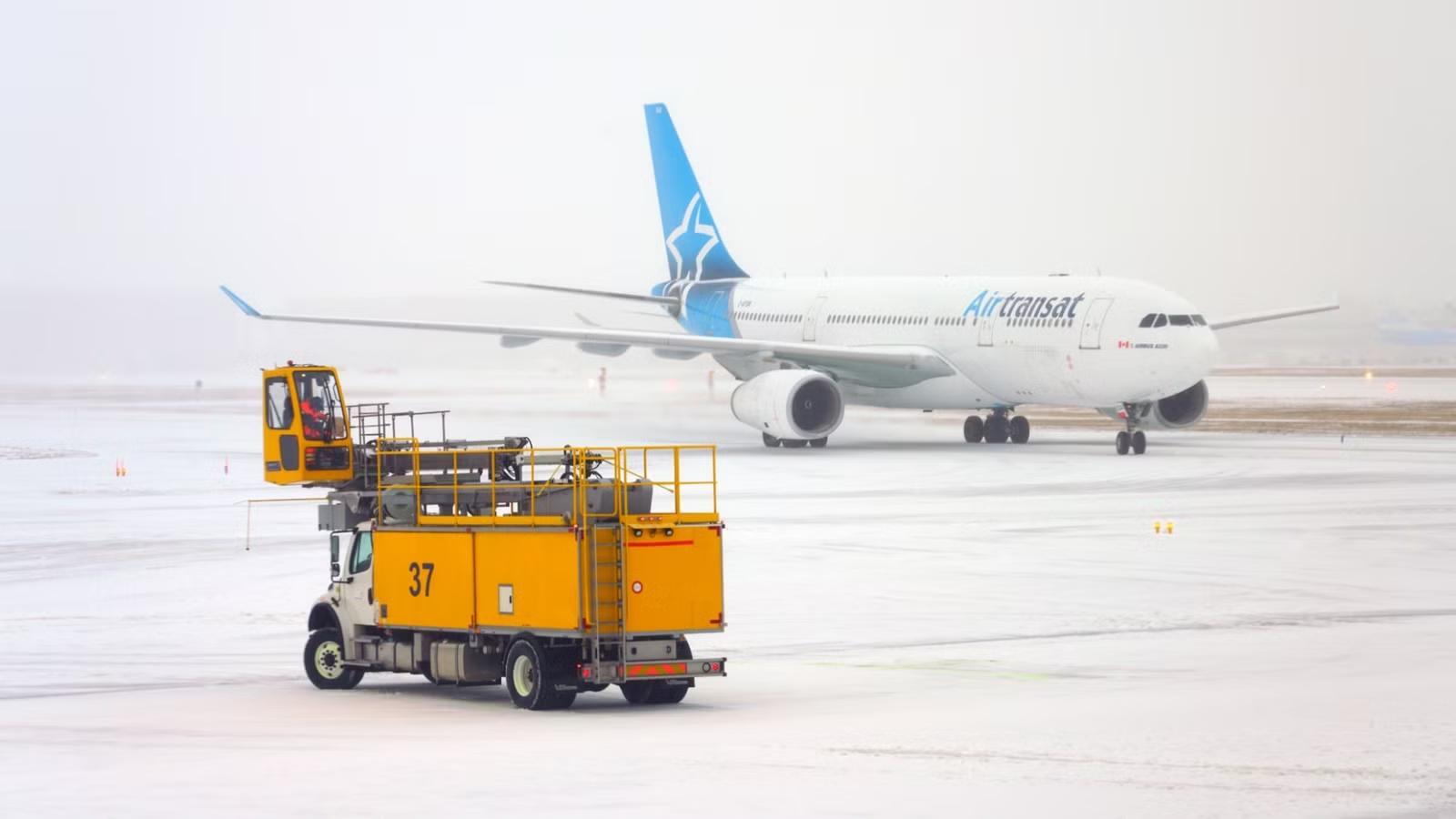
As the winter in Canada is a long and icy one compared to many airports around the world,  Toronto Pearson International Airport (YYZ) is busy every season deicing thousands of airplanes. The deicing crews at Toronto ensure that everything from turboprop’ puddle jumpers’ to Airbus A380 ‘superjumbos’ take off safely, no matter how harsh winter gets.
As the 2025-to-2026 winter season is coming to a close, but not over yet, Toronto has nearly reached 17,000 aircraft deiced with 6,000 passing through its pits in January alone. The airport expects a record number this year, as it has already serviced an additional 4,000 planes than this same time last year.
No Winter Too Tough For Toronto

On February 13, the airport reported that it had deiced 16,800 airliners in a post on X. That’s already more than three times the number that  Pittsburgh International Airport (PIT) in the United States services every winter on average. Pittsburgh is one of the airports in the US that regularly sees snow and ice throughout winter and is often impacted by snowstorms, with the most recent example being just two weeks ago, yet the volume of deiced jets at Toronto far overshadows it.
Toronto’s The Central Deicing Facility (CDF) is the largest of its kind in the world. Occupying more than 65 acres, jets can be deiced with their engines running after pushing back from the gate before they taxi to the runway. Toronto can handle 500 aircraft per day through the deicing pits during peak winter weather. It features six deicing pads that can accommodate up to 12 widebody aircraft or 24 narrowbody aircraft at once. A team of roughly 200 employees operates the site 24/7 during the winter months.
Last Summer, Toronto officially selected contractors to begin the Pearson LIFT modernization program, which will further expand the airport’s winter infrastructure. Deborah Flint, president and CEO of Toronto Pearson, remarked to Ontario Construction News following the announcement:
“These two major milestones are advancements of Pearson LIFT, investing in vital Canadian infrastructure to position Toronto Pearson to compete well into the future.”
Protecting Flyers And The Environment

The CDF maintains a fluid reserve on-site to sustain mission-critical operations in the event of a three-day continuous snow or ice storm when logistics are impacted on the landside of airport ops as well. To sustain operations throughout a typical winter, Toronto Pearson International requires approximately 3.17 million gallons (12 million liters) of deicing and anti-icing fluids.
Pearson operates an advanced recovery system with four massive underground tanks capable of holding 19 million liters of spent fluid and runoff for recycling. To prevent groundwater contamination, the entire 65-acre site is underlain with a geosynthetic liner. The pads are sloped to direct all runoff into 278 catch basins.
The Greater Toronto Airports Authority (GTAA) oversees these operations to ensure that even during the most severe storm events, like the major January events in recent years, the airport can maintain safe departure schedules.

White Out: How Do Airports Manage Winter Storms?
A hot topic after recent events!
Toronto’s Ice Rigs

The airport operates 46 Vestergaard Elephant Beta deicing trucks, each with its own elevated cab that can extend to 45 feet (14 meters) above the ground. These highly specialized work trucks allow the Operators to spray the top of even the largest aircraft, like colossal A380s. Beyond the deicing pads, a separate fleet of 106 specialized vehicles, including 40 plow-sweeper-blowers (PSBs) and 14 chemical trucks, keeps the taxiways and runways clear for deiced planes to take off.
For ‘heavy’ aircraft, like widebodies, standard operating procedures typically deploy a team of four trucks simultaneously. Pearson is also unique as it is the only major North American airport to operate a specialized fleet of three underwing deicers. These are modified pick-up trucks equipped to spray the underside of aircraft when necessary.
As winter starts, the workforce surges by nearly 50% with seasonal employees. New recruits undergo an intensive eight-week program consisting of both classroom learning and practical field training before they are permitted to operate the trucks. Single operators who drive the truck, maneuver the boom, and manage the high-pressure spray simultaneously.
Staff who monitor operations from a central control center, using electronic message signs and UHF radios to coordinate with pilots and ground crews. Dedicated technicians who perform year-round maintenance on complex data-tracking systems and fluid heaters within the trucks.