dailynewsnblog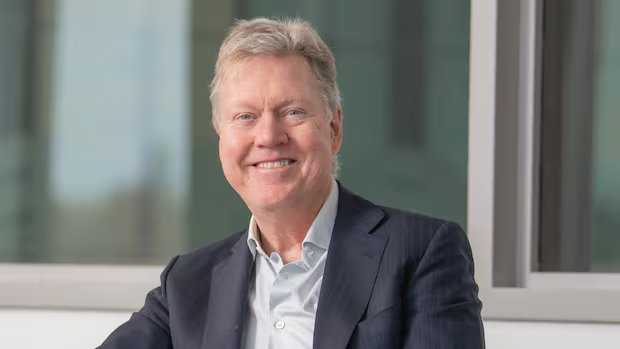
As It Happens7:28Toronto man donates $10 million to expand OCD treatment centre that changed his life
Brian Reeve hit a breaking point seven years ago, when the rituals — from repeatedly walking in and out of doors to inserting and removing his contact lenses until everything felt “just right” — had become so consuming that he could no longer manage his obsessive-compulsive disorder (OCD) on his own.
After years of searching for effective care, he received treatment in the OCD program in 2019 at the Frederick W. Thompson Anxiety Disorders Centre at Sunnybrook Hospital in Toronto.
Now in remission, Reeve, 69, a lawyer and private equity investor, says the program was a “game-changer” and a “life reset,” and has donated $10 million to the facility.
Established in 2012, the Thompson Centre, the country’s first and only facility dedicated to the research, education and treatment of OCD and related disorders, estimates that about 400,000 Canadians live with OCD.
Peggy Richter, the Thompson Centre’s head and a professor of psychiatry at the University of Toronto, says OCD is a complex disorder defined by intrusive, unwanted thoughts (obsessions) and repetitive behaviours or rituals (compulsions) used to relieve anxiety.
While many associate the disorder with symptoms like excessive washing, checking, or organizing, she says it can take many forms, including repetitive counting or even distressing thoughts that a person would never act on.
It can span from the mild end where people may frequently be late due to doing their rituals, to the more severe cases where it becomes “profoundly disabling,” Richter says.
“People can basically be prisoners in their own homes, unable to do even the most basic activities of daily living,” she said.

Managing OCD over decades
Reeve says he was diagnosed with OCD in the 1990s. At the time, he says there were limited treatment options.
But he was able to manage it well enough for most of his life. He built a successful career as a lawyer and private equity investor, and also got married and had children.
By 2019, the number of rituals — and the time they consumed — had “expanded almost exponentially,” he says, leaving him distracted and diminishing the quality of time he could spend with his children.
Reeve had to repeat tasks until they felt right — such as checking to see if he had set the alarm clock to wake up for work the next day.
“Checking once isn’t that big of a deal, but when it becomes 10 times or 20 times, and you have to keep turning the switch off and on until it feels right, that’s what OCD becomes,” Reeve told As It Happens host Nil Köksal.

From extreme cleanliness to a meticulously organized house, there are plenty of misconceptions about what it means to have obsessive compulsive disorder. Clinical psychologist Janet Caryk specializes in the assessment and treatment of the disorder, and joins us to dispel some common myths and misunderstandings.
Later that year, his family doctor referred him to the Thompson Centre’s intensive OCD treatment program.
Reeve spent four months in the program, attending five days a week for eight hours a day.
He says it gave him a toolkit that he was able to continually use and eventually go into remission three years after completing the program.
Expanding care and research
What makes the Thompson Centre unique, says Richter, is its broad spectrum of care.
The centre offers consultation services for OCD diagnosis and treatment recommendations, as well as options tailored to the severity of each patient’s condition, including psychiatric care, cognitive-behavioural therapy, and an intensive program for severe cases.

Through a network of trained volunteers who have completed treatment, she says, the centre offers both group and individual peer support for anyone who gets care with their programs.
The centre also has an aftercare program that continues to support alumni of the intensive treatment program once formal treatment ends.
Richter says Reeve’s donation will speed up the expansion and relocation of the centre, allowing it to move from its current rented space to a permanent home at Sunnybrook’s Bayview campus next spring.
The new facility will feature improved amenities, including a place to dine, and closer collaboration with the hospital’s brain sciences program, and more bed capacity.

The funding will also help establish a chair in OCD at Sunnybrook and the University of Toronto and provide fellowships to support the next generation of Canadian clinicians and researchers in OCD treatment and research.
For Reeve, he hopes people understand that effective treatment for OCD does exist.
“What we’re trying to do with the Thompson Centre [is] to make you feel that you’re not walking the road alone and that there’s a lot of resources and you don’t have to be ashamed or embarrassed that you’ve got OCD,” he said.