dailynewsnblog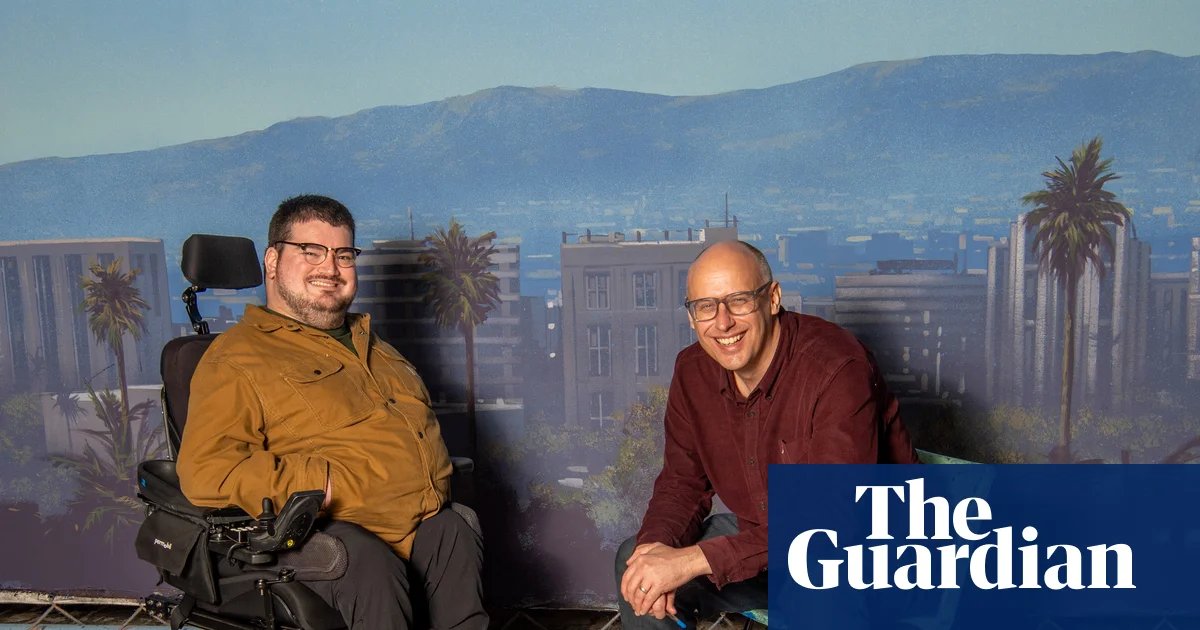
For a long time, physically disabled students who dreamed of studying at the UK’s most prestigious film and TV production school had nowhere to stay in the local area. And when they commuted, they would encounter hundreds of inaccessible areas on campus.
In an industry where just 12% of TV employees are disabled, compared with 18% in the labour market as a whole, something had to change.
To remedy this, from 2027, the National Film and Television School will offer nine new fully accessible rooms, enabling physically disabled students to live and study on its Buckinghamshire campus for the first time, with their living costs fully covered.
Hamish Thompson, NFTS disability advocate, said the new rooms and bursary would be “massively transformative” for disabled people.
“Often disabled people are having to choose between studying at a world class institution like this or not studying at all,” he said. “That talent then gets wasted. This will open a huge amount of doors for disabled people into an industry that has traditionally not welcomed them.”
A recent accessibility audit of the campus revealed 200 inaccessible areas of the historic site, the former home of Beaconsfield Film Studios. By the time the new building opens in 2027, the NFTS will bring this number down to zero.
According to Thompson, most discussion of disabled representation focuses on the more visible on-screen roles rather than behind-the-camera positions, which the school specialises in training students for. “Making disabled art is important as well,” he said.
He felt that although there was a willingness to improve representation in the industry, it “has always seen access as a cost issue”. But he praised targeted programmes such as BBC’s Extend, which ringfences job opportunities for disabled people, as well as the rise of access coordinator roles to advise on accessibility and adjustments – their work visible, for example, in Strictly Come Dancing’s embrace of disabled performers – and the TV Access Project’s commitment to achieve full inclusion by 2030.
The NFTS has recognised the need for radical change since the Adolescence writer Jack Thorne made an excoriating attack on the industry’s track record on inclusion in his 2021 McTaggart lecture at the Edinburgh TV awards. He described disability as the “forgotten diversity”, and argued that disabled people were being failed.
Thorne told the Guardian that since his call to arms, “the improvement has been vast thanks to the generosity of the broadcast sector”, noting that Diamond data, which tracks disabled representation, was going up, while “importantly, disabled writers like Kyla Harris and Billy Mager are telling their stories with disabled talent at the core”.
Though he added: “We still are nowhere near representative. Spaces need to change everywhere – and attitudes too. We want full inclusion by 2030, we hope it’ll happen.”
Noting that the NFTS was “leading the way for what inclusion should look like” in industry training, he said: “It’s a numbers game. The industry is way behind in representation; the more the NFTS brings through, the more likely the industry can get close to parity.”
Since Thorne’s lecture, the school has stepped up efforts to improve its offer for future TV and film staff with disabilities. This has already filtered in to an improved intake, from 15% of MA entrants having a disability in 2021 to 26% in 2025, and 18% to 28% of diploma students.
The accommodation is located in the school’s new Cubby Broccoli Building, named after the late James Bond producer Albert R “Cubby” Broccoli, which will increase its footprint by a quarter when it opens to students in January 2027.
The building, bursaries and a new apprenticeship programme targeted at people from low socioeconomic backgrounds are underpinned by £10m in government funding alongside match-funded private investment.
The culture secretary, Lisa Nandy, said the government’s investment was intended to reflect the fact that “talent is everywhere in this country, opportunity is not”, and that the UK could only “remain a creative powerhouse” by addressing this.
Jon Wardle, NFTS director, said investing in diverse talent was also important because the school receives funding from industry to “find people and de-risk them, because the truth about film and TV is it’s incredibly expensive to make”.
He said the NFTS already “outstrips the industry” on inclusion and diversity, with 33% of its graduates from underrepresented backgrounds, more than double the rate in the industry, which remains “horribly London-centric, middle class”. He hopes to expand the school’s presence in Scotland and Leeds soon.
“I think there’s a definite commitment, but when things get tougher and there are fewer commissions, it can sometimes fall down the list of priorities. But the partners I work with, I definitely see their desire to find great, diverse talent wherever you might come from.”