dailynewsnblog
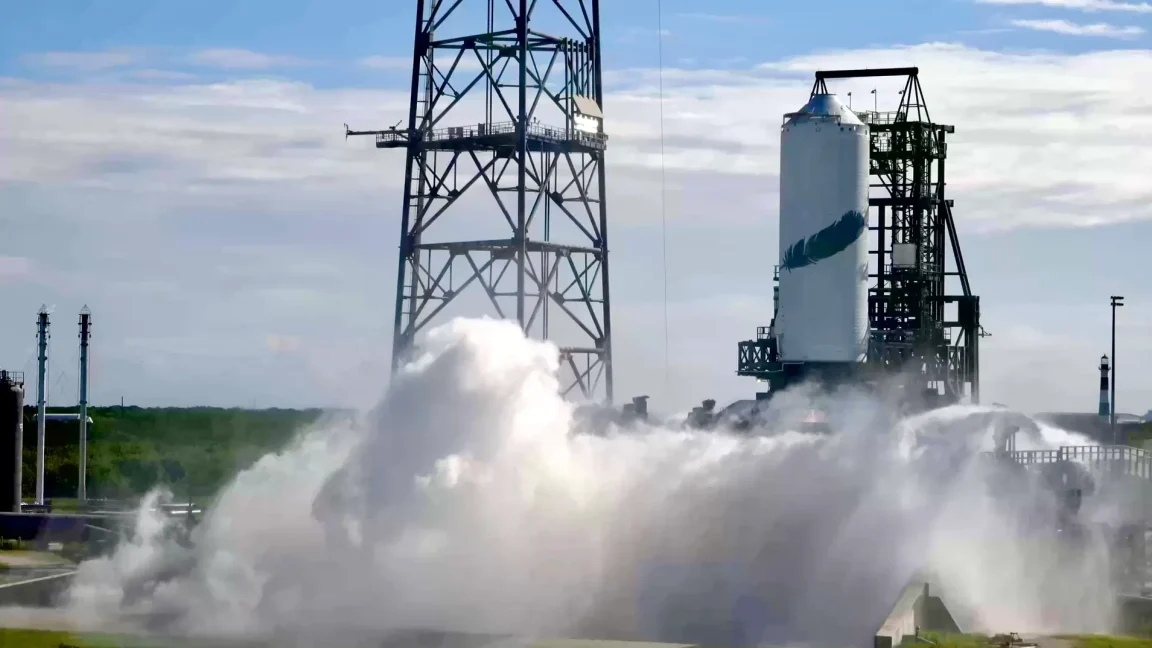
Engineers at Blue Origin have been grappling with a seemingly eternal debate that involves the New Glenn rocket and the economics of flying it.
The debate goes back at least 15 years, to the early discussions around the design of the heavy lift rocket. The first stage, of course, would be fully reusable. But what about the upper stage of New Glenn, powered by two large BE-3U engines?
Around the same time, in the early 2010s, SpaceX was also trading the economics of reusing the second stage of its Falcon 9 rocket. Eventually SpaceX founder Elon Musk abandoned his goal of a fully reusable Falcon 9, choosing instead to recover payload fairings and push down manufacturing costs of the upper stage as much as possible. This strategy worked, as SpaceX has lowered its internal launch costs of a Falcon 9, even with a new second stage, to about $15 million. The company is now focused on making the larger Starship rocket fully reusable.
New Glenn is quite a bit larger than the Falcon 9 vehicle, 98 meters in height compared to 70 meters, and with a 7-meter diameter compared to the Falcon 9’s 3.7 meters; but it is also smaller than Starship. Accordingly Blue Origin has struggled with whether to reuse the New Glenn upper stage or to seek to ruthlessly cut its manufacturing costs.
Ebbs and flows of the debate
Over the years, this internal debate has waxed and waned.
A little more than five years ago, Blue Origin kicked off a project to develop a reusable stainless-steel upper stage known as “Project Jarvis.” This initiative was later abandoned. In the run-up to the first launch of New Glenn in early 2025, both the company’s founder, Jeff Bezos, and CEO, Dave Limp, told Ars in an interview that they were continuing to trade the options on New Glenn’s upper stage, known as GS2.
However, a new job posting suggests the debate may be swinging back toward reusing GS2. The job, for a director of “Reusable Upper Stage Development,” was posted Thursday by the company.