dailynewsnblog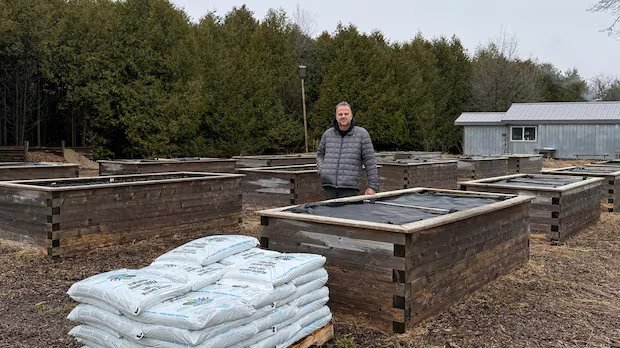

Listen to this article
Estimated 5 minutes
The audio version of this article is generated by AI-based technology. Mispronunciations can occur. We are working with our partners to continually review and improve the results.
A law in the Income Tax Act aims to keep family farms running, but some farmers in southern Ontario say that times have changed and the law needs to change too.
When a farm has a change of ownership, the new owner has to declare the farm as a capital gain and pay taxes for it as part of their income taxes.
Steve Cooper is a cattle farmer in Uxbridge, Ont. He says that these capital gains tax bills have a massive impact, especially when the farm is switching ownership within the family.
“You could be into tax bills into the millions of dollars just to keep farming the same way you’ve been farming without any real change of operations,” Cooper said. “What 25 to 30-year-old farmer is gonna have $1 million kicking around to keep the same operation going?”
As per the Income Tax Act, when farms are passed down from owner to their child, the child is able to defer paying capital gains tax on the inherited business, as long as they keep using the property as a farm. However, nieces and nephews are not eligible to receive this tax deferral when they inherit their family farms.

Cooper and other farmers across the country are pushing the federal government to change the law to broaden the criteria for the deferral to include nieces and nephews, since farming succession lines have extended beyond just immediate family.
A shrinking pool of farmers
Around 57,000 farms have closed, or were consolidated, from 2001 to 2021, according to a 2024 report from the National Farmers Union. That’s a 23 per cent decrease in two decades.
Derryn Shrosbree is a vegetable farmer in Mount Forest, Ont. He’s travelled the country advocating for the amendment because he believes this small change can make a big difference. He says Canada is losing nearly 3,000 farms a year due to “outdated tax rules.”
“You drive through villages in southwestern Ontario, some of [the farms] are boarded shut because folks are leaving the agricultural sector, which is avoidable if we could add nieces and nephews to Section 73(3) of the [Income] Tax Act,” Shrosbree told CBC K-W’s The Morning Edition host Craig Norris.
He says the farming landscape has evolved since people are having fewer children nowadays.
“The pool of people that want to or are available for farming has shrunk,” Shrosbree said.
It’s common that family farms are staffed by and being passed down to nieces and nephews who want to take up the mantle, says Shrosbree. However, he says the financial impact of the tax bill is crippling new farm owners before they even get started.

It’s becoming increasingly expensive to be a farmer in Canada. On top of tax challenges, farmers have been facing higher prices for fertilizer and diesel this spring, due to recent conflicts in the Middle East.
“Margins are razor thin already,” Shrosbree said, adding if this continues fall harvest will be “extremely difficult” and “very expensive.”
After being asked about possible amendments to the Income Tax Act, a spokesperson from the federal finance department wrote in a statement to CBC News that “while the government continually reviews tax rules to make sure they continue to be fair and appropriate,” they cannot comment on any prospective law changes.
The spokesperson added that the department has programs to help ease tax burdens, including the Lifetime Capital Gains Exemption tax provision that can be used to deduct up to $1.25 million off of capital gains tax, per taxpayer, on farms and other qualifying businesses. It can be used when buying farm land or transferring it from owner to their niece or nephew.
The family business
Cooper’s family farm could be facing this tax issue in the next 10 to 15 years.
Cooper runs a cattle, vegetable and fruit farm in Uxbridge and co-owns of his retired parents’ farm. His sister is the other co-owner, but she isn’t interested in running the farm.
Her son, Cooper’s nephew, is 14-years-old and too young to make any long-term career decisions. But, if he ever wanted to take over his family farm he would be slammed with a hefty income tax bill depending on the market value of the farm.

He wouldn’t be eligible to defer the tax bill, since his mother doesn’t actively work on the farm and he isn’t Cooper’s child.
“If it’s a niece or nephew that stepped into a role of leadership and is gonna be running the farm, why shouldn’t they get the same benefit as a son or a daughter?” Cooper said.
Despite the challenges facing farmers in Canada, Shrosbree has high hopes for the future. He is even inviting 100 farmers and young people to his own farm in May to “inspire this activity and this connection” among young farmers.
He says the Income Tax Act amendment is crucial for allowing family farms to be passed down through generations and the overall continuation of a resilient agricultural landscape in Canada.
“Canada was built on the back of agriculture,” Shrosbree said. “We’re a farming nation and we believe that the fabric of Canadian society is stronger for having good farmers and good rural communities.”