dailynewsnblog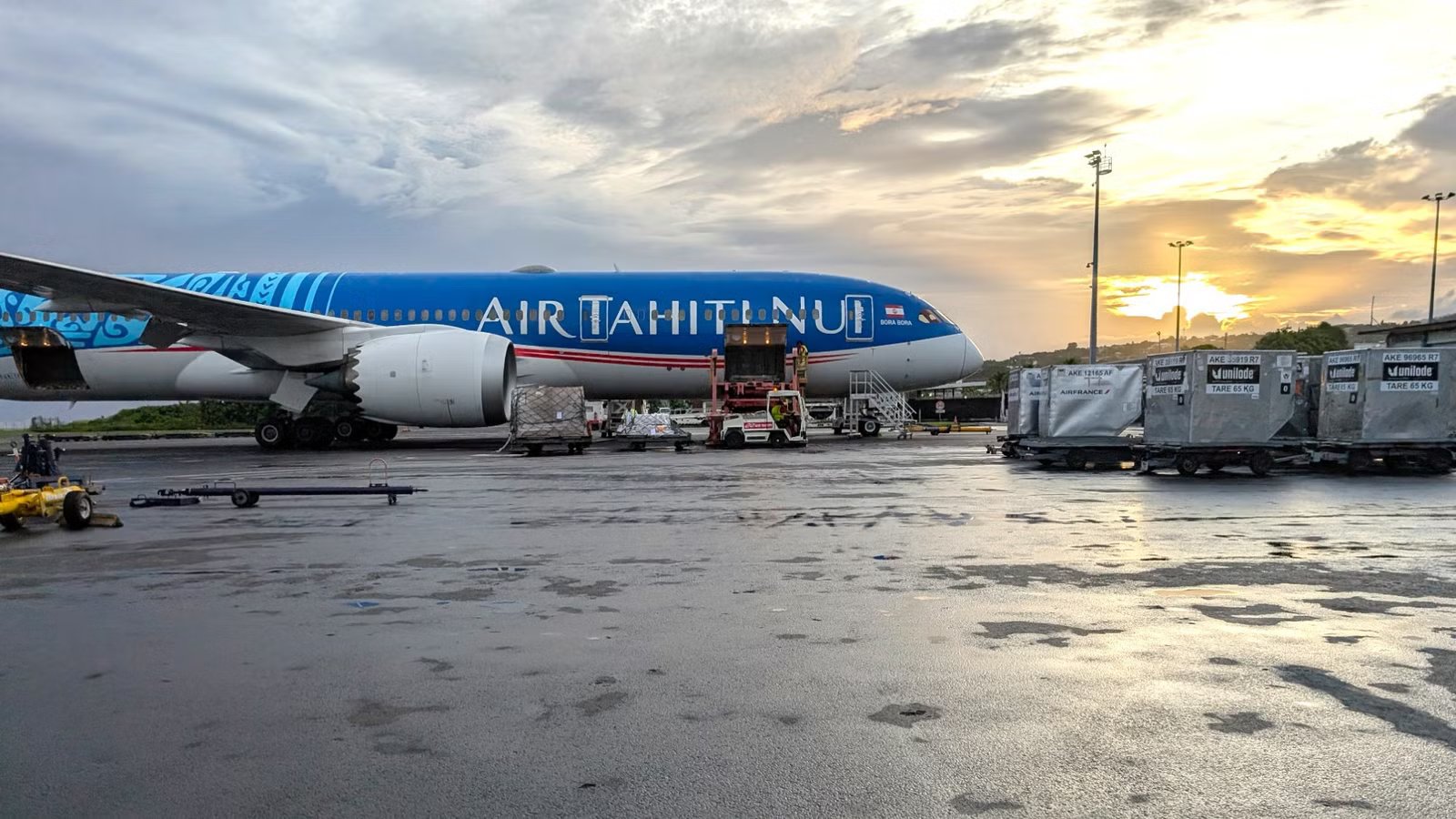
Air Tahiti Nui has announced its plans to restart its flights to Sydney Kingsford Smith Airport (SYD) in Australia after an operational hiatus that has lasted some 17 years. Using  Boeing 787-9 Dreamliner widebody twinjet aircraft, the carrier will fly to Sydney twice a week from its main hub in Papeete (PPT).
This international expansion will strengthen Air Taihiti Nui’s international presence in Oceania, with the carrier already also flying twice a week from Faaʼa International Airport to Auckland Airport (AKL) in New Zealand. Let’s take a closer look at the details behind the relaunch, and what guests can expect onboard.
Welcome Back

As confirmed yesterday in a corresponding statement released by the carrier, Air Tahiti Nui will begin flying from Papeete to Sydney once again on Monday, December 14. The outbound service, which will also depart on Thursdays, takes off at 12:10 pm local time, arriving in Sydney at 5:45 pm the next day from December 14 to March 25 and 5:00 pm the next day from March 29 to October 28. This switch aligns with the IATA summer season.
Meanwhile, the return leg will depart from Sydney Kingsford Smith Airport at 8:10 pm in the IATA winter season and 7:10 pm in the summer, with these services respectively arriving in Papeete at 6:25 am and 6:05 am. Their arrival will take place on the same day as their departure, with the service going ‘back in time’ thanks to crossing the International Date Line. Lionel Guérin, who is the Chief Executive Officer of Air Tahiti Nui, explained that:
“With two direct flights per week and our codeshare agreement with Qantas, this service offers Australian travelers greater comfort and additional frequencies, complementing our twice-weekly service to Auckland, New Zealand.“
What’s It Like On Board?

As previously mentioned, Air Tahiti Nui will use the Boeing 787-9 Dreamliner to serve its relaunched route from Papeete to Sydney. According to present fleet data made available by ch-aviation, the carrier has four examples of the widebody twinjet at its disposal with an average age of seven years old. The Boeing 787-9 is the only aircraft that Air Tahiti Nui currently flies, with the carrier having previously used the Airbus A340-200 and -300.
Data from aeroLOPA shows that Air Tahiti Nui configures its Boeing 787-9 Dreamliner aircraft in a three-class configuration that has space for a grand total of 294 passengers on board. As seen above, the best seats in the house are the jet’s 30 ‘Poevara’ business class flatbeds, which are laid out six-abreast in an angled and staggered 2-2-2 configuration. Unlike many business class flatbeds, these have the benefit of facing towards the window.
Passengers looking for a bit of extra luxury and space without the business class price tag will find a good compromise in Air Tahiti Nui’s ‘Moana’ premium economy cabin, which, on the Boeing 787-9 Dreamliner, consists of 32 recliners in a seven-abreast 2-3-2 configuration. Meanwhile, the bulk of the jet’s capacity is dedicated to accommodating ‘Moana’ economy class passengers, with 232 seats in the classic nine-abreast 3-3-3 layout.

Air Tahiti Nui Hosts Historic Onboard Vow Renewal Ceremony For A Californian Couple
Kris Perry and Sandy Stier celebrated both their 10th anniversary and the re-legalization of same-sex marriage in the state.
Air Tahiti Nui’s Previous Sydney Flights Used Quadjets

According to Aero Routes, Air Tahiti Nui last flew from its main hub at Faaʼa International Airport in Papeete to Sydney Kingsford Smith Airport some 17 years ago, back in 2009. Historical scheduling data made available by Cirium, an aviation analytics company, shows that the Airbus A340-300 was the French Polynesian flag carrier’s aircraft of choice on this route at the time, with nine round trips on the route scheduled in January of that year.
This figure then fell to four round trips apiece in February and March of 2009, with operations ending in April with a single round trip on the route. According to Seat Maestro, Air Tahiti Nui configured its Airbus A340-300s in a two-class layout that had space for a grand total of 296 passengers on board, with this figure split between 32 business class seats and 264 in economy class. The last of these quadjet aircraft left its fleet back in 2019.