dailynewsnblog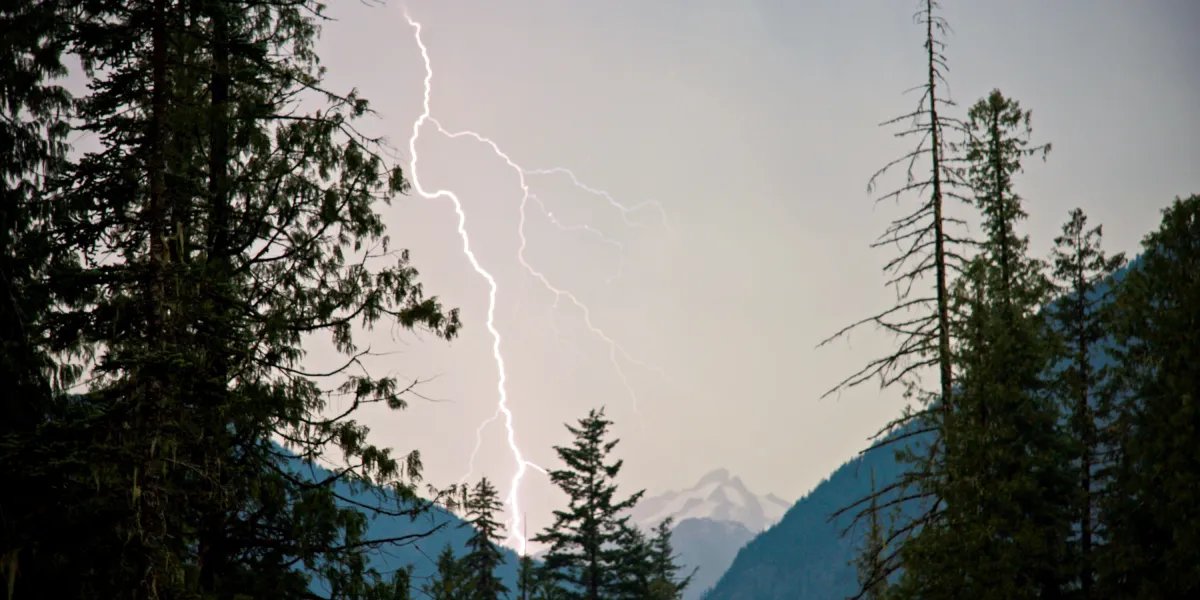
Skyward’s diagrams show planes dropping particles into clouds to prevent cloud-to-ground lightning strikes in “high risk areas.” The company also notes in the document that it uses artificial intelligence for a number of purposes, including forecasting lightning storms, prioritizing treatments, targeting storm cells, and optimizing flight paths.
Harterre stressed that the company would deploy the technology judiciously and reserve it for storm events with elevated wildfire risk, adding that such storms account for less than 0.1% of lightning activity in a given area.
“Our objective is to reduce the probability of ignition on the limited number of extreme-risk days when fires threaten lives, critical infrastructure, and ecosystems, and when suppression costs and impacts can escalate rapidly,” he said.
The document posted by the World Bank states that Skyward partnered with Alberta Wildfire in August of 2024 to “prove suppression by plane and drone,” and that its process produced a “60-100% reduction” in lightning compared with “control cells” (which likely means storm cells that weren’t seeded).
The document added that the company would be carrying out additional field trials in the summer of 2025 with the wildfire agencies in British Columbia and Alberta to “provide landscape level solutions with more advanced aircraft, sensors and forecasting.”
“BC Wildfire Service is aware that Skyward is developing technology that aims to reduce instances of lightning in targeted situations,” the British Columbia agency acknowledged in a statement provided to MIT Technology Review. “Last year, preliminary trials were conducted by Skyward to gain a better understand [sic] of the technology and its applicability in B.C. Should a project/technology like this move forward in B.C., we would engage with the project team in an effort to learn and ensure we’re using every tool available to us to respond to wildfire in B.C.”
The BC agency declined to make anyone available for an interview and didn’t respond to questions about what materials were used, where the tests were carried out, or whether it provided public disclosures or required the company to. Alberta Wildfire didn’t respond to similar questions from MIT Technology Review.
Rising lightning risks
Clouds are just water in various forms—vapor, droplets, and ice crystals, condensed enough to form the floating Rorschach tests we see in the sky. Within them, snowflakes and tiny ice pellets known as graupel rub together, causing atoms to trade electrons. This process creates highly reactive ions with negative and positive charges.
Updrafts separate the light snowflakes from the graupel, building up larger differences in the charges across the electrical field until … crack! An electrostatic discharge occurs in the form of a lightning strike.