dailynewsnblog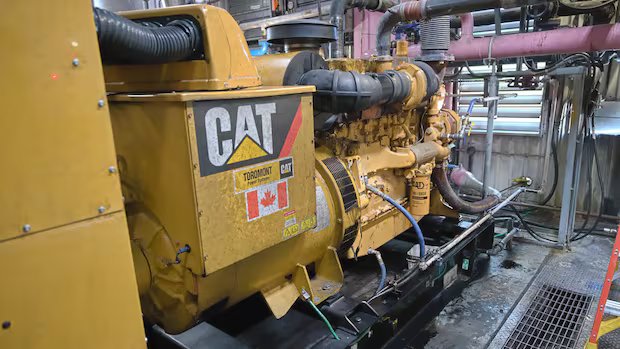

Listen to this article
Estimated 4 minutes
The audio version of this article is generated by AI-based technology. Mispronunciations can occur. We are working with our partners to continually review and improve the results.
After dealing with a week of intermittent power outages last month, Nibinamik First Nation is having problems with its diesel generating system again.
The remote Oji-Cree community, also known as Summer Beaver, is located about 500 kilometres north of Thunder Bay, Ont. About 400 people live there, according to Chief Stanley Oskineegish, and the population is growing.
A series of power outages throughout February resulted in pipes freezing in about 30 per cent of the First Nation’s homes.
On Wednesday, workers discovered the community’s main generator — a Caterpillar C27 — had experienced a mechanical failure.
“The C27 experienced a failure where bolts sheared off at the flywheel, causing damage and forcing the unit offline. This is being treated as a warranty issue. Toromont is actively sourcing the required parts, and repairs are expected to take about two weeks, depending on parts availability,” the First Nation said in a statement on Wednesday.
“Currently, the community is operating on one generator, which is stable and carrying the current load. However, as a precaution, all residents are asked to limit power usage in their homes until further notice. This will help maintain a steady and reliable power supply for everyone.”
Nibinamik has four generators in total. Now that its newer C27 is out of service, it’s using its older C27 generator to power the community and a smaller C15 as a back-up, explained band councillor Walter Oskineegish.
Community members are also working on repairs to a C18 generator; its radiator may need to be sent out for repairs.
Chief Walter Oskineegish says the First Nation desperately needs more reliable equipment, but time is running out to transport it on the seasonal winter road before spring.
Superior Morning8:36Sol Mamakwa: Nibinamik Power Failures
Kiiwetinoong MPP Sol Mamakwa is calling on the provincial and federal governments to take action in the wake of a power outage that left Nibinamik First Nation in the dark for five days.Hear more about his recent visit to the community.
“I only have a window of maybe one week, two weeks kind of thing if I need to bring in something that’s heavy to help us power our community, and it’s going so fast,” he told CBC News on Friday.
“That’s my hope, is to have something that I can rely on.”
CBC News reached out to Indigenous Services Canada for comment on support being provided to the community and received an emailed statement on Friday.
“Indigenous Services Canada (ISC) is aware of the challenges affecting Nibinamik First Nation in relation to power generation. ISC met regularly with the First Nation and partners to provide immediate supports such as generators, food, water and other supplies as requested by the community,” said spokesperson Jacinthe Goulet.
“We have been in discussions with the community about additional repair and recovery efforts, and the supports available for these efforts through ISC programming.”
Nibinamik declared a state of emergency on Feb. 20 when the power went out. Meanwhile, a pre-existing state of emergency from 2020 over ongoing issues with the community’s diesel generating system also remains in place.
Strain on appliances, people with medical conditions
Water pipes in between 70 and 80 per cent of the First Nation’s homes have been recovered since last month’s outages, Chief Oskineegish said.
However, with a lack of reliable back-up power available, he said he’s worried about some of the community’s most vulnerable while repairs are underway.
“We have people on oxygen in our community and we have people [who use] medical beds,” he said.

The intermittent outages have also taken a big toll on people’s appliances, such as stoves, washers and dryers, which are experiencing surges.
Personally, the chief has had to replace his washer and dryer three times in a span of two years — and he’s seeing appliances begin to pile up at the landfill.
He also worries about the risk of house fires, and said not all homes in the First Nation have working smoke detectors.
“That’s what my community is experiencing with this,” Chief Oskineegish said.
As repairs on the generators continue, the First Nation says it’s doing what it can to provide essential services to its members.
“This includes arranging temporary rental units to support key buildings such as the school, band office, administration office, and store, if needed. Source out a back-up generator for the Power Plant and expedite it to the community, if needed,” says Nibinamik’s statement from Wednesday.
“We will continue to monitor the situation closely and provide updates as work progresses.”