dailynewsnblog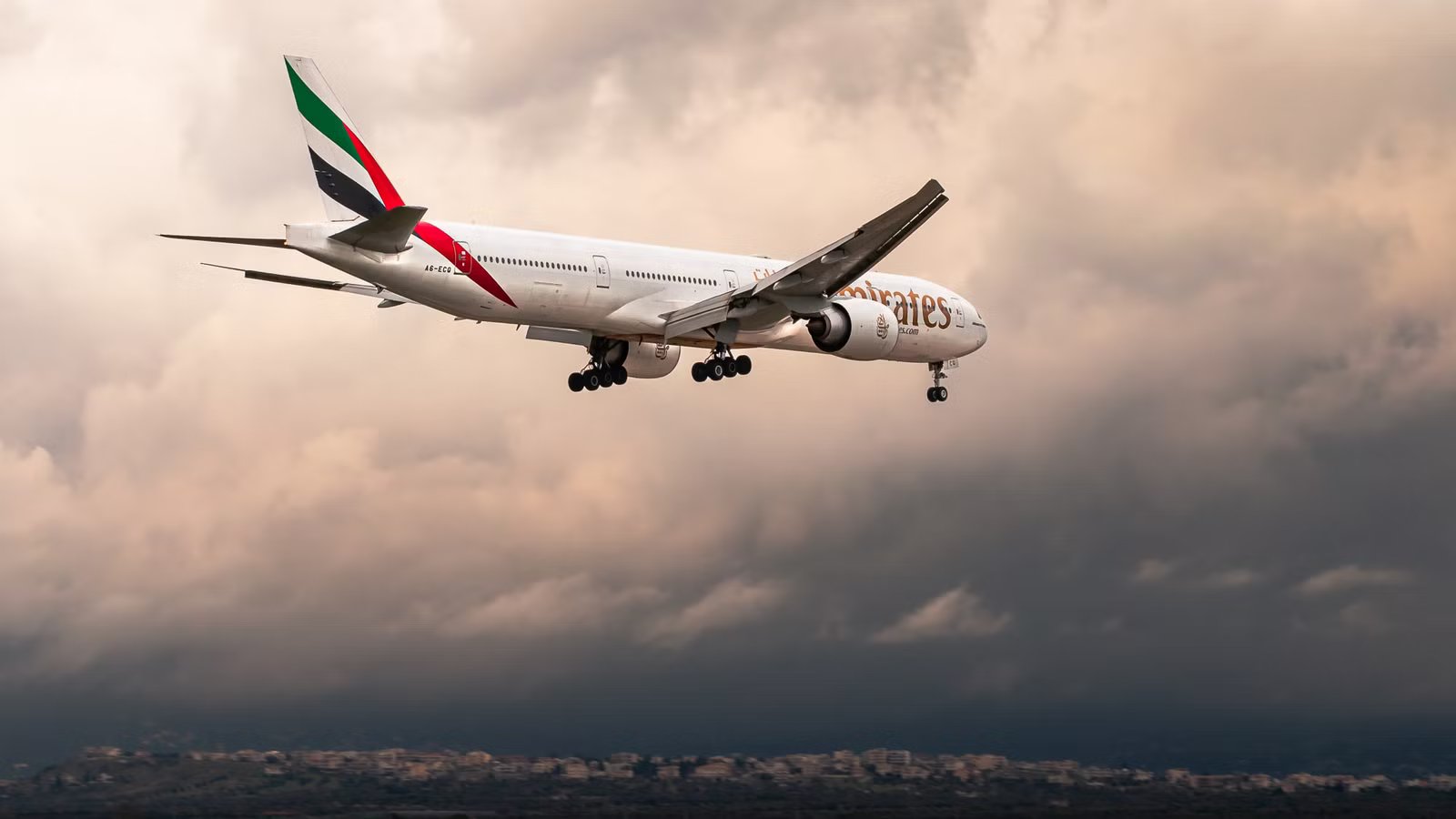
For those who love flying on commercial jets, there’s something exhilarating when the aircraft makes the turn from the taxiway onto the runway just before takeoff. The roar of the engines as the pilot in command adds power to begin the takeoff roll and gives each passenger a good sense of how much power is needed to successfully get off the ground.
The Boeing 777-300ER (extended range) is the largest variant in the 777 family, and given that it flies on just two engines, it takes an enormous amount of power from each to get a fully loaded and fueled aircraft weighing as much as 775,000 pounds (351,534 kg) airborne. Let’s take a close look at the amazing General Electric power plants that were designed specifically for the 777 extended range (ER) models.
The Most Powerful Commercial Jet Engine In The World

When it was announced that the GE90-115B engine would be the sole engine offered for 777-300ER customers, it was also the most powerful commercial jet engine in the world with 115,000 pounds of maximum thrust. Comparatively, it takes four 75,000-pound maximum thrust engines to power the quad-engine A380, a much larger and heavier aircraft. Putting this in perspective, each General Electric engine on the twin-engine 777-300ER provides 35 percent more power than a single A380 engine.
According to GE Aerospace, the reliability rate of the GE90-115B is an astounding 99.98 percent. Specifications of the engine include a fan diameter of 135 inches (11 feet, three inches), an overall length of 287 inches (23 feet, 11 inches), a pressure ratio of 42:1, a bypass ratio of 9:1, certified pound-force thrust of 115,000 (it has performed at higher levels during testing), and a dry weight of 18,260 pounds. The fan blade material is composed of carbon fiber and a strengthened epoxy matrix. The 115B engine is classified as a dual rotor, axial flow, high bypass turbofan model.
In 2013, General Electric was chosen to provide GE9X engines with 134,000 pounds of maximum thrust for the next generation of 777 aircraft, the 777-8 and 777-9. Boeing has received more than 550 orders for the aircraft, but has yet to begin production due to a multitude of FAA certification issues.
For three decades, General Electric turbofan engines have powered the Boeing 777, initially for British Airways when the 777-200 began flying commercially in 1995. While there were three engine manufacturers for earlier versions of the aircraft — General Electric, Rolls-Royce, and Pratt & Whitney — GE has always been the sole provider of engines for the 777-200LR (long range), 777 Freighter, and the 777-300ER. The GE90-115B engine was designed specifically for these aircraft and is a central focus of this article. For a close-up look at the differences between the 777-200LR and 777-200ER models, Simple Flying published a detailed comparison in 2022.
How Does The Power Of The 777-300ER Engine Compare With Those On The Titanic?

So, how does a single Boeing 777 engine (GE90-115B) deliver more than twice the horsepower of the engines on the Titanic? Let’s take a closer look.
When the Titanic departed Southampton, England for New York on April 10, 1912, on its maiden voyage, which also turned out to be its only sailing as the ship sank on April 12, it was powered by two 15,000-horsepower (hp) engines plus one 15,000-hp steam turbine which produced 16,000 hp, for a total of 46,000 hp.
Comparatively, just one GE90-115B jet engine produces 115,540 LBF (pounds of force/thrust), the most common unit of thrust measurement in the U.S. Customary and Imperial systems. Also consider that it would take 135 fully loaded 777-300 aircraft to equal the weight of the Titanic, so the amount of weight that the steam engines had to move through water, much of it being the coal carried aboard the ship to fuel the engines, was far more than that required for a Boeing 777 to fly.
A chief technology officer who chimed in with his expert opinion in an online post says that the biggest advantage of the 777 engines is how fast the engine is moving through the air. Describing the jet engines as massive scoops, he explains that the faster the aircraft moves, the more air there is available for the fuel to burn. While there is a limit for each engine, the general rule of thumb is, as the engine increases speed, the horsepower will increase accordingly.
Accordingly, the drag produced by the massively heavy Titanic was far more than aircraft being produced more than 100 years later. Advances in aerodynamic knowledge and design have made attaining much faster and more fuel-efficient speeds possible.
These Airlines Fly The 777-300ER

Seeking longer range, increased seating capacity, and improved fuel efficiency, the 777-300ER has proved to be an ideal aircraft for many airlines that offer long-haul services. Those with the current largest fleets of the model include: Emirates, 124; Qatar, 53; Air France, 43; Turkish, 36; Cathay Pacific, 35; Saudia, 35; Air China, 28; Korean Air, 25; United, 22; Singapore, 22; American, 20; Aeroflot, 20 (Boeing no longer offers mechanical support for Aeroflot due to the invasion of Ukraine); Air Canada, 19; KLM, 16; Lufthansa (12 freighters). For the last few years, airlines have been retiring their older 777-200 models, which don’t offer the fuel-saving, range, and size enhancements that were added to the -300 models.
Not to be outdone, Airbus offers an array of wide-bodied long-range models designed to compete with Boeing’s 777 options. Direct competitors over the years have included the Airbus A340, a four-engine aircraft with eight-abreast seating. The A340-600 was a slightly longer version with increased seating capacity and range, but its inferior fuel efficiency versus twin-engine wide-bodies led to its demise. For this reason, the A340 is no longer produced.
The Airbus A350-1000 is a direct competitor when airlines are looking to add to their fleet. Both are very popular due to their twin-engine design, which enhances fuel efficiency. While the 777-300ER is larger and able to carry more passengers, the A350 is more fuel-efficient due to its lighter weight. It also has a longer range than the -300ER. The final decision usually comes down to the route requirements of each airline, and financial incentives are often negotiated between the airline and manufacturer. The 777, with its wider cabin and seats, is considered by many to be more spacious with a more comfortable interior.
The Boeing 777-300ER Offers More Seats And Longer Range

Designed as a replacement for the Boeing 767 with seven-abreast economy seating, 2-3-2, and the Boeing 747 with 10-abreast economy seating, 3-4-3, the Boeing 777 also offers 10-abreast economy seating. The -300ER version of the aircraft stretches the 777-200 fuselage by 20 percent, adding 60 economy-class seats in a three-class cabin. This allows for a total of 368 passengers on the aircraft. For airlines operating a two-class cabin with business/first and economy cabins, the -300ER can accommodate 451 passengers, and in an all-economy configuration, the aircraft holds as many as 550 passengers.
The 777-200 was a hugely popular aircraft when it was introduced, but the range and passenger capacity were limited. Numerous airlines required a larger version from Boeing that could fly longer stage lengths with more passengers, while simultaneously reducing the fuel burn per seat mile. To the rescue came the 777-300ER, which serves the purposes of many airlines flying historically long routes.
The extended-range variant of the 777 increased the aircraft’s range from 6,030 to 9,840 air miles (9,700 to 15,840 km). The aircraft was Boeing’s first fly-by-wire model, though pilot yokes were still utilized, and the carbon composite materials incorporated into the manufacturing process helped to increase fuel efficiency. Of course, none of these improvements would be possible without the GE90-115B engines.
Superb Safety Record Over Millions of Flights
Everyone agrees that every aircraft accident is one too many, but with each mode of transportation carrying some degree of risk, travel by commercial jet remains the safest way to see the world. Airlines are required to adhere to the strictest safety regulations, with highly trained pilots and technology that is always improving, making air travel exceptionally safe.
The Boeing 777-300ER has a spotless fatality record, an amazing accomplishment, with 833 of the aircraft being produced. The only other widebodies with zero fatal accidents are the Airbus A340 and Airbus A380, and the Boeing 787. Production of the variant ceased in 2021 as the company moved its future focus to the 777X program. As the top-selling wide-bodied family of aircraft in history, Boeing has delivered a total of 1,760 of the multiple variants to more than 70 airlines worldwide, with Emirates currently having 148 of the aircraft in its fleet.
There have been a handful of incidents with the 777-300ER, but none have caused fatalities. In 2016, Singapore Airlines flight 368 reported an engine fire while at Singapore Changi Airport. There were no injuries, and the aircraft returned safely to the airport. Also in 2016, an Emirates 777-300ER, flight 521, encountered a runway excursion where the other aircraft involved were destroyed. Again, there were no deaths among the passengers onboard. Eight years later, in 2024, one passenger was killed during severe turbulence experienced by Singapore Airlines flight 321 while passing over Myanmar. Another 144 passengers and crew were injured when the aircraft diverted and landed safely. Lastly, earlier this year, Air India flight 187 had a brief, but sudden loss of altitude, which triggered stall warnings and alerts from the aircraft’s Ground Proximity Warning System. There were no injuries and the flight landed safely.
The first Boeing 777-200 was delivered to  United Airlines in June 1995, with the 777-300ER beginning commercial service with Air France in 2004. The multiple variants of the aircraft have amassed 16 million flights to-date, having flown over four billion miles.
Earlier versions of the 777 have been involved in 31 accidents and incidents in thirty years, giving the aircraft an overall accident rate of 0.12 per million departures. Unfortunately, 542 people have lost their lives in these mishaps. There were eight total hull losses, including five during flight operations. The 777’s overall safety rating is comparable to the Airbus A330 and Boeing 767.
A Long And Powerful Success Story

The Boeing 777-300ER, along with its GE90-115B engines, has been an aviation success story for more than 20 years. Providing excellent passenger comfort, exceptional range, outstanding reliability, and superior fuel efficiency over past models, this version of the 777 will long be considered a rousing success for Boeing, General Electric, and the many millions of passengers who have traveled on it worldwide.