dailynewsnblog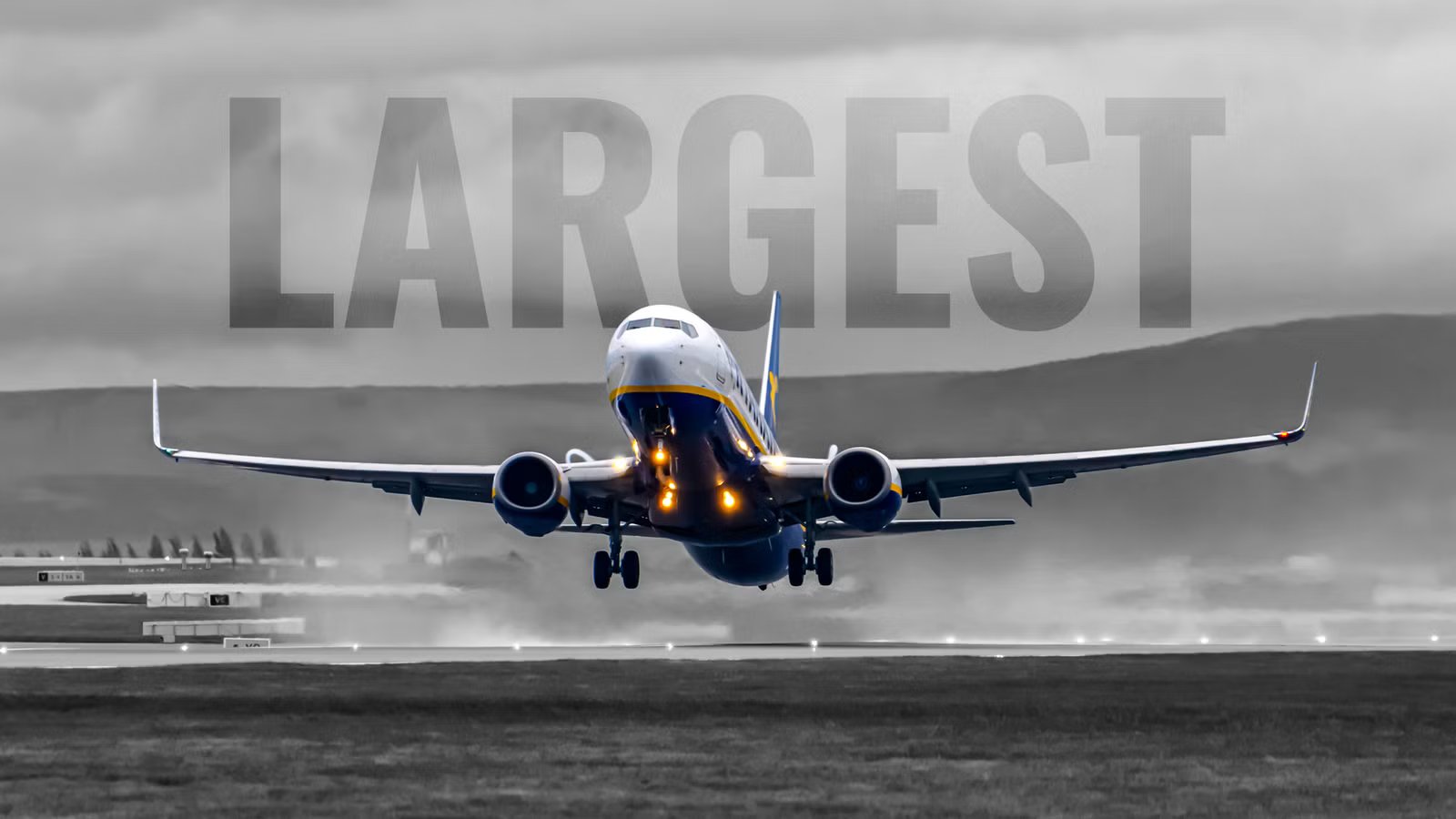
Ryanair has become one of the most recognizable names in European aviation, defined by its sheer scale as much as its low-fare reputation. Today, the airline operates across 36 countries, serves 224 airports, and runs roughly 3,600 flights each day. Few carriers in the world move as many passengers on short-haul routes with such frequency. At the core of Ryanair’s operation is a simple, cost-focused strategy.
By flying a largely standardized fleet, maintaining high aircraft utilization, and relying on a point-to-point network, the airline keeps operating expenses to a minimum. These efficiencies allow Ryanair to consistently offer some of the lowest base fares in Europe while sustaining high volumes. Despite its size, Ryanair remains highly flexible. Aircraft are constantly redeployed as taxes, airport fees, and market conditions change, ensuring capacity is directed toward the most profitable routes. Looking at how Ryanair structures its fleet and network provides a clear picture of how Europe’s largest low-cost carrier continues to compete at scale.
All About Ryanair

Although many readers may be familiar with the airline, Ryanair is one of the largest low-cost carriers in Europe. The airline has built its reputation on offering extremely low base fares while serving hundreds of routes across the continent. Its scale and frequency make it a dominant player in short-haul European travel.
Ryanair operates a point-to-point network rather than a traditional hub-and-spoke system. The airline flies a highly standardized fleet of Boeing 737 aircraft, which simplifies training, maintenance, and scheduling. Its cabins are configured entirely for economy seating, maximizing capacity and keeping unit costs low.
At the core of Ryanair’s business model is the combination of cheap tickets and extensive ancillary fees. The base fare is often minimal, while extras such as seat selection, priority boarding, and baggage generate a large share of revenue. This approach allows the airline to advertise some of the lowest fares in the market while maintaining strong profitability.
Ryanair And The Boeing 737

Ryanair took delivery of its first Boeing 737-800 on March 19, 1999, marking the beginning of a long and highly influential partnership with Boeing. According to ch-aviation, the airline operates a total of 396 Boeing 737-800 aircraft. Of those, 187 are active, 18 are currently inactive, and 191 are operated under wet lease arrangements, underscoring the scale and complexity of Ryanair’s fleet strategy.
A wet lease refers to an agreement where an aircraft is leased along with its crew, maintenance, and insurance, often abbreviated as ACMI. This structure allows airlines to quickly add capacity without having to recruit crews or manage additional operational infrastructure. By contrast, a dry lease involves only the aircraft itself, with the lessee responsible for staffing, maintenance, and insurance, which offers more control but requires greater internal resources.
Beyond the 737-800, Ryanair also operates the Boeing 737 MAX 8, which forms the backbone of its next-generation fleet. The airline has also placed a large order for 300 Boeing 737 MAX 10 aircraft, signaling its commitment to higher capacity and improved fuel efficiency. These newer models are central to Ryanair’s long-term plan to lower operating costs while continuing to grow across Europe.
“The 737’s unparalleled reliability and low operating economics have been instrumental in our ability to get passengers to their destinations on time and at the lowest possible fare, We couldn’t be more pleased with the airplane’s performance and its effect on our bottom line.” – CEO of Ryanair, Michael O’Leary

Do You Think That Ryanair Will Ever Fly To The United States?
European low-cost carrier Ryanair has used long-range narrowbody aircraft to its advantage as it looks to add longer and longer routes all over the globe. The carrier is known for its interest in capturing passenger traffic by undercutting its competitors. With dozens of long-haul airlines charging sky-high fares on routes across the North Atlantic, some might think that Ryanair could see a business opportunity in North Atlantic flying. However, it appears that the carrier is very uninterested in pursuing such a course of action, especially when one listens to the airline’s CEO. The routes in the North Atlantic are long and complex, and they require extra operational redundancy when they are operated by a low-cost carrier that chooses to just use narrowbody jets. But what do you think? Will Ryanair ever fly to the US?
Ryanair’s Longest And Most Frequent 737-800 Routes

Not surprisingly, the most frequent Ryanair Boeing 737-800 route is London Gatwick Airport to Dublin Airport, with 132 roundtrip flights scheduled in December 2025. Other high-density routes also exceed 100 roundtrips during the month, including Dublin to Manchester Airport, Catania to Rome, Madrid to Palma de Mallorca, and Rome to Palermo. These routes highlight how the 737-800 is used most intensively on dense intra-European city pairs with consistent year-round demand.
When looking at distance rather than frequency, the picture changes. Ryanair’s longest 737-800 is Tenerife to Warsaw, spanning 2,543 miles. This is followed by Berlin to Tenerife and Stockholm to Marrakesh, though several 737 MAX 8 routes exceed those distances. The longest MAX 8 flight in Ryanair’s network is Kraków to Tenerife, reflecting how the newer aircraft is increasingly used on stretched leisure routes.
Ryanair operates dozens of focus cities across Europe, but its single largest base remains London Stansted Airport. Stansted serves as the airline’s primary operational hub.
How Does Ryanair’s Fleet Compare To Other Low-Cost Carriers

Ryanair ranks second globally among low-cost carriers by total fleet size. The largest LCC remains  Southwest Airlines, which operates around 800 aircraft compared to Ryanair’s roughly 600. Like Ryanair, Southwest flies an all-Boeing 737 fleet, reinforcing how single-type strategies remain central to cost control at the top end of the low-cost sector.
Ryanair’s fleet is also relatively young by global standards. According to Planespotters.net, the airline’s average fleet age is about 10.5 years, slightly younger than Southwest’s 11.3 years. This narrow gap reflects how both carriers continuously refresh their fleets while still extracting long-term value from older aircraft.
Beyond the top two, other major low-cost carriers also operate at significant scale. IndiGo ranks third overall, driven by rapid growth in the Indian domestic market and a large Airbus A320 family fleet. easyJet follows in fourth place, with a smaller but still substantial fleet focused primarily on European routes.

You’ll Never Believe What Caused This Ryanair 737 MAX In-Flight Engine Shutdown
Pilots were able to restart the engine after the unusual chain of events.
Ryanair’s Recent Seat Cuts

Rising taxes and airport charges are prompting Ryanair to reassess where it deploys its aircraft. As costs increase at certain airports, the airline has shown a willingness to shift capacity toward routes and bases that offer stronger margins. This approach reflects Ryanair’s long-standing practice of treating aircraft as highly mobile assets rather than being tied to specific markets.
The airline has confirmed several concrete capacity reductions tied to these cost pressures. Ryanair will scale back operations at Brussels South Charleroi Airport, exit the Azores entirely, and cut hundreds of thousands of seats across Spain. These changes are set to take effect progressively through 2025 and 2026, reshaping parts of the carrier’s short-haul network.
Together, these moves underline how sensitive Ryanair is to changes in its cost base. Even relatively small increases in fees or taxes can quickly make certain routes unattractive under its low fare model. The airline’s readiness to reduce capacity or withdraw altogether reinforces just how tightly cost discipline is woven into its strategy. It has a history of not backing down in disputes with local authorities or regulators, often abruptly scrapping capacity in certain countries in protest of changing market conditions.
“The De Wever Govt has bizarrely decided to further increase Belgium’s already sky-high aviation tax by another +100% from Jan 2027, on top of the +150% in July last. As a result of this second tax hike in just 5 months, Ryanair has been forced to cut 22% of its Brussels traffic, 5 aircraft from our Charleroi base, and 20 routes for Winter 26/27.” – Ryanair’s Jason McGuinnes
How Ryanair Has Made Its Model Work

Ryanair has built its success around scale, simplicity, and relentless cost control. A standardized Boeing 737 fleet, dense short-haul routes, and a point-to-point network allow the airline to keep unit costs among the lowest in Europe. That structure gives Ryanair the flexibility to grow quickly when conditions are favorable and pull back just as fast when they are not.
The airline’s route network shows a clear divide between volume and range. High-frequency services on core European city pairs generate steady demand, while longer leisure routes stretch the capabilities of the 737 to reach markets that once required larger aircraft. Newer 737 MAX variants are playing an increasing role in supporting these longer flights while preserving operating efficiency.
Recent seat cuts reinforce a central theme in Ryanair’s strategy. When taxes or airport fees rise, the airline does not hesitate to redeploy aircraft to more profitable markets. This willingness to exit routes and even entire regions highlights how sensitive Ryanair is to cost, and why that discipline remains the foundation of its business model.