dailynewsnblog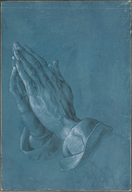

series looking at everyday things with
surprising royal connections. The last article
looked at the influence the French monarchy
had on the development of modern
strawberries. This article will look at how
feudalism altered how Christians pray to
God.
With Hands Outstretched
Bible prayed you’d probably be wrong. That is because people
across the Middle East in the period of the Old and New
Testament actually prayed in the orans position; elbows by
their sides, hands extended forward, palms up. This position
was considered the proper way to show humility before God.
References to praying in the orans position are common in
the Bible: Psalm 28:2, Psalm 143:6, 1 Timothy 2:8, and
Hebrews 12:12–13 to name a few. There is some evidence the
position was seen as a physical representation of a person’s
heart reaching out to God (Lamentations 3:41). The
comparisons to a small child wanting their parent to pick
them up make themselves.

their arms to extend more upwards and outwards until they
were in virtual imitation of Christ’s position on the cross.
But if the orans position had such a long history and rich
symbolism why did it diminish in favour of prayer with hands
together?
Fall of Rome and Rise of Feudalism
law had been present in western Europe for hundreds of
years. It was such a fact of life that even after the fall there
was an expectation that the empire would return from its
eastern redoubt. In the meantime, western Europe became
far more dangerous and unstable than it had been. What
remained of Roman law and social customs merged with the
traditions of newly-established barbarian nations. In those
dangerous times a man might seek the protection from a
stronger man who in turn asked for loyalty. This likely has
partial origin in the Roman client-patron relationships.
Regardless of its origins it gradually became a fact of life in
western Europe and various traditions developed. A man
wishing to enter into the protection of another (the vassal)
would typically get down on one knee with his hands together
in front of his face. This may have figuratively represented
being a captive, fully in the other man’s power (the lord). The
lord would place his hands over his vassals hands in
representation of his acceptance of the vassal as ‘his man’ and
confirming his protection. It was a more personal way of
organizing political relationships than the bureaucratic
Roman system and suited for a time when economic, travel,
and communication links were frayed.
When Charlemagne united western Europe under his reign
and restored some semblance of the unity that had once
existed feudalism was still in a formative stage. Charlemagne
would contribute to its development by standardizing the
ceremony of homage and required it to be done publicly. The
breakdown of his empire would lead to a more formal system
of feudalism throughout his formerly united realm.

Vassals of Christ
The peasantry slowly began to emulate the homage ceremony
when they prayed. How exactly this came about is unclear. As
stated, the ceremonies were public so commoners might on
occasion witness them. At the same time many priests in the
Medieval period were younger sons of nobles – aware of the
homage ceremony but never going to be involved in one.
Perhaps these priests started using the homage position as
a representation of their new role? Medieval historian Marc
Bloch put it, “The ancient attitude of prayer, with hands
outstretched, was replaced by the gesture of the joined hands
… Before God, the good Christian in his inmost soul saw
himself as a vassal bending the knee before his lord.” An
added dimension to this is the fact homage could not be
performed alone; it was a two way relationship. Christianity
is built on a personal relationship with God and the homage
ritual is better suited to remind the believer of this than the
orans position.
Modern Day
way into Protestant practice. However, the fact remains that
the orans position is most common in areas that never had a
feudal structure. Meanwhile, ‘prayer hands’ has become an
almost universal symbol of faith.
Loyally Yours,
A Kisaragi Colour