dailynewsnblog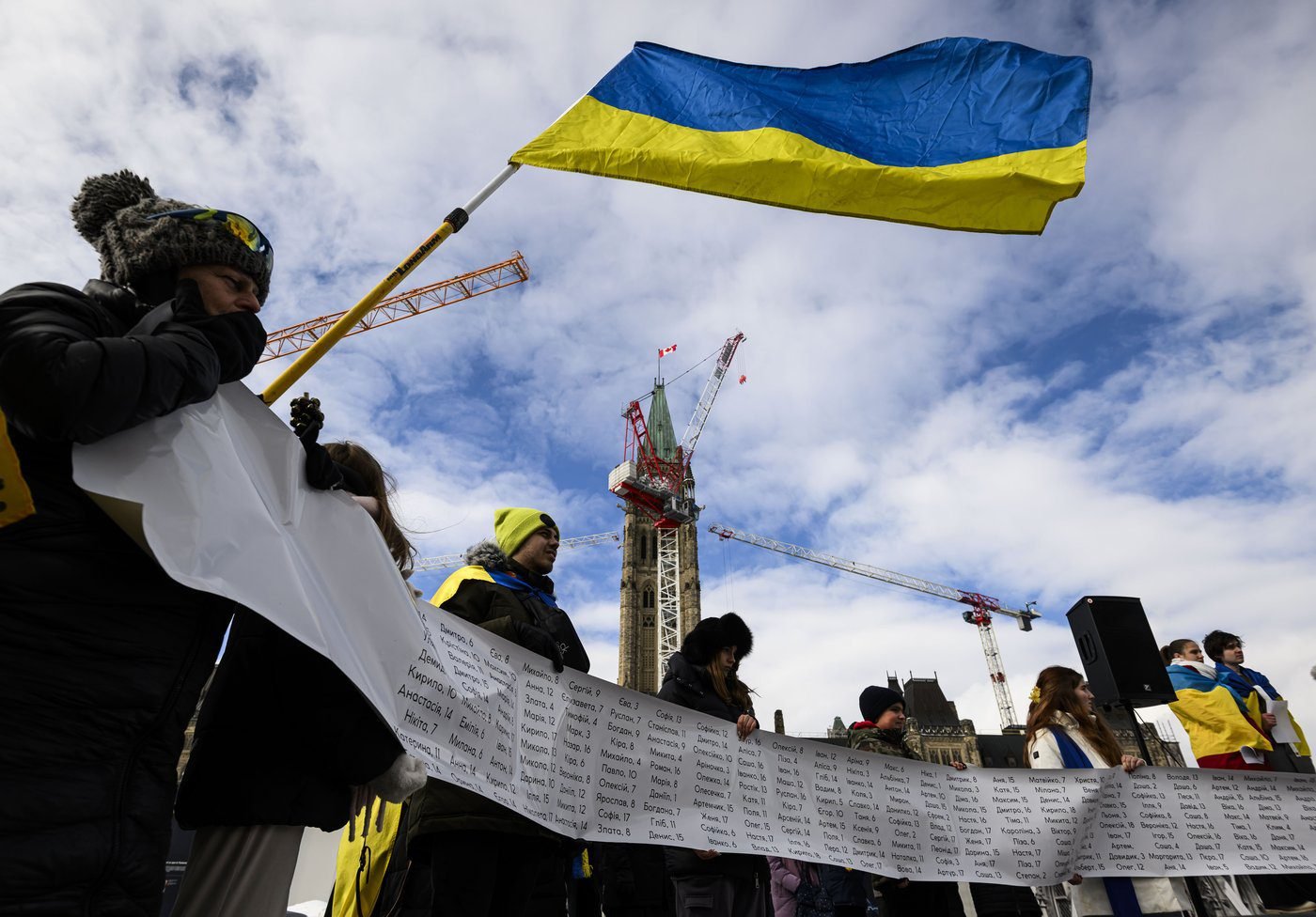
TORONTO — After Russia’s full-scale invasion of Ukraine began in 2022, nearly 300,000 Ukrainians were welcomed in communities across Canada as part of an emergency visa program that allowed those fleeing the war to temporarily work and study in the country.
Many of those who have chosen to stay face an uncertain future as their Canada-Ukraine Authorization for Emergency Travel visas expire. They have to apply to extend their status, without a clear path to permanent residency.
“What I’m hearing from people, from our community leaders … is there’s a lot of anxiety about their ability to stay in Canada,” said Ihor Michalchyshyn, the outgoing CEO and executive director of the Ukrainian Canadian Congress.
“People have four years in, children are growing up in Canada, and people are developing roots here, but they’re still on this temporary status.”
CUAET visa holders had until March 31 to apply for a new work or study permit or to renew their work permit for up to three years. That deadline has been extended for one more year, Immigration, Refugees and Citizenship Canada announced this week.
Government data show that about 2,500 CUAET visa holders have become permanent residents. More than 25,000 permit holders applied for permanent residency through a temporary stream for those with family who were either Canadian citizens or permanent residents, but IRCC says only 3,200 of those applications have been approved so far.
The government has said Ukrainians could also apply to become permanent residents through regular work-based and regional immigration programs.
But Michalchyshyn said more needs to be done to ensure eligible Ukrainians have a smoother journey toward permanent residency.
He called on the government to simplify the process for those who have graduated from a Canadian post-secondary institution or have at least a year of Canadian work experience, similar to the permanent residence pathways offered to Hong Kong residents.
Increasing the number of slots for Ukrainians in the provincial nominee programs could also help, he said.
The federal government, however, said it still expects many Ukrainians who fled the war to return to their home country once the conflict ends.
The Canadian Press spoke with several Ukrainians about their hopes for a future in Canada.
———
When Mariia Bokovnia arrived in May 2022, she wasn’t sure she would stay after completing a short-term research program at Brock University in St. Catharines, Ont., because she felt doing so would be a betrayal of her country.
“Leaving felt like abandoning my family, my friends, my country in the hardest time in our history,” the 26-year-old said.
Her parents had never visited Canada but they urged her to stay in a country where immigrants feel safe, thrive and find work opportunities.
“It’s a very funny way to say it, but they just didn’t want me (back in Ukraine). They didn’t want to worry about me,” she said.
It wasn’t an easy decision to make, but Bokovnia eventually agreed with her parents.
“My heart belongs in Ukraine, but Canada has become a second home for me,” she said.
After her program at Brock University ended, she moved to Ottawa, where she started working with the Ukrainian Canadian Congress. Soon, her younger sister joined her and began attending high school in Canada.
Bokovnia said she left her job after more than two years and went back to Ukraine to see if she was ready to permanently return home, but she quickly realized it was a risky move.
“I was constantly worried about dying,” she said. “It’s pretty intense in Ukraine, and a lot of civilian infrastructure is being destroyed, and lots of civilians are dying every day.”
Bokovnia returned to Canada and now lives in Montreal, where she is job hunting as she works on a documentary about the ethics of decision-making in the age of advanced aviation warfare technology, with a focus on Ukraine.
Because Bokovnia and her sister arrived in Canada on CUAET visas, they weren’t considered conventional refugees.
Her younger sister returned to Ukraine because it was too expensive for her to pay international student tuition fees for college or university in Canada. Bokovnia, who got an undergraduate degree in philosophy in Ukraine, said she would love to get a master’s degree but she can’t afford it.
While a number of Canadian universities and colleges have offered CUAET permit holders the same tuition rates as domestic students, none of those schools are in the areas where Bokovnia has lived and worked.
Though she has built a strong network of mentors and friends, Bokovnia said she been struggling to find stability due to a lack of employment opportunities and the uncertainty surrounding her status.
“I’ve lived here for a few years. I understand the culture more than when I arrived, and I admire the people who are so ambitious to build a strong nation, and now I’m trying to build the long-term life in Canada,” she said.
———
Maryna Shum is seeing a psychologist once a week.
“I’m a pretty tough person … I can handle everything,” she said. “But at some point, I understood that I need help.”
The daily news coming out of Ukraine has been depressing, the 44-year-old Ottawa resident said. “Every single day, and when I see big damages or when people are dying, it’s really very hard to withstand.”
But she has another source of anxiety thousands of kilometres from her home country: an uncertain future because her work permit will expire next year.
“This unidentified status, it’s very stressful. It puts us on hold and in a state of limbo,” she said.
Shum said she is “extremely grateful” to the Canadian government and people for all the support she has received since moving to Canada with her daughter, mother and their dog in April 2022.
But the lack of clarity surrounding her legal status has affected every aspect of her life as the war drags on in Ukraine with no end in sight.
Simple decisions such as buying a car become difficult, she said, and employers can’t rely on workers whose immigration status is uncertain.
Before the war started, Shum worked as a tour guide for Ukrainians travelling overseas and lived in her own apartment where she enjoyed watching the “amazing” sunset over the Dnipro River in Kyiv.
On the morning of the invasion, she woke up to her dog growling, then heard blasts she initially thought were fireworks because she couldn’t imagine Russians would target her country’s capital.
She said her friends encouraged her to move to Canada because she spoke English. Shum began working with a settlement agency in Ottawa, where she helped fellow Ukrainian newcomers navigate bureaucratic challenges.
She now works as an event and portrait photographer and volunteers to help her community members as she continues searching for a full-time job.
Shum, who travelled internationally as part of her job in Ukraine, said she has grown fond of Canada’s multiculturalism, diversity and its acceptance of immigrants such as herself.
She is confident she has the skills to find a job, but the ambiguity surrounding her long-term status in Canada bothers her.
“Do I have to invest that much time and money here if by the end of the day they’re going to throw me out?” she said.
———
Solomiia Loik was 17 when the war forced her family to leave her home in western Ukraine and travel thousands of kilometres for safety. They settled in Manitoba, where she enrolled in high school.
“The first challenge was the language,” she said. “I had some basics, but I still struggled, and I had to put a lot of work in that in order to graduate in one year.”
Loik slowly overcame those challenges, made new friends, found a job and a boyfriend, and a year after her arrival she was accepted to study biochemistry at the University of Manitoba. The school allows CUAET visa holders to pay domestic tuition fees.
But she is still in constant fear about the situation in her home country.
“I miss Ukraine and I never wanted to leave Ukraine,” the now 20-year-old said.
Her family arrived in Winnipeg in August 2022. When Loik turned 18, her mother returned to Ukraine to reunite with her father, while Loik and her older brother stayed in Canada.
Loik, who started out working as a store cashier, now has two part-time jobs at a ballet school and her professor’s lab as she continues her third year in university.
Like others, Loik faces an uneven path toward permanent residency. She said she is far behind in points she needs to be invited to apply because she came here as a minor and doesn’t have a lot of work experience.
“I’m worried about it … I would be less stressed if I got my permanent residency,” she said.
———
Mariia Rudenko remembers her father waking her up after several blasts rocked Kyiv early in the morning.
Then there was silence for about 10 minutes.
“We were about to go back to sleep thinking that nothing happened, and we heard such a huge explosion that our house started to shake,” she recalled. “It was a very scary experience.”
The Russians had just begun the invasion of her country in the early morning of Feb. 24, 2022.
Rudenko’s application for a two-month internship on Parliament Hill in Ottawa had already been accepted before the war broke out, but her travel had not been finalized due to a COVID-19 backlog. When the war began, the process was expedited, and she arrived in Canada in May 2022.
“I enjoyed my internship very much, but I didn’t have peace in my mind knowing that my family is in danger,” she said.
Rudenko worked at a restaurant in Ottawa for one year after her internship ended. She became the co-ordinator for the Canada-Ukraine Parliamentary Program where she had interned, and worked in different federal government roles.
Rudenko now works as a parliamentary assistant at the office of Liberal MP Annie Koutrakis.
“I would say it wasn’t an easy path,” she said. “I just kept feeling like challenges were everywhere, but it taught me to be resilient, it taught me to always be positive, to never give up.”
Rudenko visits her parents in Ukraine every year during Christmas holidays because her father can’t leave the country due to martial law.
“They’re happy that I’m safe and that I am also working for the government, helping Ukraine as much as I can. But they miss me dearly,” she said.
Rudenko is still on a work permit. She said she lacks the points to apply for permanent residency and hasn’t yet decided to apply via a humanitarian program.
But she is optimistic that Ottawa will come up with the right solution to address Ukrainians’ immigration issues – even if she isn’t sure whether she will stay in Canada.
“Every time I go back home I feel very happy … I feel like I’m much happier being with my family, despite the war,” she said.
But, she said, “if I have chance to obtain my permanent residency, then of course I will.”
That would also allow her to achieve her dream of obtaining another master’s degree, this time in Canada, she said.
———
Galya Matkovska’s daughter was born just two months before the war in Ukraine broke out.
“I hoped to be able to (raise) my child in Kyiv, but also the moment I saw my baby in hospital I knew that she is my main priority,” she said. “I couldn’t imagine hiding with her in (bomb) shelters.”
Matkovska, 28, her husband and their baby were able to flee Ukraine by crossing the border into Romania hours before martial law banning men from leaving the country went into effect. When Canada announced its plan to welcome Ukrainians fleeing the war, the family was in Poland.
“It was quite a fast decision,” she said about their move to Canada. The couple spoke English, and Matkovska’s husband could continue working for his company in its Canadian office.
Four years later, the family lives in Canada’s capital with their two dogs, one of which they brought from Ukraine, and Matkovska works in the marketing and communications department of a health-care non-profit.
Having stable jobs meant a smoother path for their immigration process, and they are now Canadian permanent residents.
Matkovska said while her family has been lucky because they haven’t struggled financially, “emotionally it was extremely hard.”
It took time to adjust to the reality of her life as an immigrant.
“I had to take care of my mental health because I felt like I was falling apart,” she said, adding that she started taking antidepressants for the first time in her life.
But she doesn’t feel like a stranger in Ottawa and what she likes most about Canada is its inclusivity, equal rights and welcoming attitudes.
“I have met so many incredible people who … didn’t owe me anything but they cared for me,” she said.
This report by The Canadian Press was first published April 3, 2026.
Sharif Hassan, The Canadian Press