dailynewsnblog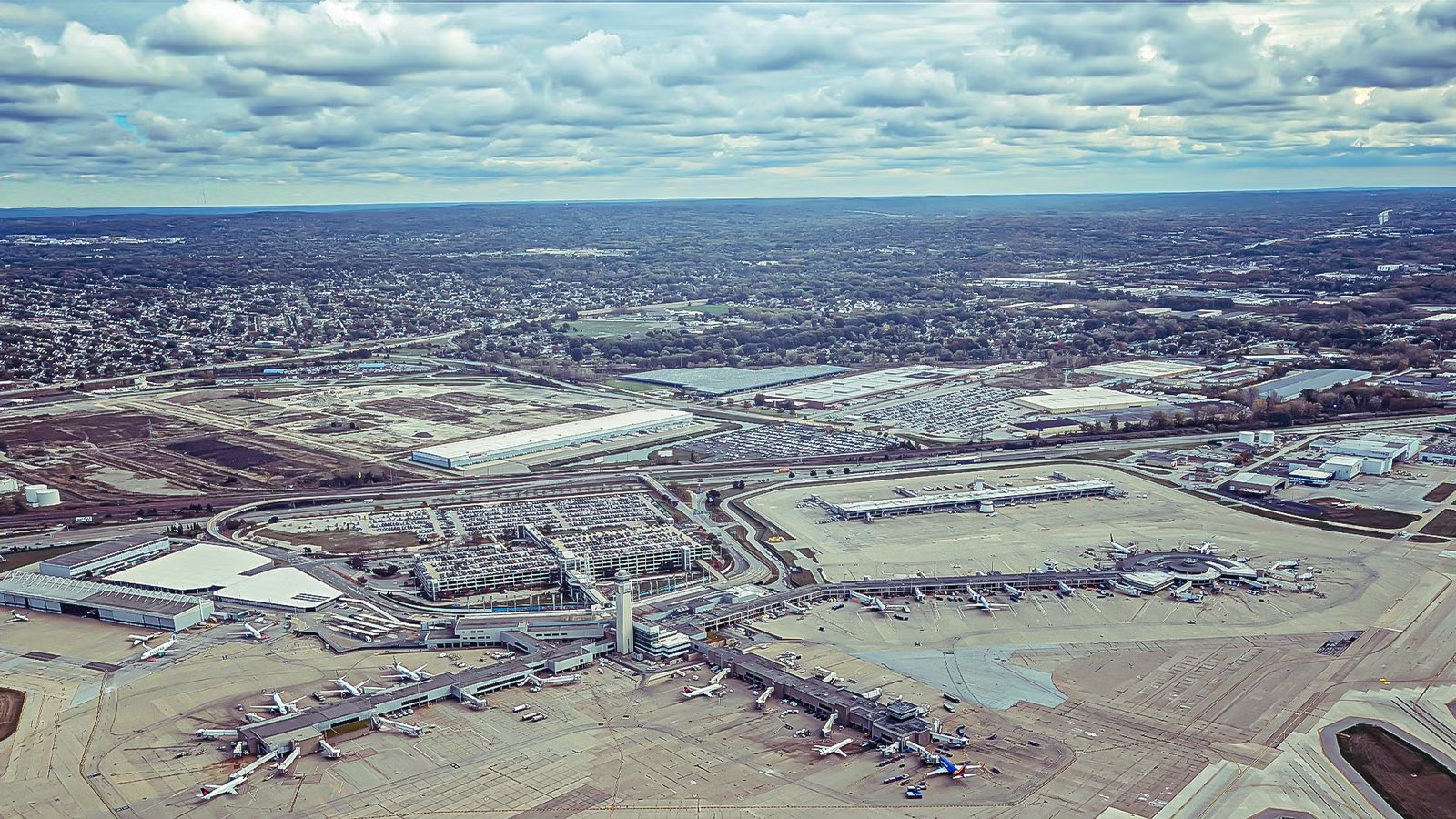
The United States is where the first successful human flight was recorded in history, and as such, the nation is proudly home to many of the most significant airfields in the history of flying. This list will review 10 of the most important airports in the country. They not only directly contributed to the advancement of modern-day aerospace, but are still open for business today.
10
Albert Whitted Airport
Established 1929

Albert Whitted Airport (SPG) in St. Petersburg, Florida, is nationally recognized as the site where the world’s first commercial airline flight took place in 1914. A small airboat flew to Tampa, marking the first regularly scheduled airline activity ever recorded. One of the first airlines in American history, National Airlines, began its operation at the field in 1934. Goodyear chose Albert Whitted as one of the first airports to base its famous blimps.
It was named in honor of local Navy aviator Lieutenant James Albert Whitted, a St. Petersburg native and one of the US Navy’s first 250 pilots. He tragically died in a plane crash in 1923. During World War II, the airport was converted into a military air base, serving as a primary flight training facility for hundreds of Navy and Marine Corps student aviators.
Today, Albert Whitted serves as a reliever airport for commercial traffic at nearby Tampa International (TPA) and St. Petersburg-Clearwater International (PIE). It also supports flight training, charters, corporate travel, and medical transport flights.
9
Spartanburg Downtown Airport
Established 1927

Spartanburg Downtown Memorial Airport (SPA) holds the distinction of being South Carolina’s first commercial airport thanks to the vision of World War I “Ace” Bob Cates. Just a month after its opening, the famous aviator Charles Lindbergh landed the Spirit of St. Louis at the airport as part of his national tour following his historic solo transatlantic flight. In 1928, the airport became the state’s first airport with direct airmail service.
During WWII, the airport served as a training facility for the Army Air Corps and a refueling stop for Naval aviators. The airport was unable to accommodate modern jet aircraft, with the Greenville-Spartanburg Jetport (GSP) (now Greenville-Spartanburg International Airport) opening in 1962 to take over commercial traffic. Today, Deerfield continues to host general aviation and executive jet flights.

How Chicago Midway Was Known Globally For 3 Decades
Between 1930 and 1960, the airport was crowned the world’s busiest airport.
8
Cleveland Hopkins International Airport
Established 1925

Cleveland Hopkins International Airport (CLE) holds a unique and pioneering place in aviation history as the first municipally owned airport in the US. It was the site for testing numerous innovations that are now global standards in aviation. In 1929, the world’s first airport control tower was built, and within a year, it featured the first-ever air-to-ground radio communication system. Later, to enable night operations, the airport installed the world’s first airfield lighting system.
It hosted the nation’s first scheduled passenger service, initiated by the Ford Motor Company in 1925, and established the first air freight system. In the 1930s and ‘40s, Cleveland Hopkins was the regular site of the National Air Races, attracting famous aviators like Amelia Earhart and Charles Lindbergh. During World War II, a lab was opened on its western campus, which eventually became part of the NASA Glenn Research Center.
In 1968, the airport achieved another North American first by opening a direct rapid transit rail link to downtown Cleveland. United Airlines established a hub at CLE after WWII, which it maintained until the mid-1980s when Continental Airlines took over. Following the merger of Continental and United Airlines in 2010, the new United gradually reduced and eventually closed the Cleveland hub in 2014. Today, it is still Ohio’s busiest airport thanks to low-cost carriers like Spirit and Frontier.
7
Boston Logan International Airport
Established 1923

The airport first opened in 1923 on 189 acres of reclaimed land in the tidal flats of East Boston. At first, it accommodated only the airmail service and Army aviation. The first commercial passenger service began in 1927 with Colonial Air Transport, connecting Boston with New York City. Major investment came with the outbreak of World War II, as the US Army Air Corps invested in significant expansion for anti-submarine patrols and training purposes.
After the war, the city began to push ahead with expansion with the advent of jet engines, leading to even greater investment. The airport steadily grew in the decades after WWII, but tragedy struck with the hijacking of Eastern Air Lines Shuttle Flight 1320 on March 17, 1970.
The aircraft landed safely at Logan International Airport, but the first officer was killed, and the captain was seriously wounded. It spurred significant changes in American aviation security, leading to the implementation of mandatory passenger and luggage screening with metal detectors.
Today,  Boston Logan International Airport (BOS) is the largest airport in New England and a key hub for major US carriers and international airlines. It is a vital connection point between North America and Europe, and increasingly, Asia.
6
Chicago Midway International Airport
Established 1923

The airport began as Chicago Air Park in 1923, with its first air services being part of the US air mail network. In 1927, the City of Chicago purchased the field, renamed it Chicago Municipal Airport, and constructed its first hangar as well as all-weather runways. In 1949, it was officially renamed Chicago Midway Airport (MDW) in honor of the Battle of Midway, a pivotal naval battle of WWII.
With the dawn of the jet era, Midway was not prepared, and its runways were too short to accommodate airliners powered by jet engines. The newly developed Chicago O’Hare International Airport (ORD) became the airfield of choice for most airlines in the 1960s due to the limitations of Midway’s airfield.
That changed in the 1980s with infrastructure investment and the arrival of Southwest Airlines. Today, it is a major Midwest hub, with Southwest being the dominant carrier and other low-cost carriers filling out the airport’s full capacity.
5
Long Beach Airport
Established 1923

Long Beach Airport (LGB), once known as Daugherty Field, is the oldest airport in California and one of the most historically significant in the US. In the early 1900s, aviation pioneers used the beaches as their first airstrip. In 1919, aviator Earl Daugherty opened a 20-acre flight school, and in 1923, the city council purchased the land to establish an official municipal airport.
In 1941, Douglas Aircraft established a factory nearby, which also led the airport to become one of the busiest in the nation that year. As the historic manufacturing ramp-up of WWII led to unprecedented aerospace growth, Long Beach would become one of the most important locations in the industrial base of American military aviation.
Douglas, then McDonnell Douglas, and later Boeing, had an enormous presence in the city until the C-17 Globemaster II production ended in 2015. The airport cannot compete with Los Angeles International Airport (LAX) for many reasons, but it goes back to the first US airport noise restrictions at LGB in the 1980s. Now, it has a reputation for being one of the most comfortable and relaxing airports to travel through due to its small and efficient design.

How The 4th Busiest US Airport Got Its Name
A brief look into the history of fourth largest airport in the United States.
4
Minneapolis–Saint Paul International Airport
Established 1920

Initially known as Speedway Field, the airport’s history began in 1919 when a group of local aviation enthusiasts formed the Minneapolis Aero Club. The group acquired the land of the defunct Twin City Speedway, a two-mile concrete auto racing oval akin to a NASCAR track. In 1923, the airfield was renamed Wold-Chamberlain Field to honor two local World War I pilots, Ernest Wold and Cyrus Chamberlain, who lost their lives in combat.
The Minneapolis Park Board took possession of the field in 1928, and it was soon simply called Minneapolis Municipal Airport. With the arrival of international service, flights to Tokyo and Manila in 1948, it was officially designated  Minneapolis-St. Paul International Airport (MSP).
The airport steadily grew and expanded over the coming decades until the 1980s, when it became a major hub for Northwest Airlines. After its merger with Northwest Airlines in 2008,  Delta Air Lines instantly gained a robust presence in the Asia-Pacific market by making MSP a new hub. It also inherited a strong domestic network in the Midwest, where Delta had previously been weak.
3
Stinson-Mission Municipal Airport
Established 1915

Stinson Municipal Airport (SSF) in San Antonio, Texas, is the third-oldest continuously operating airport in the United States and the oldest west of the Mississippi. The Stinson family founded the airport when they leased 500 acres of farmland from the city for $5 to establish the Stinson School of Flying. Eddie Stinson founded the Stinson Aircraft Company, which manufactured popular enclosed-cabin aircraft from the 1920s to the 1940s.
Marjorie Stinson was the ninth licensed female pilot in the world and earned the nickname “The Flying Schoolmarm” for training over 80 pilots for World War I. Katherine Stinson became the fourth licensed female pilot in the US in 1912 and was known as a stunt pilot, setting endurance and distance records. She was also the first woman to perform a loop-the-loop.
The legendary Charles Lindbergh kept and flew his personal Curtiss Jenny biplane from Stinson in 1924-1925 while stationed as a cadet at nearby Brooks Army Airfield. Fairfield was commandeered by the army during both world wars and served as a major training location for the US Army Air Corps during WWII. The airfield is still open for business and hosts the Texas Air Museum-Stinson Chapter.

The 7 Oldest United States Air Force Bases & Their Strategic Roles
Discover the rich history and vital roles of the USAF’s oldest active bases.
2
Pearson Field
Established 1911

Heading to the Pacific Northwest, we find Pearson Field in the city of Vancouver, Washington State. Even before fixed-wing aircraft began operating out of Pearson, dirigibles used its fields as landing and take-off zones. In 1918, as aviation grew into a large-scale industry due to a demand for military aircraft in World War I, Pearson’s campus became home to the largest airframe-grade spruce wood mill in America.
Pearson Field was a stopover for the Army’s Douglas World Cruisers during the first aerial circumnavigation of the globe. The ANT-25 monoplane, carrying three Soviet aviators, landed at Pearson after completing the first non-stop transpolar flight from Moscow.
Over the years, the field hosted famous aviators such as Charles Lindbergh, Jimmy Doolittle, and Eddie Rickenbacker. Today, the airport continues to be an active general aviation hub jointly managed by the city and the National Park Service. There is an aviation history museum located on-site, with active STEM (science, technology, engineering, math) education programs for K-1 students.
1
College Park Airport
Established 1909

College Park Airport (CGS), located in College Park, Maryland, holds the distinction of being the world’s oldest continuously operating airport. Established in 1909, it is a site of immense historical significance in American aviation, often referred to as the “Field of Firsts.” The airfield is very close to Washington, DC, but still serves private aviation and houses a museum that is an affiliate of the Smithsonian Institute.
Wilbur Wright came to the field in 1909 to train the US Army’s first two military officers to fly in the government’s first airplane, effectively establishing the first US military flight school. The first flight to achieve a mile high in altitude was flown at this airfield by Army Lieutenant Henry “Hap” Arnold in 1912.
Some of the very first prototype helicopters took flight at College Park, and one of the stops in the very first US Air Mail routes was established at the airfield. Development and testing of early radio navigation aids and “blind landing” systems by the National Bureau of Standards paved the way for modern instrument flight systems.