dailynewsnblog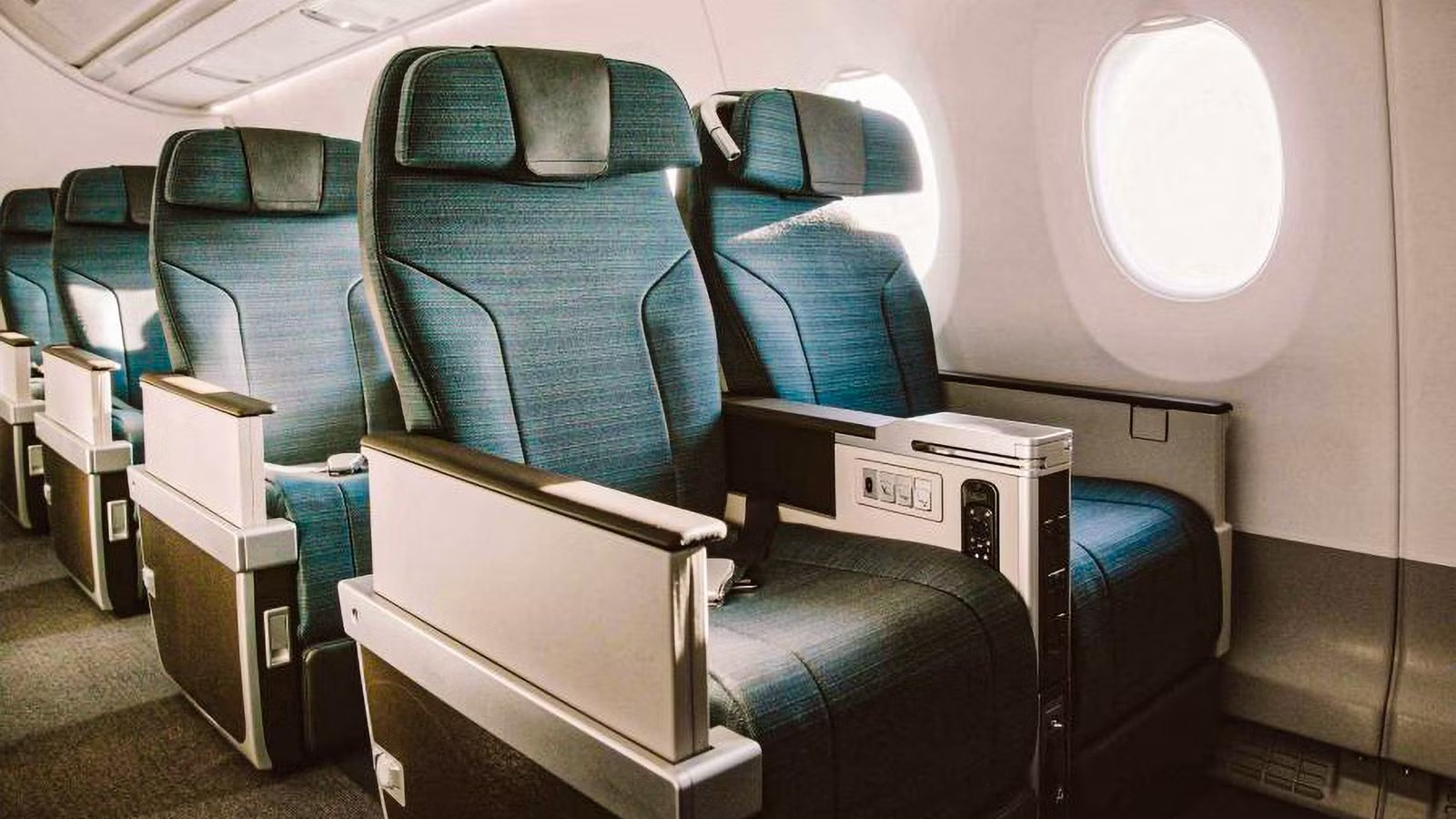
Flying in premium economy across the Pacific can feel like a joy compared to standard economy class, with more space to stretch out, wider seats, and thoughtful service that begins the moment passengers arrive onboard. It is no surprise that this product has grown from a niche option to a popular sweet spot for passengers who want greater comfort than economy class without the premium price tag of business class. On ultra-long-haul flights between North America and Asia, the benefits of a roomy seat, enhanced dining, and dedicated service areas quickly become clear.
In this article, we will take a closer look at some of the airlines offering the widest premium economy seats across the Pacific. From Japan’s legendary hospitality to Singapore’s refined offering, each airline brings its own interpretation of what excellent premium economy should feel like, but what is it that makes these seats so noteworthy, and on which routes across the Pacific can they be found?
The Rise & Rise Of Premium Economy

Premium economy has not always been a staple of long-haul flying. For decades, airlines offered two basic cabins – economy class and business class. Business class was the domain of corporate travelers and high-end leisure flyers, while economy class was for everyone else. Somewhere in between was a gap in comfort, with longer flights begging for an option that was not quite business class, but offered a noticeable step-up from standard economy class.
That gap began to close in the early 2000s, and ultra-long-haul sectors across the Pacific became the perfect proving ground. Airlines saw an opportunity not only to sell a new cabin class, but to make marked improvements to the overall long-haul flying experience. EVA Air was first off the mark, introducing what is widely recognized as the world’s first premium economy class in 1992 on its fleet of Boeing 747-400 aircraft (known as Economy Deluxe at the time). Premium economy had soon grown from a few rows tucked at the front of the economy class cabin to a distinct cabin with dedicated service, seating, and amenities.
On transpacific routes, premium economy quickly became more than just extra legroom and a slightly wider seat, encompassing greater recline, a generous seat pitch, better dining, priority services, and an overall experience that separated it from the densely packed economy class cabin. Today, the majority of the full-service carriers flying between the US and Asia offer some form of premium economy, and as airlines have continually evolved their products, passengers have learned that the jump in comfort to premium economy can be a very worthwhile upgrade.
Japan Airlines

On Japan Airlines, premium economy is known for combining Japanese hospitality with practical comfort, and the  oneworld carrier was an early adopter of the modern premium economy product, rolling it out on transpacific routes long before many competitors. Between 18.3 in and 19.3 in wide, the carrier’s premium economy seat itself is noticeably wider than standard economy class, with a seat pitch that gives even the tallest of passengers plenty of room. The seats also feature generous recline and an adjustable footrest, further adding to the sense of space.
Japan Airlines generally deploys its Boeing 777-300ER and Boeing 787 aircraft on transpacific routes, serving major North American gateways such as Los Angeles International Airport (LAX), San Francisco International Airport (SFO), and New York John F. Kennedy International Airport (JFK) from both Tokyo Narita Airport (NRT) and Tokyo Haneda Airport (HND). Depending on the aircraft type, Japan Airlines’ premium economy cabin features either a 2-4-2 or 2-3-2 configuration, making aisle access much easier for passengers compared to the standard 3-4-3 or 3-3-3 layout in economy class.
When it comes to Japan Airlines’ soft product in premium economy, meals are more substantial than in economy class, featuring a mix of local and international dishes, paired with welcome drinks. The attention to detail, from soft blankets and larger pillows to quality amenity kits on overnight flights, reflects a focus on passenger wellbeing, and has been recognized by the carrier being awarded Best Premium Economy Class in Asia at the 2025 Skytrax World Airline Awards.

The Airlines With The World’s Superior Premium Economy Class Seats In 2025
We look at the top four airlines with impressive premium economy products.
Singapore Airlines

 Singapore Airlines has a reputation for premium service across all cabins, and its premium economy product lives up to that legacy. On Singapore Airlines’ widebody fleet, particularly on the Boeing 777-300ER and Airbus A350-900ULR aircraft that are deployed on transpacific services, the premium economy cabin feels like a thoughtful blend of spacious design and attentive service. The airline itself is known for its industry-leading premium service, consistently ranking as one of the best premium airlines in the world.
The seats in Singapore Airlines’ premium economy cabin are between 18.5 in and 19.5 in wide, depending on the aircraft, and are arranged in a 2-4-2 configuration. With extra width, generous pitch, and a deeper recline than in standard economy class, these seats are designed for passengers who want to rest, work, or simply enjoy their journey without feeling confined. Adjustable headrests and footrests add to the ergonomic comfort, and the in-seat power outlets and larger entertainment screens reflect the cabin’s positioning between economy class and business class.
From its hub at Singapore Changi Airport (SIN), Singapore Airlines deploys its premium economy-equipped aircraft to a wide range of destinations across the Pacific, including Los Angeles International Airport (LAX), Vancouver International Airport (YVR), and San Francisco International Airport (SFO). The Star Alliance carrier also has seven Airbus A350-900ULRs, which are uniquely equipped only with business class and premium economy seats, that it deploys on the two longest non-stop flights in the world to both New York John F. Kennedy International Airport (JFK) and  Newark Liberty International Airport (EWR).
All Nippon Airways

Just like Japan Airlines, All Nippon Airways offers a premium economy product that reflects Japanese simplicity and efficiency with thoughtful comfort upgrades. On the carrier’s Boeing 777-300ER and Boeing 787-9 aircraft, which are commonly deployed on transpacific services, the premium economy cabin sits between business class and economy class, with seats arranged in a 2-4-2 layout, rather than the 3-4-3 configuration typically found in economy class. All Nippon Airways’ premium economy seats are among the widest in the skies, coming in at 19.3 in.
Routes on which All Nippon Airways showcases its premium economy offering from its dual hub operation at Tokyo Narita Airport (NRT) and Tokyo Haneda Airport (HND) include Chicago O’Hare International Airport (ORD), Houston George Bush Intercontinental Airport (IAH), and  Seattle-Tacoma International Airport (SEA), all of which are lengthy long-haul flights where a flight in premium economy can make a big difference for comfort.
Like other carriers, All Nippon Airways enhances its premium economy seat experience with other touches, including upgraded meals, welcome drinks, and an advanced in-flight entertainment system. The  Star Alliance carrier also pays attention to the small details, with plush pillows, blankets, and thoughtful amenity kits on overnight legs all adding to the premium feel.

Why Is Premium Economy So Popular?
The story behind how premium economy is pushing out first class.
EVA Air

EVA Air launched the world’s first premium economy product back in 1992, and since then, the Star Alliance carrier has developed a loyal following for its award-winning premium economy product. EVA Air’s version of premium economy stands out for its combination of comfort, service, and attention to detail, and is known for having one of the most generous seat pitches around, at 42 inches.
When it comes to seat width, this measures an equally impressive 19.5 inches, and in addition to physical comfort, EVA Air delivers an award-winning soft product to its premium economy passengers. As a long-time premium economy operator, EVA Air has the product nailed down, and is often ranked as one of the best premium economy airlines worldwide.
From its hub at Taipei Taoyuan International Airport (TPE), EVA Air serves a variety of North American destinations with its fleet of Boeing 777-300ER and Boeing 787-9 aircraft. These destinations include Toronto Pearson International Airport (YYZ), Vancouver International Airport (YVR), and New York John F. Kennedy International Airport (JFK). Later this year, the carrier will also launch services to Washington Dulles International Airport (IAD).
Cathay Pacific

Cathay Pacific’s premium economy product strikes a balance between space, style, and service on routes that stretch across the Pacific from its hub at  Hong Kong International Airport (HKG). Over the years, Cathay Pacific has evolved its premium economy product to meet the growing demands of long-haul travelers, blending thoughtful seat design with strong service fundamentals.
On board the carrier’s widebody aircraft that regularly fly across the Pacific, namely the Airbus A350-900 and Boeing 777-300ER, Cathay Pacific’s premium economy cabin offers a noticeable step up from standard economy, with seats arranged in a 2-4-2 configuration and featuring a width of up to 20 inches. A larger seat pitch, deeper recline, adjustable footrests, and ergonomic headrests all add to the comfort, making it easier for passengers to find a relaxing position for work or sleep.
Transpacific routes on which Cathay Pacific’s premium economy product can be found include to the likes of  Boston Logan International Airport (BOS), Vancouver International Airport (YVR), and Dallas/Fort Worth International Airport (DFW). These ultra-long flights make the thought of extra space and privacy all that more appealing to many passengers.