dailynewsnblog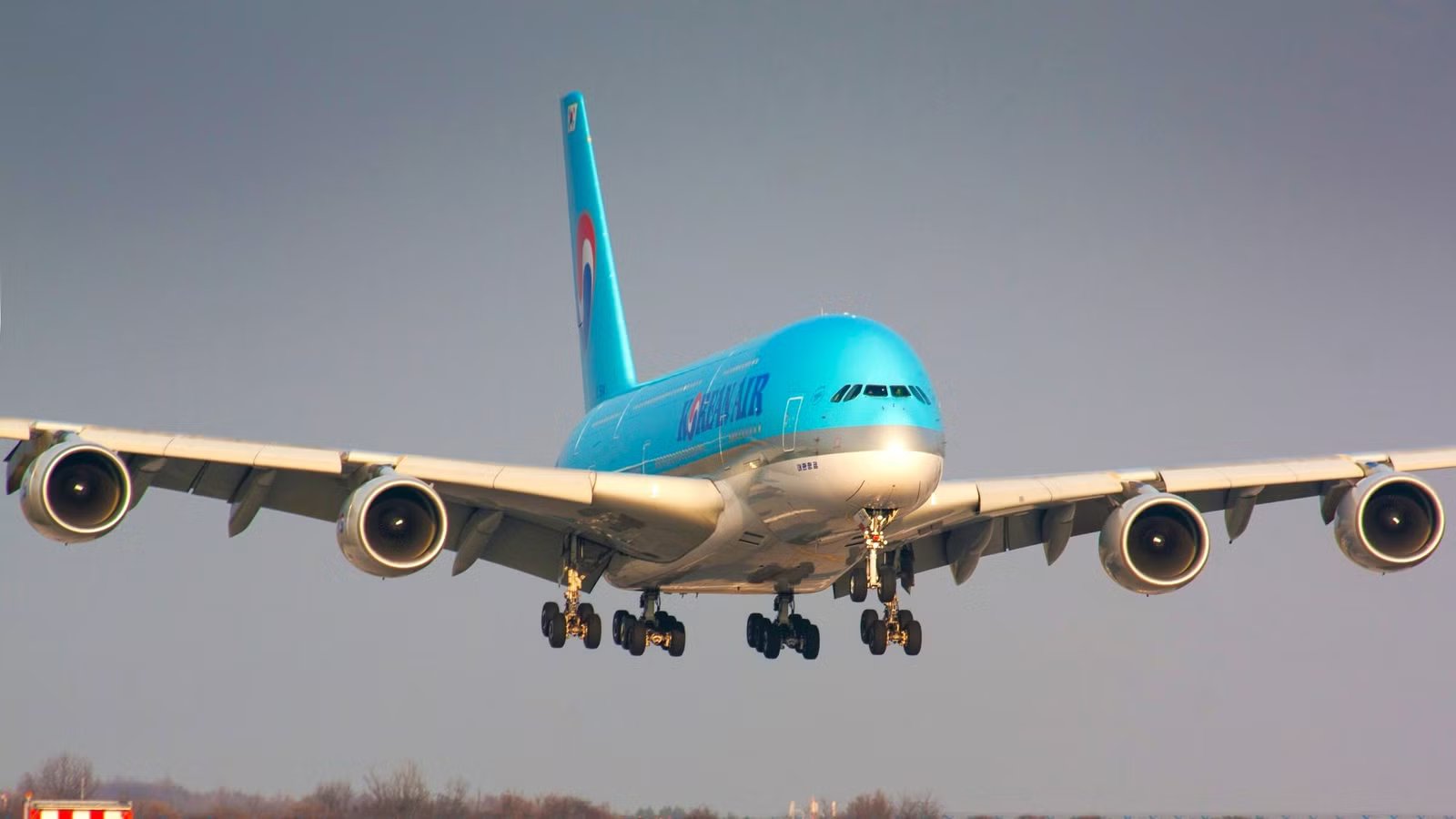
Korean Air has extended the presence of the Airbus A380 on the world’s shortest regularly scheduled route for the type. The superjumbo was initially only set to connect the South Korean flag carrier and SkyTeam founding member’s main hub at Seoul  Incheon International Airport (ICN) with Narita Airport (NRT) in the Japanese capital city of Tokyo until April of 2026. While much shorter than most A380 routes, there is clearly high demand.
Now, however, schedule changes detailed in the current data made available by Cirium, an aviation analytics company, show that the airline’s small but mighty Airbus A380 fleet will now serve this two-hour route during the peak summer months. Korean Air will be one of two different carriers flying the superjumbo on this intra-Asia route this summer, resulting in a total of ten return flights a week with the type. Let’s dive deeper into the data!
Extended Until August

A quick look at Cirium’s latest schedules shows that Korean Air now plans to operate the Airbus A380 between Seoul Incheon International Airport and  Tokyo Narita Airport until August, with a typical schedule of three flights a week penciled in on this short intra-Asia route. While these are arguably the airline’s most interesting aircraft deployments on this corridor, they actually only represent a fraction of its total Seoul-Narita coverage.
Indeed, Korean operates seven flights a day on this route. Elsewhere in Tokyo, while Haneda only sees one daily round trip from Incheon, this is joined by six rotations a day from its secondary hub at Seoul Gimpo International Airport (GMP). As for the A380, its last trip to Narita is now set to be flight KE703 on August 31. Korean has implemented Airbus’s S. Fleet Performance+ solution across its Airbus fleet, including the A380, explaining:
“With the integration of the S.FP+ solution, we will not only enhance these results but also establish a critical, unified maintenance platform for our expanded fleet following the integration with Asiana Airlines.”
One Route, Two Airbus A380 Operators

Fans of the Airbus A380 in Tokyo and Seoul who want to sample the superjumbo without having to shell out for one of the long-haul routes that it typically operates are certainly in luck with this corridor, as Korean Air is actually one of two airlines operating the type here. Indeed, fellow South Korean carrier Asiana Airlines is also present, and actually offers an even greater frequency, giving fans of the A380 more choice with their flights.
Every day, Asiana Airlines deploys the Airbus A380 on flight OZ102 from Seoul Incheon International Airport to Tokyo Narita, with this flight timed to depart at 8:25 am. Its arrival into Tokyo is scheduled for 10:50 am, some two hours and 25 minutes later. This daily frequency amounts to seven rotations a week, meaning that, combined with Korean Air’s aforementioned thrice-weekly services, there will be ten A380 flights a week this summer.
Asiana Airlines favors a relatively high-density layout on the A380, with Cirium’s scheduling data showing that it configures the type with a grand total of 495 seats. Of these, 417 (84.2%) can be found in the economy class cabin, while 66 (13.4%) are in business class, and just 12 (2.4%) are in the first class cabin.

Korean Air Has Ended Airbus A380 Flights On 11 Routes: Full List
The South Korean carrier’s double-decker network has changed radically. See where the type used to fly.
What’s It Like On Board?

According to present fleet data made available by ch-aviation, Korean Air currently has five examples of the Airbus A380 at its disposal (from a previous grand total of ten), and these aircraft are 11.9 years old, compared to a fleet-wide mean figure of 11.8 years. Unlike many superjumbo users, the airline has not fitted these jets with a premium economy cabin. Instead, as detailed by aeroLOPA, they can seat 407 guests across three classes.
The best seats in the house are the 12 Kosmo Suites in first class. These are located at the front of the lower deck, and laid out four-abreast in a 1-2-1 configuration. Meanwhile, the remainder of the lower deck accommodates the jet’s 301 economy class seats in the standard ten-abreast 3-4-3 setup. As for the upper deck, this is dedicated entirely to the jet’s 94 business class Prestige Sleeper seats, which are laid out six abreast in a 2-2-2 setup.