dailynewsnblog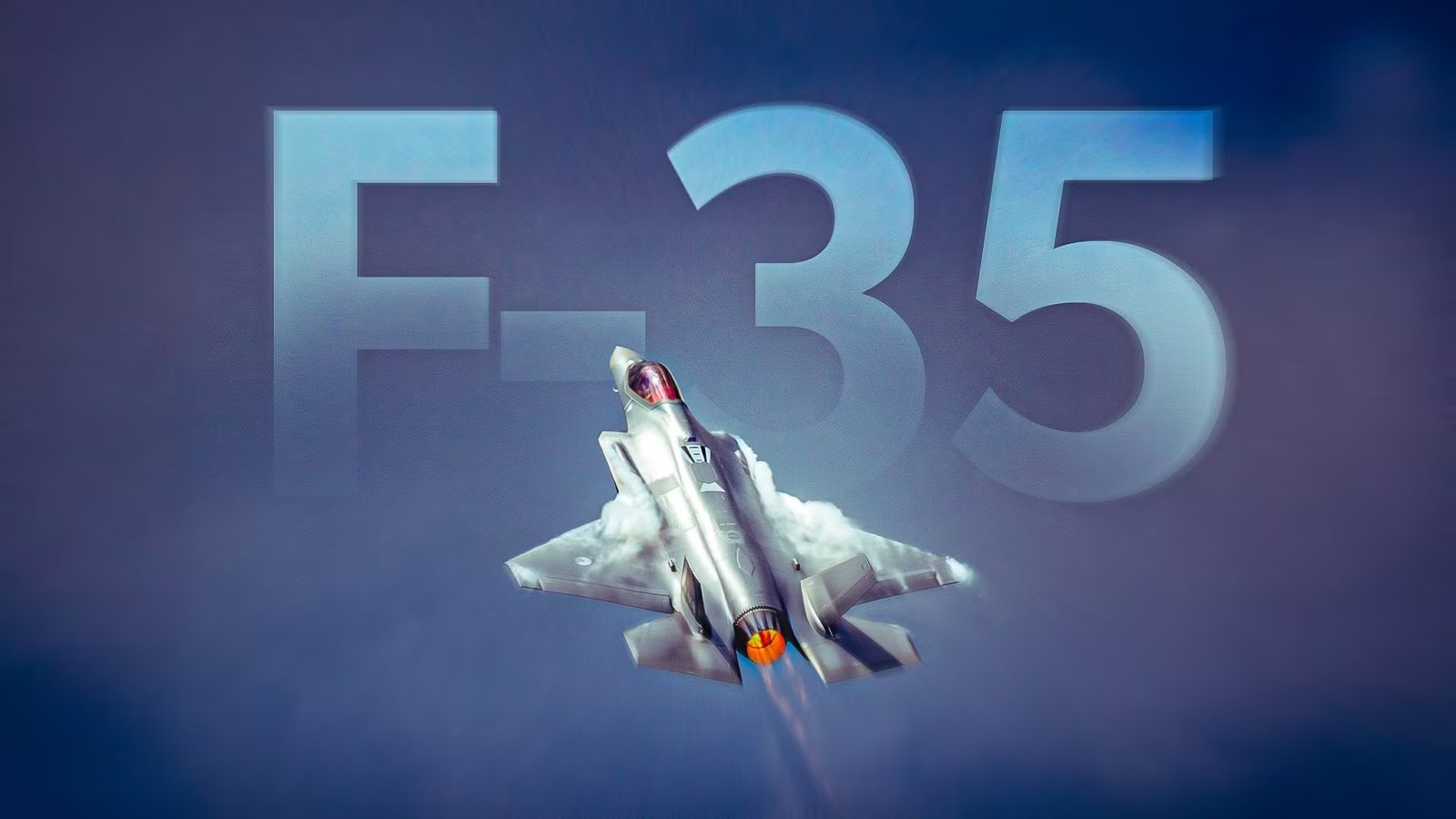
The F-35 Lightning II program has grown to become the largest defense project in US history since it began in 2001. The Lockheed Martin F-35, also known as the Joint Strike Fighter, is primarily manufactured in Fort Worth, Texas, at the US Air Force’s ‘Bomber Plant.‘ There are also two final assembly lines in partner nations in Cameri, Italy, and Nagoya, Japan. The rapid proliferation of the F-35 has changed the game of air power in the 21st century.
The United States, Japan, the United Kingdom, Australia, and Italy make up the heart of the program, while 20 other nations now fly or have ordered the fifth-generation fighter. In total, they will deploy about 3,000 airframes in three different versions. Although the United States controls almost two-thirds of the global fleet, partners are gradually growing their stealth fighter fleet in order to strengthen the common defense system.
Italian Air Force & Navy

Given that Italy is a key player in the current Eurofighter Typhoon production chain, it is one of the more interesting operators in the global F-35 fleet. It allows Leonardo and Lockheed Martin to operate Europe’s F-35 final assembly line at Cameri Air Base. Building wings for the global F-35 fleet, assembling Italy’s airframes, and providing maintenance for other European users make Italy a significant link in the worldwide supply chain
At a ceremony in Sardinia on July 2, 2025, Defense Minister Guido Crosetto declared that Italy is prepared to create the first F-35 fighter pilot training school outside of the United States, according to Second Line of Defense. Sicily will host the ground-breaking facility, solidifying Italy’s standing as a major collaborator in the global F-35 program. Crosetto gave the following statement:
“The future is built not by limiting ourselves to defence, but by making defence a social, economic, and technological innovation engine.”
|
Ranking |
F-35 Fleet Numbers (Total Planned) |
|---|---|
|
1. USA |
1,763 F-35As, 340 F-35Cs, 353 F-35Bs |
|
2. Japan |
105 F-35As, 42 F-35Bs |
|
3. United Kingdom |
138 F-35Bs |
|
4. Australia |
100 F-35As |
|
5. Italy |
60 F-35As, 30 F-35Bs |
The Italian military’s air and naval forces agreed to procure the F-35 after sea trials in 2019 with a joint Air Force-Navy detachment aboard Cavour, which showed the short-deck carrier could accommodate F-35B variants. Operational squadrons from Amendola and Ghedi have already conducted Baltic Air Policing and Red Flag exercises in the US since the first jets entered service.
The Royal Australian Air Force

The F-35 allows for what Australia refers to as self-reliant defense within an alliance framework. Australia values the long-range intelligence, surveillance, and reconnaissance capability of the F-35 over the Indo-Pacific maritime expanse. The Lightning II’s stealth and sensor fusion, paired with a secure data link, integrates with the Royal Australian Air Force Wedgetail AWACS platforms for battlespace management. The jets will also be matched with the upcoming Ghost Bat loyal-wingman drones.
Last year, the RAAF, JASDF, and USAF held a large-scale drill, Exercise Bushido Guardian 25, with 25 examples of the F-35 from the three nations, according to AeroTime. Australia deployed eight F-35A fighters from No. 3 Squadron, supported by a KC-30A Multi-Role Tanker Transport from No. 33 Squadron. The F-35 contingent deployed to Japan marked one of the largest forward deployments of the type in the RAAF’s history so far. RAAF Wing Commander Mark Biele said:
“We are excited to take to the sky with aircraft from Japan and the United States, sharing experience and strengthening aviator-to-aviator relationships between our nations.”
The RAAF procured the F-35 with a distinct set of priorities owing to its vast geography and alliances with the US under the ANZUS treaty. To prevent a capability gap after the old F/A-18 Hornet and F-111C strike bomber aged out, lawmakers in Canberra decided to procure the JSF. After a lengthy process of industrial negotiation and strategic development, the F-35A was ordered to the tune of 100 aircraft.

Which Country Has The Most Superior Military Jets In The World?
Discover why the US leads global air power with over 13,000 aircraft, cutting-edge fighters like the F-35, and sixth-gen tech like NGAD and B-21.
The Royal Air Force

In addition to committing to a fleet of 138 F-35Bs, the UK is in negotiations to replace its departing Eurofighter Typhoons with additional F-35As. For the Royal Air Force and Royal Navy, these aircraft fulfill three functions: they boost multi-domain operations for the combined forces, boost carrier power, and fortify US-UK interoperability. BAE Systems plays a crucial role in the global sustainment network at the same time. After all, it manufactures 15% of the airframe of every F-35, including the aft fuselage.
It also operates a maintenance facility at RAF Marham that serves both European and British fleets. The Lightning also functions as a technology tester for the upcoming Tempest future-combat-air-system sixth-generation fighter. The UK rearmed the 617 Squadron at RAF Marham and the 809 Naval Air Squadron with the F-35 as its first squadrons. For the naval air arm, the F-35B was the ideal platform, thanks to the Royal Navy’s two new Queen Elizabeth-class carriers.
There have been some issues, with one jet making an emergency landing in southern India due to a weather system that prevented it from landing back on the carrier HMS Prince of Wales. It was then stuck due to issues with its auxiliary power unit, and finally left in July, according to Euro News. Similarly, another F-35B was forced to land on a public airfield at Kagoshima, Japan, due to an in-flight emergency in August 2025, according to The War Zone.
Japanese Air Self-Defense Force

Japan’s adoption of the F-35 was driven by both geopolitical urgency and technological ambitions. China is becoming a bigger menace, as evidenced by the development of new stealth fighters and the alarming frequency of violations of Japanese air defense identification zones. The dual function of the F-35 as an intelligence node and an interceptor makes it highly valuable against the increasingly well-armed and brazen Chinese Air Force and Navy.
Tokyo has ordered 42 F-35Bs to date and 105 airframes of the F-35A series, making it the second-largest operator outside the USA. New JSF squadrons are currently stationed at Misawa and Hyakuri with Japan’s Air Self-Defense Force. Bushido Guardian 25 was the first joint exercise conducted by Japanese F-35 squadrons.
The SDF received its first three F-35B models in early August of this year at Nyutabaru Air Base on the main island of Kyushu, Japan. The F-35Bs will operate from two Izumo-class destroyer carriers, JS Izumo (DDH-183) and JS Kaga (DDH-184), after a temporary assignment at Nyutabaru, according to USNI News.
The US Leads The Way

Even in the annals of American mega-projects, the F-35 is the greatest in scale. Replacing the F-16C/D, F/A-18C/D, and AV-8B, three very different Cold War workhorses, was a monumental undertaking for the United States Air Force, Navy, and Marine Corps. Decades in the making, the result is an aircraft family with a common airframe that features tailored systems and performance to each service. Since the F-35 debuted, the Marines have purchased 353 short-takeoff-vertical-landing F-35Bs.
Meanwhile, the Navy has ordered 340 carrier-capable F-35Cs. However, the Air Force is by far the top operator, and it has agreed to procure as many as 1,763 conventional-takeoff F-35As. The Technology Refresh 4 update, part of the larger Block 4 modernization effort for the F-35, has been significantly delayed, over budget, and scaled back. This modernization’s completion is now expected to be at least 2031, five years later than originally planned. It is at least $6 billion over budget compared to initial estimates.
|
Specifications |
F-35A |
F-35B |
F-35C |
|---|---|---|---|
|
Power Plant |
One Pratt & Whitney F135-PW-100 turbofan engine |
F135-PW-600 |
F135-PW-100 |
|
Thrust |
43,000 pounds |
38,000 pounds (40,500 pounds Vertical) |
43,000 pounds |
|
Wingspan |
35 feet (10.7 meters) |
35 feet (10.7 meters) |
43 feet (13.1 meters) |
|
Length |
51.5 feet (15.7 meters) |
51.2 feet (15.1 meters) |
51.5 feet (15.7 meters) |
|
Height |
14 feet (4.38 meters) |
“ |
“ |
|
Payload |
18,000 pounds (8,160 kilograms) |
15,000 pounds (6,800 kilograms) |
18,000 pounds (8,160 kilograms) |
|
Maximum Takeoff Weight |
70,000-pound class |
“ |
“ |
|
Speed |
Mach 1.6 (~1,200 miles per hour) |
“ |
“ |
|
Range |
More than 1,350 miles with internal fuel (1,200+ nautical miles), unlimited with aerial refueling |
“ |
“ |
|
Ceiling |
Above 50,000 feet (15 kilometers) |
“ |
“ |
|
Armament |
Internal and external capability. Munitions carried vary based on mission requirements. |
“ |
“ |
|
Crew |
One |
“ |
“ |
The TR3 effort, a prerequisite hardware and software upgrade for Block 4, has been plagued by stability issues, technical setbacks, and production delays, causing aircraft deliveries to be delayed. The GAO criticized the use of incentive fees for contractors, noting that Lockheed Martin and engine maker Pratt & Whitney were still paid bonuses despite late deliveries, as the National Security Journal reported.
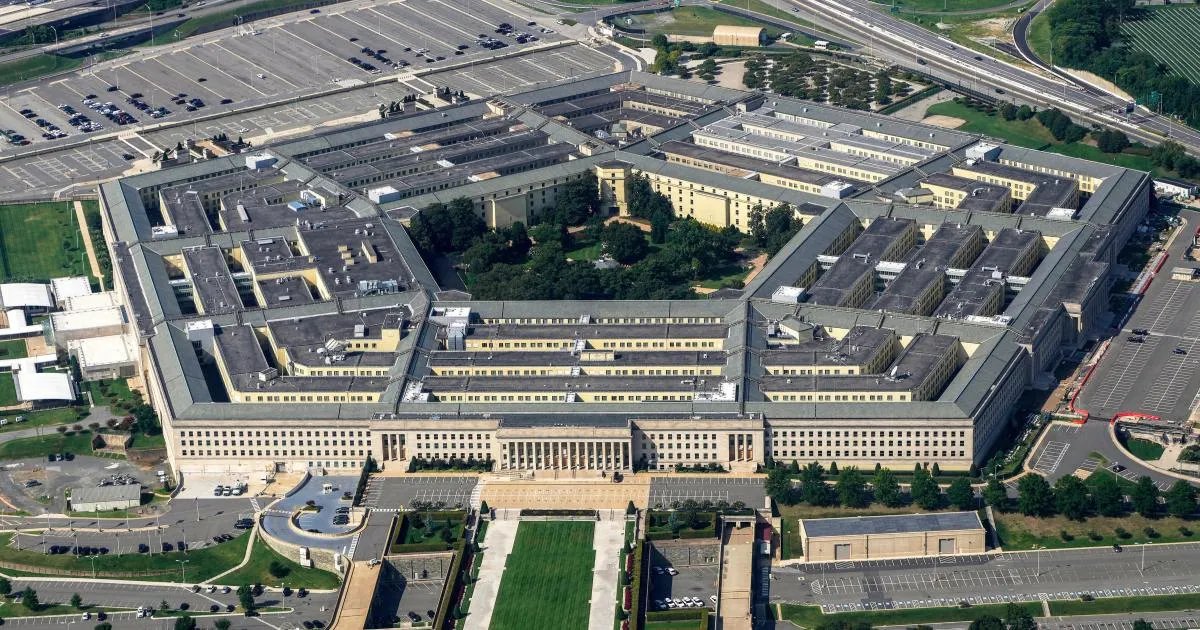
The Pentagon has reduced the scope of Block 4 to deliver a smaller number of upgrades at a more predictable pace, reducing the number of planned capabilities from 66 to 31. Some of the most advanced capabilities planned for Block 4 depend on a new engine core upgrade for the F-35’s F135 engine, which has been deferred to 2033.