dailynewsnblog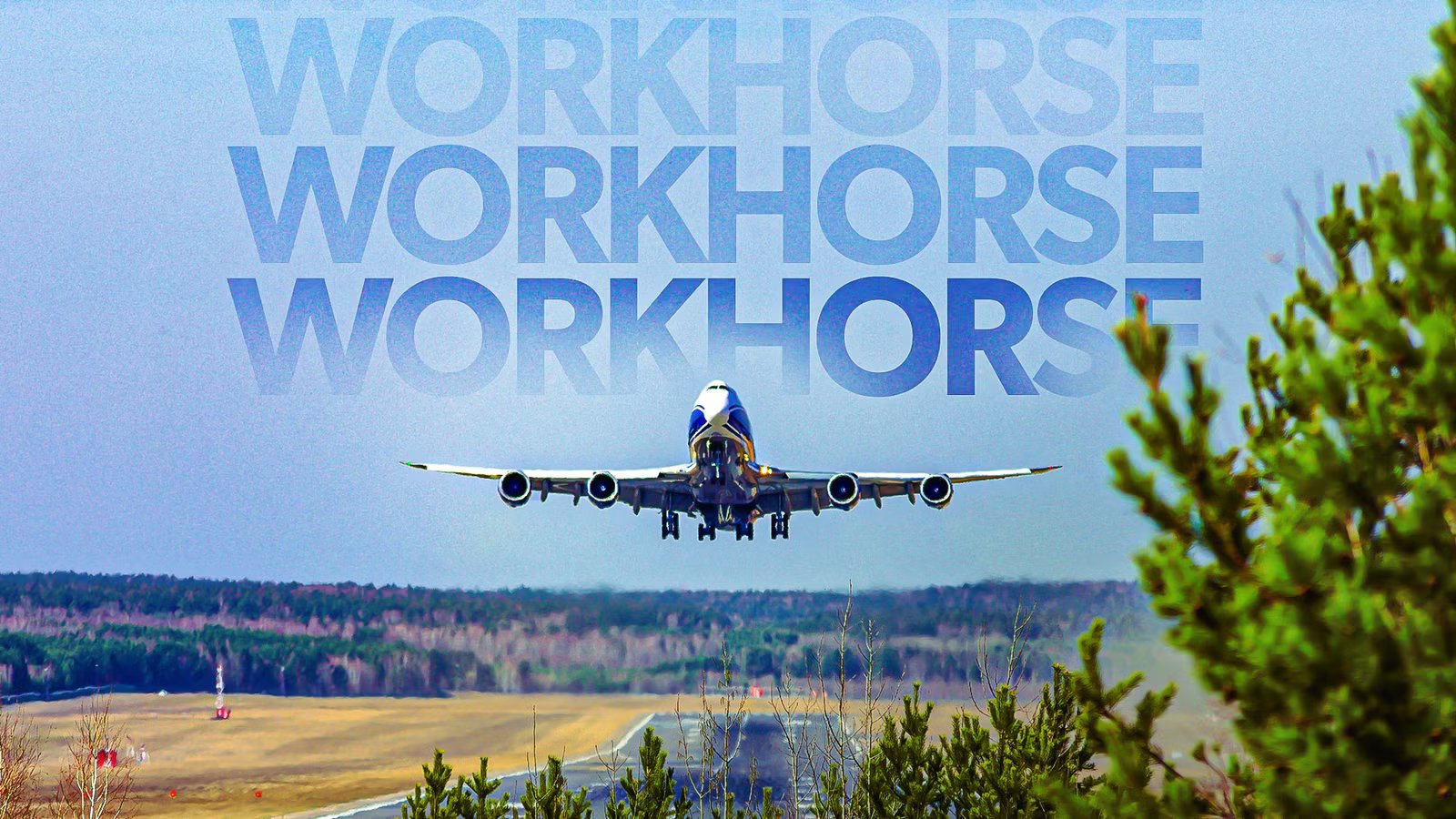
The Boeing 747 remains one of the most important aircraft in global cargo aviation in 2026, even as passenger versions of the jet have largely disappeared from airline fleets. More than 300 Boeing 747 freighters, including the latest 747-8F introduced in 2011, continue to transport goods across long-haul trade routes, according to fleet data from  Boeing and major cargo operators. Their longevity is largely due to a unique capability: the aircraft can load oversized cargo through a hinged nose door, allowing freight that cannot fit inside conventional cargo aircraft.
This capability was built into the design from the start. During development in the late 1960s, Boeing engineers placed the cockpit above the main deck, creating the 747’s distinctive upper-deck “hump.” The layout allowed the nose of the aircraft to open upward for freight loading. Drawing on fleet history and technical documentation, this analysis explores how the Boeing 747 evolved from the world’s first widebody passenger jet into one of the most important cargo aircraft ever built. The story unfolds across three key phases: the aircraft’s dominance in long-haul passenger travel after its 1970 debut, the development of specialized freighter variants such as the 747-200F and 747-400F, and the modern role of the 747-8F in global logistics networks operated by airlines including Atlas Air and Cargolux. For the United States, home to Boeing and several major cargo carriers, the aircraft remains a critical part of international freight transport.
The Era When The Boeing 747 Ruled Global Travel

When Boeing launched the 747 program in the 1960s, airlines were searching for ways to carry more passengers across long distances while lowering the cost per seat. Boeing’s answer was revolutionary: the world’s first widebody commercial airliner, featuring a double-aisle cabin and dramatically greater passenger capacity than previous aircraft.
The Boeing 747 entered commercial service in January 1970 with Pan American World Airways, operating the New York–London route. The aircraft could carry more than 350 passengers, depending on configuration, far exceeding the capacity of earlier jetliners such as the Boeing 707. This dramatic increase in capacity helped transform international travel. Airlines could transport more passengers on a single flight, reducing ticket prices and expanding access to long-distance travel.
Throughout the 1970s and 1980s, the 747 became the flagship aircraft for major airlines around the world, dominating long-haul routes across the Atlantic and Pacific. The aircraft’s enormous fuselage also provided a level of internal space that would later prove ideal for cargo transport. Even during its peak years as a passenger aircraft, airlines and logistics companies recognized the potential of the jumbo jet as a high-capacity freighter.
From Passenger Giant To Cargo Specialist: The Many 747 Variants

Over more than five decades, the Boeing 747 evolved through several major variants. Each new model introduced improvements in performance, efficiency, or capacity, allowing the aircraft to remain competitive in an industry that was rapidly advancing.
The first model, the 747-100, entered service in 1970 and established the basic design of the jumbo jet. Boeing soon followed with the 747-200, which introduced more powerful engines and increased range. In the early 1980s, the 747-300 appeared with a stretched upper deck and improved passenger capacity. However, the most significant evolution arrived in 1989 with the 747-400, which introduced winglets, advanced avionics, and improved fuel efficiency, allowing airlines to operate the aircraft more economically on long-haul routes.
|
Variant |
Entry Into Service |
Key Features |
|
747-100 |
1970 |
First widebody airliner; high passenger capacity |
|
747-200 |
1970 |
Increased range and more powerful engines |
|
747-300 |
1983 |
Extended upper deck and improved capacity |
|
747-400 |
1989 |
Glass cockpit, winglets, better efficiency |
|
747-8 |
2011 |
New wings, advanced engines, stretched fuselage |
Alongside passenger aircraft, Boeing also produced dedicated freighter versions. These cargo variants included structural reinforcements, strengthened floors, and specialized loading systems designed for heavy freight. In addition, many passenger aircraft were converted into freighters later in their operational life, creating a large fleet of cargo aircraft used by logistics companies around the world.

Over 13 Hours: The World’s Longest Regularly Scheduled Boeing 747 Route
A 13-hour marathon that pushes the Queen of the Skies to its limits. Discover the route that stretches the 747’s endurance like no other.
The Cargo Pioneers: Early 747 Freighters

The Boeing 747 quickly proved to be one of the most capable cargo aircraft ever built. Its enormous fuselage volume, wide cargo deck, and large doors made it possible to carry shipments that would otherwise require multiple smaller aircraft. One of the earliest purpose-built freighters was the Boeing 747-200F.
These aircraft were designed specifically for cargo operations and included features such as strengthened floors and a nose cargo door that could swing open to allow loading directly into the front of the aircraft. This design made it possible to load extremely long or oversized items, such as heavy machinery or industrial equipment.
Later, the Boeing 747-400F refined the concept even further. The aircraft combined the Boeing 747-400’s improved aerodynamics and avionics with cargo-specific features such as a large side cargo door and advanced freight-handling systems. These improvements allowed cargo airlines to transport massive loads efficiently across long distances.
Cargo airlines quickly embraced the aircraft. Operators such as Cargolux and Atlas Air built large fleets around 747 freighters, using them to connect major logistics hubs around the world. Their ability to carry heavy and oversized cargo made them indispensable in global trade.
Factory-built Boeing 747 freighters were designed with both a nose cargo door and a side cargo door. Converted freighters, however, originate as passenger aircraft and typically receive only a large side cargo door during modification, since adding a nose door would require major structural redesign of the forward fuselage. This distinction highlights the unique engineering of purpose-built cargo aircraft. While passenger jets can be converted into freighters, factory-built 747 freighter variants retain a level of loading flexibility, especially for outsized cargo, that conversions generally cannot match.
The Ultimate Jumbo Freighter: Boeing 747-8F

By the early 2000s, Boeing faced increasing competition from newer aircraft designs that promised greater efficiency and lower operating costs. To keep the iconic 747 relevant, the company introduced the Boeing 747-8, the most advanced generation of the jumbo jet family.
The aircraft incorporated significant aerodynamic and technological improvements, including a stretched fuselage, redesigned wings inspired by the Boeing 787 program, and more efficient engines. These changes were intended to extend the life of the 747 platform in both passenger and cargo markets while improving operating economics for airlines and freight operators.
The Boeing 747-8F freighter was the first version of the new generation to enter service. It featured a stretched fuselage, new wings, and advanced engines derived from the Boeing 787 program. These upgrades significantly improved fuel efficiency and cargo capacity while reducing noise emissions.
Each GEnx-2B67 engine produces roughly 66,500 pounds of thrust while delivering lower fuel consumption and reduced noise compared with the engines used on earlier 747 variants. Combined with redesigned wings and advanced avionics, these improvements significantly enhanced the aircraft’s efficiency and operational performance.
Another major advantage of the 747-8F is its cargo handling capability. The aircraft can carry dozens of pallets across its main deck and lower deck while maintaining the ability to load oversized freight through the nose door. This makes it uniquely suited for transporting heavy industrial equipment, aerospace components, or large machinery.

The Aircraft Replacing The Boeing 747 Freighter
When the Boeing 747 freighter era ends, discover how Boeing’s 777s and Airbus’ A350F will redefine the future of global air cargo.
Why Cargo Airlines Still Rely On The Boeing 747

Despite the arrival of modern twin-engine freighters such as the Boeing 777F, the Boeing 747 continues to hold a unique position in global cargo aviation.
One reason is capacity. The aircraft’s massive fuselage provides enormous cargo volume, allowing operators to transport large quantities of freight on a single flight. According to Boeing data, the 747-8F offers more than 30,000 cubic feet of cargo volume across its decks.
Flexibility is another important reason why cargo operators continue to rely on the aircraft. The 747’s distinctive nose-loading capability allows freight companies to transport extremely long cargo items that cannot fit through conventional side cargo doors.
This capability is essential for industries such as energy, aerospace, and heavy manufacturing, where shipments may include turbines, aircraft parts, or large industrial components. This significant combination of payload, range, and loading flexibility explains why many cargo airlines continue to rely on the aircraft. Operators such as Cargolux, Atlas Air, UPS and others use 747 freighters on long-haul routes connecting global trade hubs.
Why The Boeing 747 Is No Longer In Production

Although the Boeing 747 remains extremely capable as a cargo aircraft, market conditions eventually led to the end of its production run. The biggest challenge came from advances in twin-engine aircraft technology. Modern widebody aircraft such as the Boeing 777 and Airbus A350 offer comparable passenger capacity while using fewer engines and consuming less fuel. These aircraft are also cheaper to operate and maintain, making them more attractive to airlines.
As passenger demand for the 747 declined, Boeing increasingly relied on cargo orders to sustain production. The 747-8F became the most successful variant of the final generation, with cargo airlines placing the majority of orders for the aircraft.
Ultimately, Boeing delivered the final 747 in 2023, bringing more than half a century of production to a close. Yet the aircraft’s story is far from finished. Hundreds of 747 freighters, including the modern 747-8F, continue to operate across the globe, moving goods between continents every day.
The jumbo jet may no longer dominate passenger travel, but as a cargo aircraft, it remains one of the most important machines in global aviation. The Queen of the Skies has simply traded passengers for pallets and continues to serve the world economy in a new role.