dailynewsnblog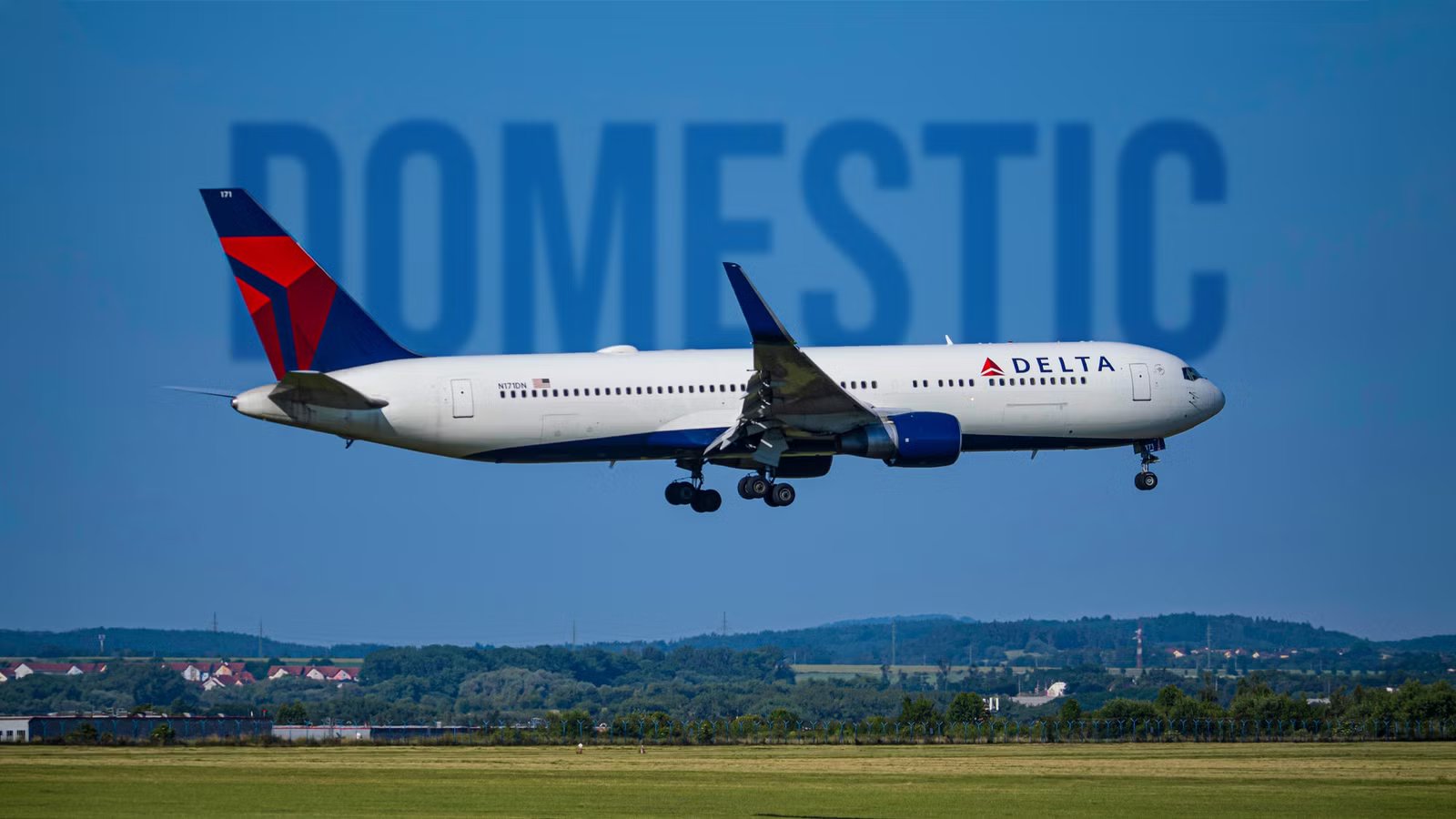
Widebody aircraft are typically associated with long-haul international travel, linking continents and carrying hundreds of passengers across oceans. However, the US domestic market is typically defined by both its geographic scale and the strength of its domestic demand, and these larger aircraft also play a notable role on internal routes. From premium transcontinental services to high-capacity leisure markets, airlines regularly deploy widebody aircraft on flights that never leave the country.
This practice reflects a mix of strategic considerations, including slot constraints at major airports, strong passenger demand, and the need to efficiently utilize widebody fleets between long-haul assignments. According to data from Cirium, an aviation analytics company, covering scheduled operations in 2026, the scale of these deployments is striking. Thousands of widebody flights are planned on key domestic corridors, particularly between New York and California.
At the same time, routes linking the US mainland to Hawaii account for some of the longest domestic sectors in the world, often exceeding 2,500 miles. Airlines including  Delta Air Lines, United Airlines, and Hawaiian Airlines rely heavily on aircraft such as the Boeing 767, Boeing 777, Boeing 787, and Airbus A330 to serve these markets. Together, these operations highlight how widebody aircraft continue to shape passenger experience and operational strategies.
New York John F Kennedy International Airport – Los Angeles International Airport

The route between New York John F. Kennedy International Airport (JFK) and  Los Angeles International Airport (LAX) is one of the most competitive and high-profile domestic air corridors in the US. Delta Air Lines’ use of the Boeing 767-300ER on this route underscores the importance of capacity and premium service in this market, with a total of 2,386 flights scheduled in each direction throughout 2026.
These flights collectively generate more than 1.27 billion available seat miles (ASMs) in each direction, with an average stage length of 3,983 km. The Boeing 767-300ER is particularly well suited to this mission, as although it is not as large as newer widebodies, it provides a balance of capacity and range, allowing the  SkyTeam carrier to offer a premium-heavy configuration tailored to business travelers.
The New York – Los Angeles market is known for its high-yield passengers, including entertainment industry professionals and corporate travelers, which justifies the deployment of widebody aircraft even on a domestic route. This route exemplifies how widebody aircraft are used not only to move large volumes of passengers, but also to deliver a competitive, premium-focused experience on domestic services.
Delta Air Lines’ use of the 767 also enables lie-flat seating in premium cabins, helping it compete effectively in a market where onboard product is a key differentiator. Frequency is another critical factor, and with multiple daily departures, Delta Air Lines ensures flexibility for passengers while maintaining high seat capacity.

Why Delta Air Lines Is Retiring Its Boeing 767-300ERs
Delta will retire its aging Boeing 767-300ERs by 2030, replacing them with fuel-efficient A350s and A330neos while keeping the 767-400ER flying.
New York John F. Kennedy International Airport – San Francisco International Airport

A similarly important transcontinental route is the link between New York John F. Kennedy International Airport (JFK) and  San Francisco International Airport (SFO). Here again, Delta Air Lines deploys the Boeing 767-300ER, with a total of 1,479 flights in each direction scheduled to operate this year. These operations produce over 818 million ASMs, with an average distance of 2,586 miles (4,161 km).
San Francisco’s role as a global technology hub drives significant premium demand, particularly from business travelers moving between Silicon Valley and New York’s financial and media sectors. As on the Los Angeles route, Delta Air Lines’ widebody deployment allows it to offer a high-quality onboard experience, including lie-flat seating, which has become a baseline expectation in the transcontinental premium segment.
The slightly longer sector length compared to the New York – Los Angeles route further reinforces the value of a widebody aircraft. While narrowbody aircraft are capable of operating the route, the additional comfort, cargo capacity, and premium seating of the Boeing 767 provide a meaningful competitive advantage. The high number of annual flights also reflects consistent demand, cementing the route as a core part of Delta Air Lines’ domestic widebody network.
Honolulu Daniel K. Inouye International Airport – Las Vegas Harry Reid International Airport

The route between Honolulu Daniel K. Inouye International Airport (HNL) and Las Vegas Harry Reid International Airport (LAS) is one of the most prominent leisure-focused widebody operations in the US domestic market. Hawaiian Airlines deploys the Airbus A330-200 on this route, with a total of 1,246 flights in each direction throughout 2026. These services account for approximately 956 million ASMs in each direction, with an average stage length of 2,762 miles (4,445 km).
Las Vegas acts as a major gateway for Hawaiian tourism, and vice versa, attracting travelers seeking both vacation experiences and entertainment, and the high seat totals (over 346,000 annually in each direction) demonstrate the strength of demand. The Airbus A330-200 is well-suited to this type of route, offering both the range required for long overwater flights and the capacity needed to keep unit costs competitive.
Unlike more premium-heavy transcontinental routes, the focus here is more leisure-oriented, influencing cabin layout and pricing strategies. Hawaiian Airlines balances a large economy cabin with premium economy and a smaller business class section.

21 Domestic Routes: Where Delta Air Lines’ Widebodies Are Flying This Month
Its twin-aisle flights have risen by more than a quarter in the past year.
Other Routes To/From Hawaii

Beyond Honolulu – Las Vegas services, other routes linking Hawaii with the mainland US represent some of the most significant widebody operations in the domestic market. Cirium’s 2026 schedule data highlights multiple high-capacity routes, including services between Honolulu and Los Angeles, Seattle, Dallas/Fort Worth, and Salt Lake City. These routes range from approximately 2,556 miles (4,113 km) to nearly 3,800 miles (6,115 km), making them among the longest domestic sectors in the country.
The Honolulu – Los Angeles market stands out in particular, with 1,050 flights scheduled in each direction with the Airbus A330-200, generating more than 746 million ASMs. In addition, Delta Air Lines operates Boeing 767-300ER flights on the same route, contributing a further 378 million ASMs in each direction. This combination of operators and aircraft types reflects the sheer scale of demand between Southern California and Hawaii.
 Seattle-Tacoma International Airport (SEA) is another key gateway, with 852 flights in each direction between Honolulu and Seattle, producing over 634 million ASMs. Meanwhile, routes to
  Dallas/Fort Worth International Airport (DFW) see 586 flights in each direction using Boeing 787-8 aircraft, covering an average distance of 3,784 miles (6,089 km). Salt Lake City International Airport (SLC) also features, with nearly 500 annual flights in each direction using Boeing 767-300ER aircraft.
These routes underline Hawaii’s unique position within the US aviation network. Its geographic isolation necessitates widebody aircraft for efficiency, while strong leisure demand ensures consistently high load factors. As a result, Hawaii-bound services remain one of the most important domains for domestic widebody operations.
United Airlines’ Significant Widebody Domestic Network

 United Airlines is a major operator of widebody aircraft on domestic routes, particularly on transcontinental sectors. One of the most notable examples is the route between
  Newark Liberty International Airport (EWR) and San Francisco International Airport (SFO). The
  Star Alliance carrier will operate a total of 447 flights in each direction in 2026 with its Boeing 777-300ER aircraft, generating over 401 million ASMs per direction, alongside additional frequencies operated by the Boeing 787-9.
This dual-aircraft strategy allows United Airlines to adjust capacity based on demand while maintaining a consistent premium product. The Boeing 777-300ER, with its larger seating capacity, is particularly effective during peak periods, while the 787-9 offers improved fuel efficiency and a modern passenger experience. Both aircraft types feature advanced cabins with premium seating, reflecting the importance of the Newark – San Francisco market for business travelers.
|
Ranking |
From |
To |
Number Of Flights |
Aircraft |
Airline |
|---|---|---|---|---|---|
|
1 |
New York John F. Kennedy International Airport (JFK) |
Los Angeles International Airport (LAX) |
2,386 |
Boeing 767-300ER |
Delta Air Lines |
|
2 |
New York John F. Kennedy International Airport (JFK) |
San Francisco International Airport (SFO) |
1,488 |
Boeing 767-300ER |
Delta Air Lines |
|
3 |
Honolulu Daniel K. Inouye International Airport (HNL) |
Las Vegas Harry Reid International Airport (LAS) |
1,246 |
Airbus A330-200 |
Hawaiian Airlines |
|
4 |
Honolulu Daniel K. Inouye International Airport (HNL) |
Los Angeles International Airport (LAX) |
1,050 |
Airbus A330-200 |
Hawaiian Airlines |
|
5 |
Honolulu Daniel K. Inouye International Airport (HNL) |
Seattle-Tacoma International Airport (SEA) |
852 |
Airbus A330-200 |
Hawaiian Airlines |
At 2,565 miles (4,127 km), the route sits firmly within the transcontinental category, where competition is intense, and service quality is critical. United Airlines’ decision to deploy its most modern widebody aircraft domestically highlights the strategic importance of this corridor, not only for revenue generation but also for maintaining brand consistency across key markets. The busiest widebody domestic routes in the US by number of flights in 2026 are outlined in the table above.

What Are The Best Seats In Each Class Of United’s Boeing 777-300ERs In 2025?
The Boeing 777-300ER plays a significant role in United Airlines’ fleet.
Other Popular Widebody Domestic Routes In The US

Beyond the major transcontinental and Hawaii markets, several other domestic routes see regular widebody operations. For example, Delta Air Lines operates Boeing 767-300ER aircraft between  Hartsfield-Jackson Atlanta International Airport (ATL) and Los Angeles International Airport (LAX), with 370 flights in each direction scheduled for 2026. These flights generate more than 155 million ASMs each way.
Additional capacity is also evident on the New York John F. Kennedy International Airport (JFK) – Los Angeles International Airport (LAX) corridor through Delta Air Lines’ use of Boeing 767-400ER aircraft, which adds over 320 million ASMs in each direction. This complements the 767-300ER operations and highlights how airlines layer capacity on high-demand routes using multiple aircraft variants.