dailynewsnblog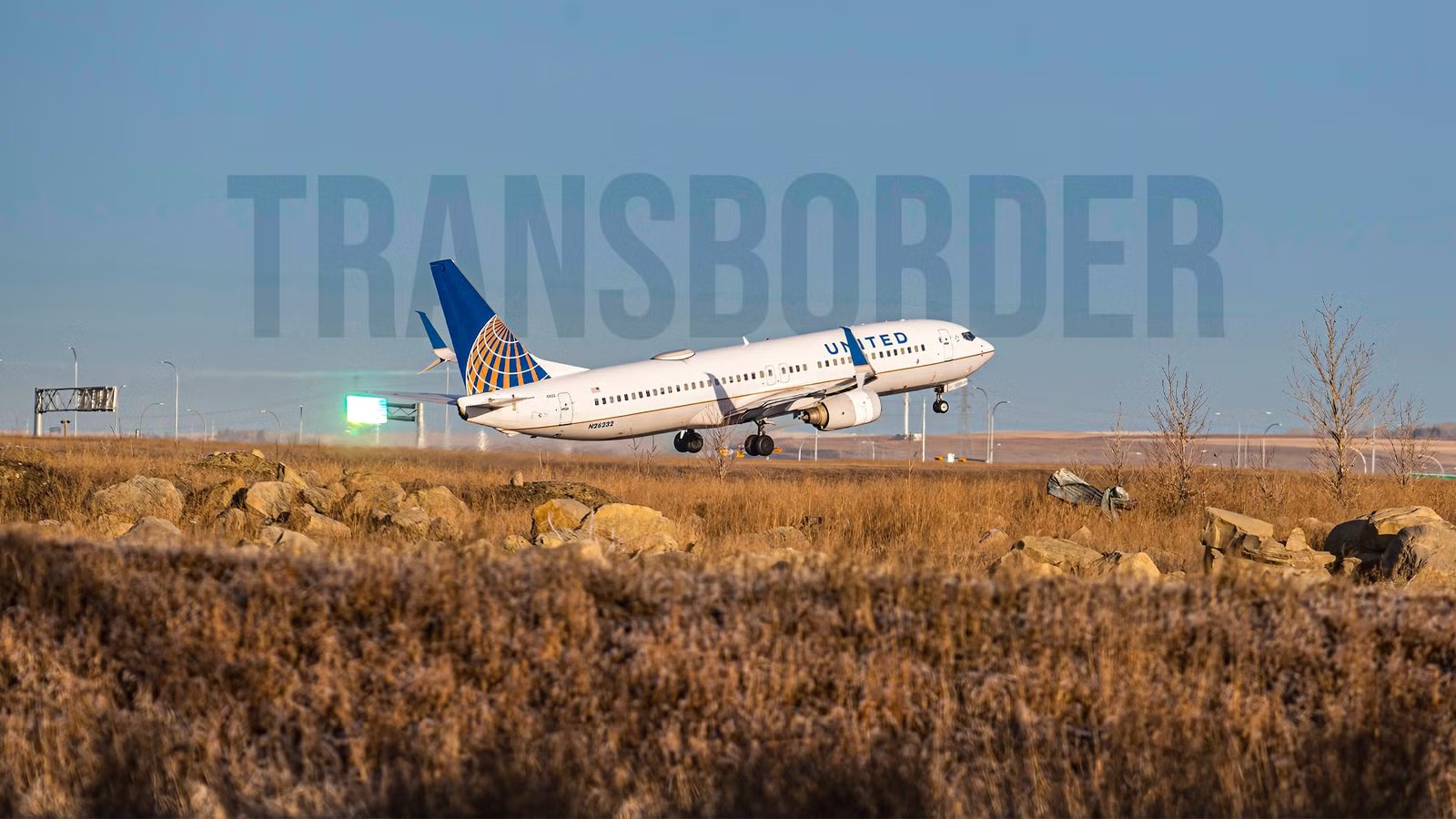
Few international aviation markets are as interconnected as the United States and Canada. Shared borders, deep economic ties, and large tourism flows create constant demand for flights between the two countries. Airlines operate everything from short regional hops across the border to longer routes linking major metropolitan hubs across the continent.
In 2026, the US airlines in this analysis, using data provided by Cirium, will collectively operate 64,929 cross-border flights to Canada, offering 6.46 million seats and generating more than 5.6 billion available seat miles (ASMs). The average route length across the market is 707 miles (1,138 km), reflecting the mix of short-haul regional services and longer transcontinental connections. However, while several airlines operate in this market, a handful of major carriers dominate the majority of flights.
United Airlines Dominates The Market

United Airlines is the clear leader in US–Canada aviation. The airline operates 25,098 flights, offering 2,743,650 seats and generating nearly 2.67 billion ASMs across the cross-border market in 2026. In practical terms, that means almost four out of every ten flights between the two countries operated by US airlines are flown by United, highlighting the carrier’s dominant role in connecting the two neighboring aviation markets.
Much of this presence is built around United’s major hubs near the Canadian border. Airports such as Chicago O’Hare and Newark Liberty act as the airline’s primary gateways to Canada, with frequent services to cities like Toronto, Montreal, and Ottawa. On the West Coast, routes such as  San Francisco International Airport (SFO) – Vancouver International Airport (YVR) and Denver International Airport (DEN) – Calgary International Airport (YYC) help connect Western Canada with United’s broader domestic and international network, while Chicago O’Hare International Airport (ORD) – Toronto Pearson International Airport (YYZ) remains one of the busiest cross-border corridors.
United’s network strategy relies heavily on connections. Many passengers traveling between Canada and the United States do not stop at these hubs but instead transfer to onward flights across the airline’s global network. From hubs like Newark and Chicago, travelers arriving from Canadian cities can easily continue to destinations throughout Europe, Asia, or Latin America. By combining strong hub geography with a wide international network, United can sustain the largest cross-border operation between the two countries.
Delta Builds Strength Through Border Hubs

Delta Air Lines holds the second-largest share of the cross-border market with 17,562 flights scheduled between the United States and Canada in 2026. These services provide 1.64 million seats and generate over 1.04 billion ASMs, making Delta a key player in connecting Canadian cities with major US hubs. Routes such as  Detroit Metropolitan Wayne County Airport – Toronto Pearson International Airport,
  Minneapolis-St. Paul International Airport – Montreal, and New York JFK – Vancouver International Airport illustrate the airline’s focus on high-demand corridors while maintaining broad coverage across the border.
Delta’s cross-border strategy emphasizes shorter, high-frequency routes rather than longer-distance services. With an average flight distance of 542 miles (872 km), significantly below the group average of 707 miles, the airline leverages the proximity of hubs like Detroit and Minneapolis–St. Paul to provide multiple daily departures to key Canadian business centers. This approach ensures both flexibility and convenience for travelers who need frequent options for work or connecting flights.
The airline’s network design prioritizes connectivity, particularly for passengers continuing onward to domestic or international destinations. From hubs such as New York JFK or Seattle, travelers from Canadian cities can easily connect to Delta’s broader network across the US, Europe, and Asia. By focusing on frequent, reliable service on shorter routes while supporting onward connections, Delta strengthens both its cross-border market share and its appeal to corporate and leisure travelers alike.

Up To 23 Hours: Canada’s 7 Longest 1-Stop Flights Revealed
Unveiling the top seven most extensive one-stop routes in Canadian skies
American Airlines Connects Canada To Southern Hubs

American Airlines ranks third overall with 16,159 cross-border flights in 2026, carrying 1,533,874 seats and generating 1.49 billion ASMs. Key routes such as  Dallas/Fort Worth International Airport – Toronto Pearson International Airport, Charlotte Douglas International Airport — Montréal Trudeau International Airport, and Philadelphia International Airport – Vancouver International Airport highlight the airline’s strategy of connecting major Canadian cities with its southern and eastern US hubs.
An interesting detail in the data is American’s average route distance of 775 miles (1,247 km), longer than both Delta and the market average. This reflects the airline’s reliance on hubs that are geographically further from Canada, including Dallas/Fort Worth, Charlotte, and Philadelphia. These hubs allow the airline to offer fewer but longer flights, targeting both business and leisure travelers while capturing connecting traffic from across the United States.
|
Airline |
Flights |
Seats |
ASMs |
Average Distance |
|---|---|---|---|---|
|
United Airlines (UA) |
25,098 |
2,743,650 |
2,667,994,602 |
824 miles (1,326 km) |
|
Delta Air Lines (DL) |
17,562 |
1,640,448 |
1,049,410,956 |
542 miles (872 km) |
|
American Airlines (AA) |
16,159 |
1,533,874 |
1,496,220,147 |
775 miles (1,247 km) |
|
Alaska Airlines (AS) |
5,605 |
462,088 |
225,243,020 |
354 miles (570 km) |
|
JetBlue (B6) |
455 |
72,617 |
178,786,733 |
2,462 miles (3,962 km) |
|
Sun Country Airlines (SY) |
50 |
9,300 |
9,603,366 |
1,033 miles (1,662 km) |
|
TOTAL |
64,929 |
6,461,977 |
5,627,258,824 |
707 miles (1,138 km) |
These hubs also serve as gateways to American’s global network. Canadian travelers using American Airlines can easily continue onward to long-haul destinations in Europe, the Caribbean, and Latin America, making cross-border flights not only about US connections but also about international mobility. By combining long-haul capability with high-demand cross-border routes, American strengthens its position as one of the top US carriers serving Canada.
Alaska Airlines Specializes In Short Cross-Border Flights

Alaska Airlines takes a very different approach to the Canadian market compared to the larger legacy carriers. Rather than a continent-wide network, the airline’s geographic location pushes it to concentrate on the Pacific Northwest, where short distances and high demand make cross-border flying particularly efficient. Key routes include Seattle-Tacoma International Airport – Vancouver International Airport, Portland International Airport – Vancouver International Airport, and  Seattle-Tacoma International Airport – Victoria International Airport, which together form the backbone of Alaska’s Canada operations.
In 2026, Alaska Airlines will operate 5,605 flights between the United States and Canada, providing 462,088 seats and generating 225 million ASMs. With an average route length of just 354 miles (555 km), these are the shortest flights of any airline in the dataset, emphasizing the airline’s focus on high-frequency, short-haul connectivity rather than long-distance coverage.
The structure of Alaska’s network allows multiple daily departures on these short routes, meeting the needs of both business travelers and commuters while supporting leisure traffic. By concentrating on these high-demand regional corridors, Alaska maximizes aircraft utilization and provides convenient scheduling, giving it a strong niche presence in the US–Canada market.

Why Alaska Airlines Is Moving Toward Hub-Based Operations
More aircraft now means more flights to key markets from the airline’s busiest airports.
JetBlue Focuses On Long-Distance Canada Routes

JetBlue Airways operates a much smaller network in Canada compared with the largest US airlines, but it still maintains a measurable presence in the transborder market. In 2026, the airline will run 455 cross-border flights, offering around 72,617 seats and generating nearly 179 million available seat miles (ASMs). These figures represent only a small fraction of the total US–Canada aviation market, which is largely dominated by major carriers such as Delta Air Lines, United Airlines, and Air Canada.
What makes JetBlue distinctive is the length of its routes. The airline records an average stage length of about 2,462 miles (3,962 km), more than three times the typical distance seen across the broader cross-border market. Rather than focusing on short routes between nearby cities, JetBlue tends to operate longer flights linking Canada with major US destinations further south. This strategy results in relatively fewer departures but a much higher average distance per flight, significantly increasing the airline’s ASM contribution despite its limited schedule.
Much of this flying connects Canadian cities with JetBlue’s East Coast focus markets, particularly hubs such as New York and Boston. By concentrating on longer nonstop services instead of frequent short-haul routes, the airline targets travelers who value direct connections to large metropolitan areas. This niche strategy allows JetBlue to compete selectively in the transborder market, providing an alternative to traditional hub-and-spoke connections offered by larger network carriers.
Sun Country Airlines Targets Select Leisure Routes

Sun Country Airlines appears only in a limited way within the cross-border market, operating just 50 flights between the United States and Canada in 2026. Despite this small footprint, the airline still provides roughly 9,300 seats and generates more than 9.6 million available seat miles (ASMs). With an average stage length of about 1,033 miles (1,662 km), Sun Country’s cross-border routes are significantly longer than many typical US–Canada services, which often consist of short-haul links between nearby cities.
Much of the airline’s international activity is concentrated at its primary hub at Minneapolis–Saint Paul, where it operates a fleet composed largely of Boeing 737-800 aircraft configured with around 180 seats. The airline typically operates only a few weekly departures on these cross-border routes rather than daily frequencies, meaning capacity is limited but targeted. This approach keeps operating costs lower while still allowing the airline to capture demand during peak travel periods.
Rather than competing directly with major network airlines on busy business corridors, Sun Country focuses on leisure-oriented travel flows. Canadian passengers often use these services to reach warm-weather destinations such as Las Vegas, Orlando, or Phoenix, particularly during the winter months when demand for sun destinations rises. This seasonal, leisure-focused strategy allows the airline to maintain a presence in the cross-border market without needing the high-frequency schedules typically required to compete on corporate travel routes. Ultimately, such targeted approaches highlight how carriers are continually adapting to the evolving demands of international travel.