dailynewsnblog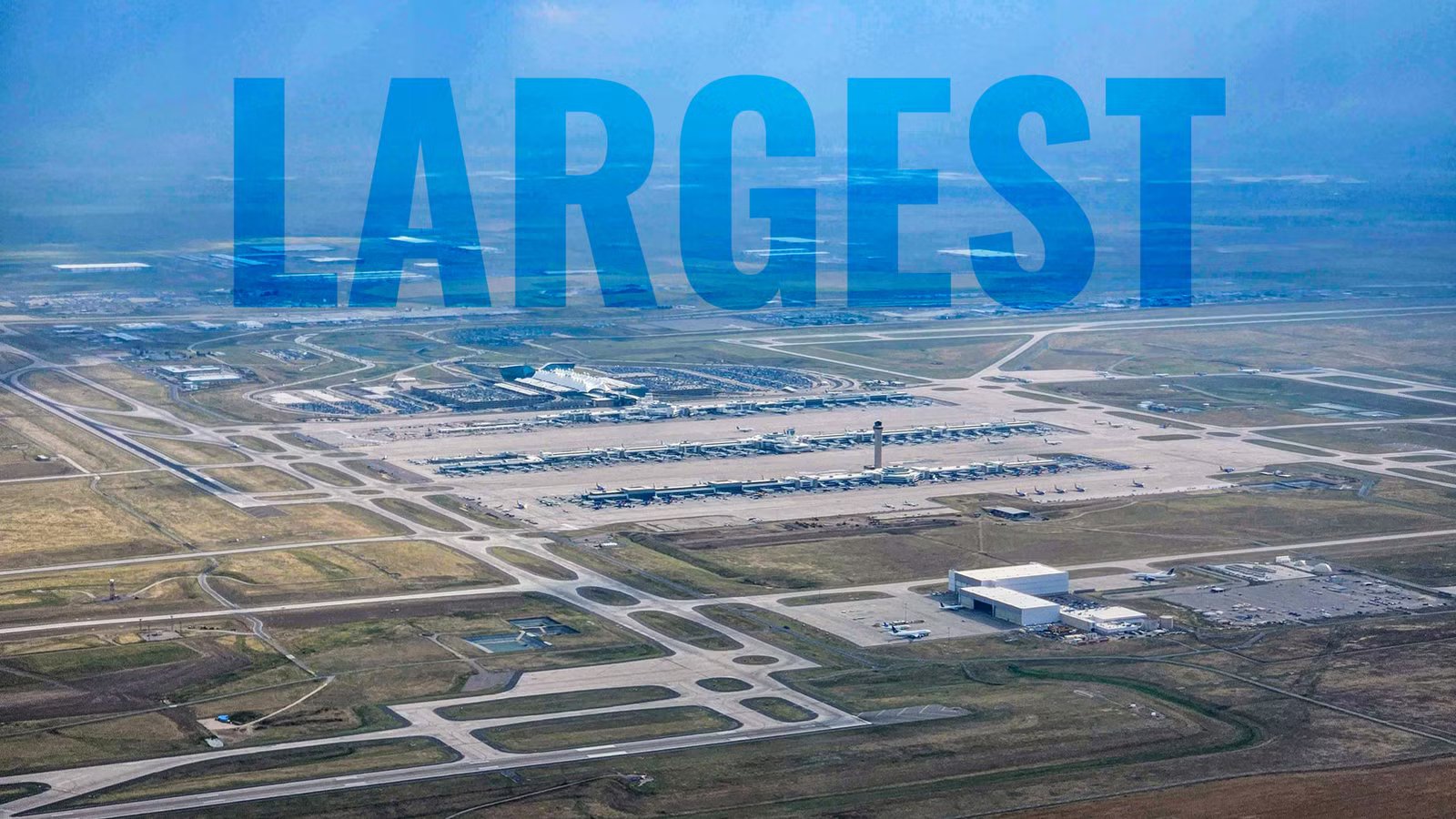
The US is filled with airports big and small, and it’s home not only to some of the world’s busiest airports, but also to some of the world’s largest airports by land area. This gives the airfields enormous capacity for handling flights, and in some cases, room for further growth.
This list will cover the 10 largest airports in the United States by land area. While all of these airports are some of the busiest in the country, they do not necessarily track with the list of the nation’s busiest airports by passenger numbers. This list will only take into account airports currently in operation.
10
Detroit Metropolitan Wayne County Airport
7.3 square miles (19 square kilometers)

 Detroit Metropolitan Wayne County Airport (DTW) is the largest airport in the state of Michigan, and the 10th largest in the United States. It serves the city of Detroit and is home to a hub for Delta Air Lines and Spirit Airlines, while also formerly being home to a hub for Northwest Airlines.
The airport has six runways: Runway 4L/22R, 4R/22L, 3L/21R, 3R/21L, 9L/27R, and 9R/27L. The airport also has maintenance facilities constructed during the Northwest era, and has handled airliners as large as the Boeing 747-400 in the past (although the largest aircraft it routinely handles today is the Airbus A350).
|
Runway |
Length In Feet |
Length In Meters |
|---|---|---|
|
4L/22R |
12,003 feet |
3,659 meters |
|
4R/22L |
10,000 feet |
3,048 meters |
|
3L/21R |
8,500 feet |
2,591 meters |
|
3R/21L |
10,001 feet |
3,048 meters |
|
9L/27R |
8,708 feet |
2,654 meters |
|
9R/27L |
8,500 feet |
2,591 meters |
Detroit features two passenger terminals that together have four concourses and 150 gates. The Edward H. McNamara Terminal is the newer and larger of the two terminals. It features three concourses (A, B, C) that house 121 gates, and Concourse A is also the second-longest airport concourse in the entire world. The Warren Cleage Evans Terminal features 29 gates housed in Concourse D.
9
John F. Kennedy International Airport
8 square miles (21 square kilometers)

All three of New York’s airports are notoriously busy and overcrowded. However, there’s a reason why New York-JFK Airport is the busiest out of the three, and that’s because the airfield is physically larger than LaGuardia or Newark. This allows it to receive significantly more flight traffic than the other two, and JFK has essentially become the international gateway to the US.
JFK features four runways: Runways 4L/22R, 4R/22L, 13L/31R, and 13R/31L. At 14,511 ft (4,423 m), Runway 13R/31L is the third-longest runway in the United States, and it was used as a backup runway for the Space Shuttle program.
The airport currently has five terminals with a total of 130 gates, housed by Terminals 1, 4, 5, 7, and 8. JFK serves as a hub for American Airlines, Delta Air Lines, and JetBlue, along with a sizeable cargo operation by Atlas Air and Kalitta Air. The airport also has a wide array of hangars and administrative facilities, in addition to private aviation FBOs.

The 10 Countries With The Most Airports In The World
Several nations have more than 1,000 airports, but one in particular stands out from the crowd.
8
San Francisco International Airport
8.1 square miles (21.07 square kilometers)

 San Francisco International Airport (SFO) is the largest airport in the Bay Area, and it’s also the largest airport in the state of California (although LAX is the busiest airport in the state). It’s home to a large hub for United Airlines, as well as a smaller hub for Alaska Airlines. United operates its primary Asia hub here, and just as New York is the gateway to the US on the East Coast, SFO essentially serves the same role from the West Coast (along with LAX).
San Francisco International Airport operates four intersecting runways: Runway 10L/28R, 10R/28L, 1L/19R, and 1R/19L. The airport is famous among enthusiasts for its simultaneous parallel approaches and departures, and while it’s a large airfield, it’s also constrained and faces severe operational restrictions during adverse weather.
|
Runway |
Length In Feet |
Length In Meters |
|---|---|---|
|
10L/28R |
11,870 feet |
3,618 meters |
|
10R/28L |
11,381 feet |
3,469 meters |
|
1L/19R |
7,650 feet |
2,332 meters |
|
1R/19L |
8,650 feet |
2,637 meters |
SFO has four terminals with a total of 121 gates. Terminal 1 features the B gates, while Terminal 2 includes the C and D gates. Terminal 3 hosts the E and F gates, while the International Terminal is home to the A and G gates. In addition, SFO also hosts the primary maintenance facility for  United Airlines, which performs work for United and over 40 other customers.
7
Chicago O’Hare International Airport
11.9 square miles (30.9 square kilometers)

Chicago O’Hare International Airport (ORD) is one of the busiest airports in the world, and it’s the most connected airport in the United States. It’s home to a hub for American Airlines, and it’s also home to United Airlines’ busiest hub. In addition, it hosts operating bases for Frontier Airlines and Spirit Airlines.
Chicago O’Hare has eight runways, more than any other airport in the world. These are Runways 4L/22R, 4R/22L, 9L/27R, 9C/27C, 9R/27L, 10L/28R, 10C/28C, and 10R/28L. Runway 4L/22R intersects Runways 9C/27C and 9R/27L, which are the only intersecting runways at O’Hare.
Four terminals at O’Hare host 216 gates, more than any other airport in the entire world. Terminal 1 features the B and C concourses, with a total of 52 gates. Terminal 2 features 41 gates in the E and F concourses, while Terminal 3 hosts 80 gates in the G, H, K, and L concourses, and Terminal 5 has 35 gates in the M concourse.
6
Salt Lake City International Airport
11.96 square miles (31 square kilometers)

As a general rule of thumb, the further west you go in the US, the newer the city, and that also applies to the size of US airports. Salt Lake City International Airport (SLC) is the largest and busiest airport in Utah, and it’s home to a sizeable hub for  Delta Air Lines.
Salt Lake City International features four runways, three of which are often used for commercial operations and one of which is reserved for smaller aircraft. These are Runways 16L/34R, 16R/34L, and 17/35, while Runway 14/32 is significantly shorter.
|
Runway |
Length In Feet |
Length In Meters |
|---|---|---|
|
16L/34R |
12,002 feet |
3,658 meters |
|
16R/34L |
12,000 feet |
3,658 meters |
|
17/35 |
9,596 feet |
2,925 meters |
|
14/32 |
4,893 feet |
1,491 meters |
Salt Lake City features a single terminal building with two concourses. Concourse A features 47 gates, while Concourse B has 36 gates, and 11 more gates are scheduled to open in late 2026. In addition, Salt Lake City International Airport also receives a sizeable number of general aviation flights.

The 10 Largest Airline Megahubs In 2025
How many of the airports on the list do you know?
5
George Bush Intercontinental Airport
15.4 square miles (40 square kilometers)

Houston is home to a hub for United Airlines, and was formerly a hub for Continental Airlines and Texas International before that. It’s the second-busiest airport in Texas and also the state’s second-largest airport. It ranks behind only Dallas/Fort Worth in both metrics.
 Houston George Bush Intercontinental Airport (IAH) has five runways: Runway 15L/33R, 15R/33L, 9/27, 8L/26R, and 8R/26L. While Houston primarily serves as the Latin America hub for United Airlines, it’s also home to an operating base for Spirit Airlines.
Houston features five terminals. Terminal A contains 20 gates, while Terminal B includes 30 gates. Terminal C contains 29 gates, while Terminal D comprises 18 gates. Terminal E, meanwhile, has 24 gates. In total, Houston George Bush Intercontinental Airport contains 121 gates.
4
Washington Dulles International Airport
20 square miles (52 square kilometers)

Washington Dulles International Airport (IAD) is the secondary transatlantic hub for United Airlines. This was the carrier’s primary transatlantic hub for decades, but the airline’s merger with Continental Airlines in 2010 gave it a hub in Newark Liberty International Airport, which is ultimately a larger market than Washington.
The airport features four runways with a fifth planned: Runways 01L/19R, 01C/19R, 01R/19L, and 12/30, while Runway 12R/30L is in planning. The airport’s main terminal features four gates, while two parallel midfield buildings (Concourses A/B and C/D) contain 135 gates. In total, the airport has 139 gates.
Washington Dulles is a massive airport, but despite the space, it tends to lag behind the much smaller Washington Ronald Reagan National Airport. Ultimately, National Airport is much closer to the city center of Washington, D.C., and as such is generally preferred by most passengers within its perimeter, although Dulles does serve wealthy communities nearby as well.
3
Orlando International Airport
20.8 square miles (54 square kilometers)

Shutterstock
 Orlando International Airport (MCO) is the busiest airport in Florida and is also the largest in the state. While it’s home to operating bases for JetBlue, Breeze Airways, Frontier, Southwest Airlines, and Spirit Airlines, it doesn’t feature a large hub from any of the big three US airlines (American, Delta, United) due to competitive pressures and low yields.
Orlando features four parallel runways: Runway 17L/35R, 17R/35L, 18L/36R, and 18R/36L. Terminal A consists of concourses Airside 1 (29 gates) and Airside 2 (30 gates). Terminal B consists of concourse Airside 3 (30 gates) and Airside 4 (30 gates). Terminal C is located on the southern part of the airfield and contains 16 gates.
Orlando is a major tourist destination, but legacy airlines typically rely heavily on business travel, and business travel to and from Orlando is relatively minimal. The majority of travel to Orlando is by vacationers, who are low-yielding. Instead, the US budget airlines take the majority of the market share.

The US’s 10 Busiest Airports For International Flights
They collectively have up to 1,700 daily departures.
2
Dallas/Fort Worth International Airport
26.6 square miles (69 square kilometers)

 Dallas/Fort Worth International Airport (DFW) is the world’s second-busiest airport by passenger numbers, and the largest as well as busiest airport in Texas. DFW is the primary hub for American Airlines, and it is the second-largest airline hub in the US, behind only Delta’s hub at Atlanta (which is also the world’s busiest airport).
DFW has seven runways: Runway 13L/31R, 13R/31L, 17L/35R, 17C/35C, 17R/35L, 18L/36R, and 18R/36L. The airport is so large that it has its own zip code and USPS city designation, and it also essentially serves as a global hub for  oneworld, receiving flights from over 40 airlines and receiving aircraft as large as the Airbus A380.
DFW features six terminals that contain a total of 193 gates. Terminal A contains 36 gates, while Terminal B features 45 gates. Terminal C has 38 gates, and Terminal D has 33 gates. Terminal E contains 41 gates, while Terminal F is under construction and will feature 31 gates, bringing the airport’s total to 224 when completed.
1
Denver International Airport
52 square miles (135 square kilometers)

 Denver International Airport (DEN) is by far the largest airport in the country. It’s home to a sizeable hub for United Airlines, and this hub has significantly grown in recent years, at times eclipsing Chicago-O’Hare regarding United departures.
Denver has six runways arranged in a pinwheel pattern: Runway 7/25, 8/26, 16L/34R, 16R/34L, 17L/35R, and 17R/35L. The pinwheel design is unorthodox, but it’s one of the most efficient airfield layouts to ensure timely departures and arrivals, reducing on-ground time and increasing overall capacity.
Denver has a single terminal named the Jeppesen Terminal, along with three midfield concourses. Concourse A features 60 gates, while Concourse B contains 72 gates. Concourse C features 47 gates. In total, the airport has 169 gates.