dailynewsnblog
Sundays are for waking up in a Holiday Inn and finding that the breakfast buffet hash browns are glued to the bottom of the serving pan. Tarnation! I bellow like an enraged thunder god, like Vesuvius at full bloom, and stab the tray wildly with my knife and fork. I am dragged away by heavyset teenagers, who are about to heave me into the canal when I protest that I haven’t yet finished writing the weekly Sunday Papers article for prominent videogame website Rock Paper Shotgun. Shocked, the outsized urchins release me, and I scurry back to my typing desk with a mugful of baked beans. I’ll be back for those hash browns. I will have my vengeance.
I’ve been thinking about photographic aesthetics a lot this week, and not just because I recently discovered that damp has spoiled a bunch of my old university snapshots. Over at Outland, Al Warburton offers a potted origin story for the Backroom aesthetic, tethering it to the falling cost of access to 3D graphics hardware. (This is a Substack publication – a reminder that Substack have proven happy to let anti-Semites and white supremacists publish on their platform. The Verge has a timeline of reporting.)
The most beguiling images were devoid of waxy CG humans or complex geometry and focused instead on crisp, lucid interiors whose clean lines and simple lighting accentuated the seductive visual qualities of synthetically illuminated space. Here’s where the backrooms aesthetic begins: with indie artists leaning into the affordances of their new medium and discovering that computer graphics perform a strange alchemy on sterile civic interiors like hospitals, reception rooms, tunnels, lounges, offices, and garages. At once skeletal and emotive, this kind of synthetic photography seems to mimic the architecture of memory itself.
A good picture captures the soul of its subject, they say. On which note, here is Ashley Bardhan’s reflection on the snapping of spooks in this year’s remake of 2003’s Fatal Frame 2: Crimson Butterfly.
Again, my fingers twitch for my sister’s hand – an action that both regenerates Mio’s health and gives me, as the player, a tangible sense of companionship in Minakami Village’s otherwise desolate neighborhood of black and bones. When she’s gone, the loneliness is even emptier. The dolls hanging from their necks above me in the cottage look even more like her – or like me, her twin. Me and the limp dolls – we’re both purposeless without another girl to hold us. But I also love feeling this pathetic. There’s no other opportunity to do it safely.
In the wake of Nvidia’s DLSS 5 rollout, it feels like a good time to discuss what we mean when we say something ‘looks AI-generated’ – that specific, plump-yet-cadaverous, sterile-yet-libidinous, cost-effective and aberrant congealing of photorealism especially into aesthetics I myself don’t have any satisfying umbrella terms for, yet. I haven’t read a piece on Nvidia’s latest that really gets into it, but if you’re after some chunkier background research, Jan-Noël Thon and Lukas R.A. Wilde put out a book of essays on AI aesthetics in November 2025, all available to read online in early access. Here is an excerpt from Michelle Henning’s essay about photorealism, “affective realism”, and how technologies such as Google Pixel 9 play upon desires hidden within the notional “truthfulness of photography”.
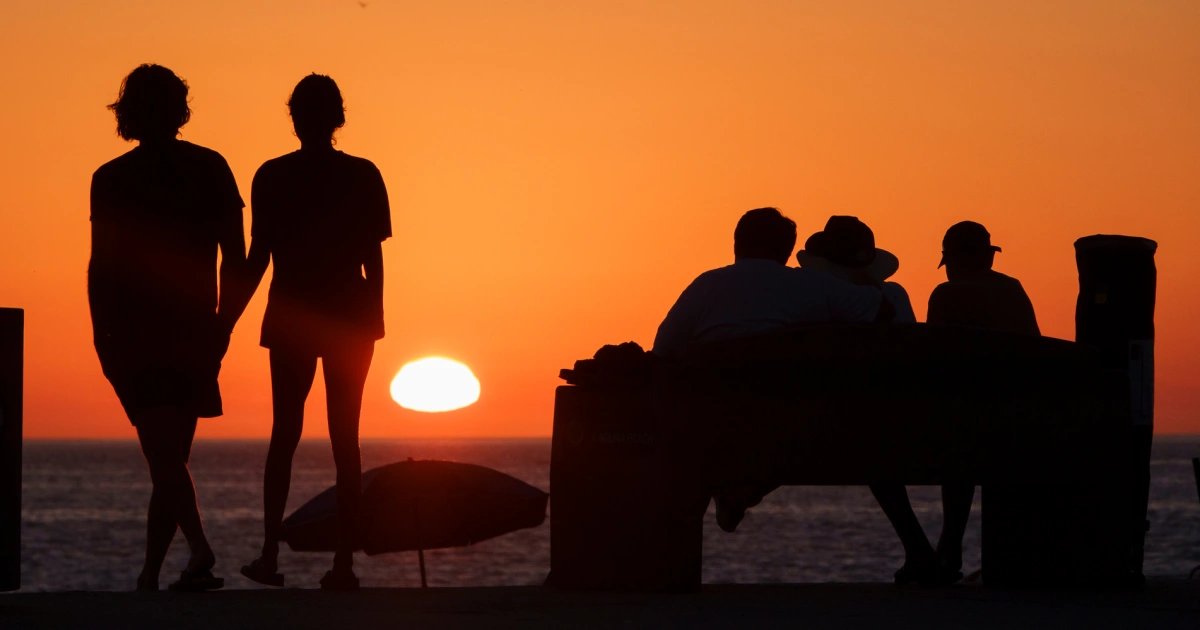
…in the numerous promotional videos for Google Pixel phones, users are shown manipulating the image immediately after taking it. The promotion represents the generative AI as making a scene more like a wish than a memory—how you want to remember the event from now on, rather than how you actually do. This is illustrated in advertisements for Google’s Pixel 9 phone in which people are shown using the “Magic Editor” to remove passers-by from their photographs and editing group photos to get the “perfect” shot in which every facial expression is uniformly flattering. This is not so much about the fallibility of human memory as the deliberate production of alternative “memories.” Building on earlier claims around “creative photography” such as Kost’s, Reynolds justifies the manipulations of the Magic Editor according to an idea of authenticity rooted ultimately in desire and self-promotion. His promise that you can “create that moment the way you remember it” would be more truthfully expressed as “the way you want to remember it” or “the way you want others to think it was.”
Moving away from photography, Elizabeth Bushouse profiles a few of the women, credited and uncredited, who worked on localisation for games such as Final Fantasy IV, Earthbound and Slipheed.
According to some tweets of hers that I uncovered, she was always an avid gamer: Romance of the Three Kingdoms II kindled her initial interest in games, and Final Fantasy II is what sparked her desire to work at Square. Her wish was granted in 1990, and she stayed with Square until 1994, working in their Japan offices. Her first task was to check over a strategy guide for Final Fantasy III. Strategy guide checking was considered part of Public Relations at the time, which was her initial role at the company. In a tweet posted in 2013, she admitted to being the person behind “You spoony bard!”, saying that she thought a wise person like Tellah wouldn’t use curse words, so she ending up having him say something odd instead, which she said would’ve never happened if the translation had been outsourced.
Bullet Points Monthly are doing a bunch of articles on Pathologic 3, which reminds me that I need to carry on playing Pathologic 3 and finish my own three-part sort-of-review. Here is Julie Muncy with a very spoiler-filled, “reluctant defence” of Daniil Dankovsky, Bachelor of Medicine:
Pathologic 3 is not a story about a Town, a plague, and a trio of desperate healers. Pathologic 3 is a Gnostic puzzle box, its center hollow and recursive. It presents a series of false realities and false selves for its hero to break out of. By following the path left by the hole torn in the fabric of his character, Dankovsky can find a way to become something new.
This week’s music is “Childlike Adults”. Have a good weekend, wherever you are – I’m off back to the buffet. The hotel’s beefy youths are elsewhere at the time of writing. Perhaps I will throw the hash browns in the canal.