dailynewsnblog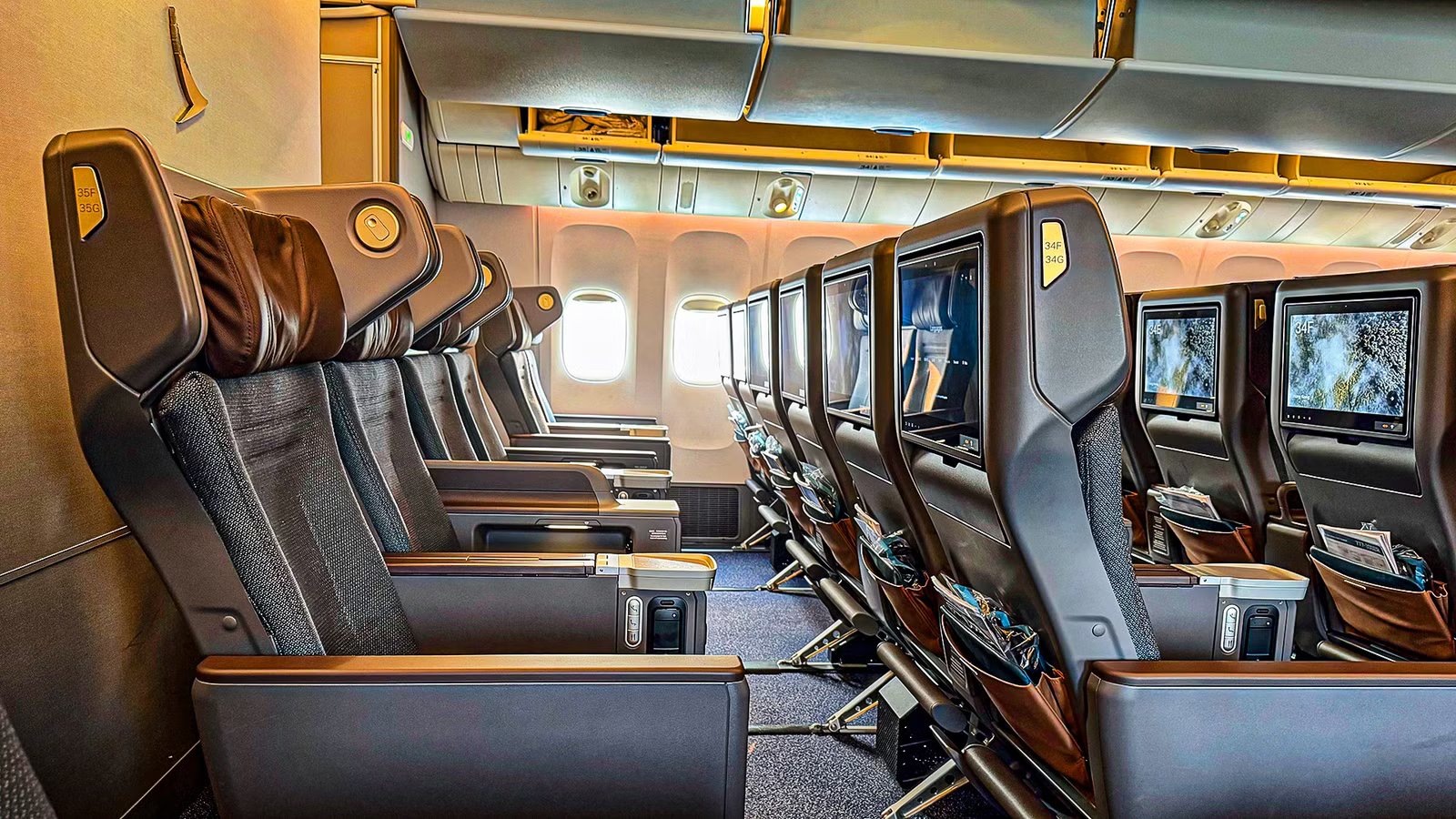
Premium economy has become one of the most competitive cabin classes in long-haul travel, bridging the gap between economy and business class by offering more space, enhanced service, and an upgraded onboard experience. It is designed for travelers who value these benefits without the price tag of a business-class seat.
Among the strongest players in this space are  Singapore Airlines and Cathay Pacific, two Asian carriers consistently recognized for cabin quality, service standards, and attention to detail. While both airlines position premium economy as a refined and comfortable step up from economy, their products differ in execution, design philosophy, and onboard focus.
A Look At Cathay Pacific’s Premium Economy Product

Cathay Pacific positions its premium economy class as a clear upgrade over standard economy, with a strong emphasis on additional space, comfort, and a more refined onboard experience. The cabin is available across the airline’s Airbus A350 and Boeing 777 fleet, including the newly introduced premium economy product on the Boeing 777-300ER, where comfort, privacy, and modern design are central to the experience. While traveling, premium economy passengers benefit from priority treatment throughout the journey, including dedicated check-in counters at selected airports, priority boarding, and an increased baggage allowance. Onboard, passengers receive a high-quality dining experience, starting with an alcoholic welcome drink upon boarding. Meals feature enhanced menu options, often inspired by Hong Kong cuisine, and are served with metal cutlery and proper tableware. Snacks and beverages are available throughout the flight, and on long-haul services, passengers receive an amenity kit including everything for a good night’s sleep.
The seats in Cathay Pacific’s premium economy cabin are arranged in a 2-4-2 configuration and offer up to 40 inches (101.6 cm) of pitch, providing noticeably more legroom and personal space compared to economy class. The A350s are equipped with the Collins Aerospace MiQ seats while the B777s feature the Recaro R5. Each seat features increased recline, an adjustable headrest, and a calf and footrest to support a good night’s rest on long-haul flights. Furthermore, all seats are equipped with high-resolution inflight entertainment (IFE) screens of 15.6 inches (39.4 cm) with 4K capability. The system supports Bluetooth audio, allowing passengers to connect their own headphones, while noise-cancelling headphones are also provided. Every seat is equipped with USB ports and power outlets, as well as additional storage compartments and dedicated holders for phones and tablets. On the latest Boeing 777-300ERs, the premium economy seats feature improved padding, a sleeker finish, and enhanced storage options, further improving overall comfort.

The World’s Most Spacious Transpacific Premium Economy Seats You Can Book Today
Discover the secrets to unlocking the most spacious premium economy seats for your next transpacific flight.
A Look At Singapore Airlines’ Premium Economy Product

Singapore Airlines’ premium economy cabin is currently available across its Airbus A350, A380, and Boeing 777 fleet. For Singapore Airlines, passenger comfort and convenience are a priority in its premium economy class cabin. Passengers benefit from priority treatment throughout the journey, from check-in and boarding to baggage handling. Onboard, the experience is further enhanced by an exclusive premium economy dining offering. Meals are served as a three-course experience, presented on proper tableware, with a selection of snacks and beverages available throughout the flight. On flights exceeding seven hours, passengers may request additional amenities designed to further improve comfort and support a restful night’s sleep.
Onboard the A350s and B777s, Singapore Airlines has installed the Safran Z535 seats offering up to 38 inches (96.5 cm) of pitch with a generous eight inches (20.3 cm) recline and measure 19.5 inches (49.5 cm) in width, providing noticeably more space than the airline’s standard economy class. To support rest and sleep on longer flights, each seat features a generous recline, along with a headrest, leg rest, and footrest. Entertainment is delivered via a large 13.3-inch (33.8 cm) HD screen running the KrisWorld inflight entertainment system, which offers an extensive library of around 1,800 entertainment options. Noise-cancelling headphones are provided, and every seat is equipped with a reading light, two USB ports, and additional storage space for personal items.

5 Most Superior Long-Haul Economy Seats You Can Book Today
Discover the unexpected comfort hiding in these long-haul economy seats.
How Do The Products Compare?

Singapore Airlines and Cathay Pacific both offer premium economy products that sit firmly at the top end of the segment. Looking at the Skytrax World Airlines Awards 2025, both airlines have a spot in the top 10 best premium economy class products in the world. However. Singapore Airlines does have a slight edge over Cathay Pacific in the ranking. Singapore Airlines ranked fourth for the world’s best premium economy class, while Cathay Pacific came in sixth. Similarly, Singapore ranked fourth for the best premium economy class seat compared to the sixth spot for Cathay. In terms of premium economy class catering, Singapore Airlines came in second place, whereas Cathay Pacific ranked fifth.
|
Premium seats (per AeroLOPA) |
Cathay A350-900 |
Cathay 777-300ER |
Singapore A350-900 |
Singapore 777-300ER |
|---|---|---|---|---|
|
Premium seats |
Collins Aerospace MiQ |
Recaro R5 |
Safran Z535 |
Safran Z535 |
|
Row pitch |
40 inches (101.6 cm) |
38.2 inches (97 cm) |
38 inches (96.5 cm) |
38 inches (96.5 cm) |
|
Seat width |
18.5 inches (47 cm) |
19.5 inches (49.5 cm) |
19 inches (48.3 cm) |
19.5 inches (49.5 cm) |
|
Seat recline |
9 inches (22.9 cm) |
6 inches (15.2 cm) |
8 inches (20.3 cm) |
8 inches (20.3 cm) |
Although Singapore Airlines ranks higher in the Skytrax ranking for seat quality, Cathay Pacific seems to hold a small advantage, offering up to 40 inches (101.6 cm) compared to Singapore Airlines’ 38 inches (96.5 cm). Cathay’s seats also feel more private, particularly on the newest Boeing 777-300ER, thanks to improved padding, a more sculpted shell, and enhanced storage. Singapore Airlines, however, counters with excellent seat ergonomics, generous recline, and a consistently polished cabin feel across its fleet. When it comes to inflight entertainment, both airlines perform exceptionally well. While Singapore Airlines’ KrisWorld system, with around 1,800 entertainment options, might win on content, Cathay seems to have a hardware advantage.
In terms of soft products, both airlines have their own style, but only differ slightly in terms of quality. Both airlines offer refined, multi-course, locally-inspired dining options that are well above economy class standards. These meals are served on proper china plates and with metal cutlery. On the ground, both airlines provide priority check-in, boarding, and baggage handling, creating a more comfortable airport experience compared to economy class. Neither product typically includes lounge access as standard, keeping premium economy clearly positioned below business class. Additionally, both airlines offer larger luggage allowances compared to economy. All things considered, it is difficult to say whether one airline is significantly better than the other. In the end, both represent some of the strongest premium economy products on the market.

Why Premium Economy Is Booming On Ultra-Long-Haul Flights
Premium economy is becoming more and more popular around the world as passengers seek a comfortable, but affordable class of fare.
The Rise Of Premium Economy

In recent years, premium economy has gained popularity among airlines and passengers worldwide. Since the introduction of the first lie-flat business class seat in 2000, business-class cabins have become increasingly luxurious, offering sliding privacy doors, lie-flat beds, and excellent dining options. On the other hand, many airlines have reduced service in economy class and continue to opt for increasingly dense configurations. As a result, premium economy has gained popularity among airlines and passengers worldwide, bridging the gap between business class and economy class.
In premium economy, passengers benefit from extra legroom, wider seats, enhanced dining options, and other premium amenities, which improve the long-haul travel experience compared to regular economy class. For airlines, the cabin offers a high-yield product that meets passenger demand for comfort at a lower price than business class. It is a product designed to attract both leisure travelers seeking more comfort and price-conscious business travelers. However, the value-for-money of premium economy is heavily discussed among frequent travelers and depends heavily on the airline and passenger expectations.
An important reason for the increased demand for premium economy cabins is the post-pandemic surge in business-class travel in recent years, which has driven up prices and forced some travelers to seek more affordable alternatives. At the same time, the service quality cuts in regular economy class, have created a customer segment willing to pay extra for better service but unwilling to pay for business class. According to a 2016 study, passengers are willing to pay more for premium economy, with flight distance a logical factor in the level of this willingness to pay. An interesting finding in this study is that older age groups show a strong willingness to upgrade to premium economy, as they seek more space and comfort.
Over the past decade, widebody aircraft featuring premium economy cabins have more than doubled, with the cabin class now installed on around 45% of aircraft. Most premium economy cabins are available in North America and Europe, with North America even having 90% of widebodies featuring a premium economy cabin. And whether you love or hate premium economy, the cabin class isn’t going anywhere anytime soon. Airlines such as KLM, SWISS, and United Airlines are investing heavily in the cabin class, while others, such as Korean Air, Thai Airways, KLM, and  Alaska Airlinesare preparing to enter the premium economy market.