dailynewsnblog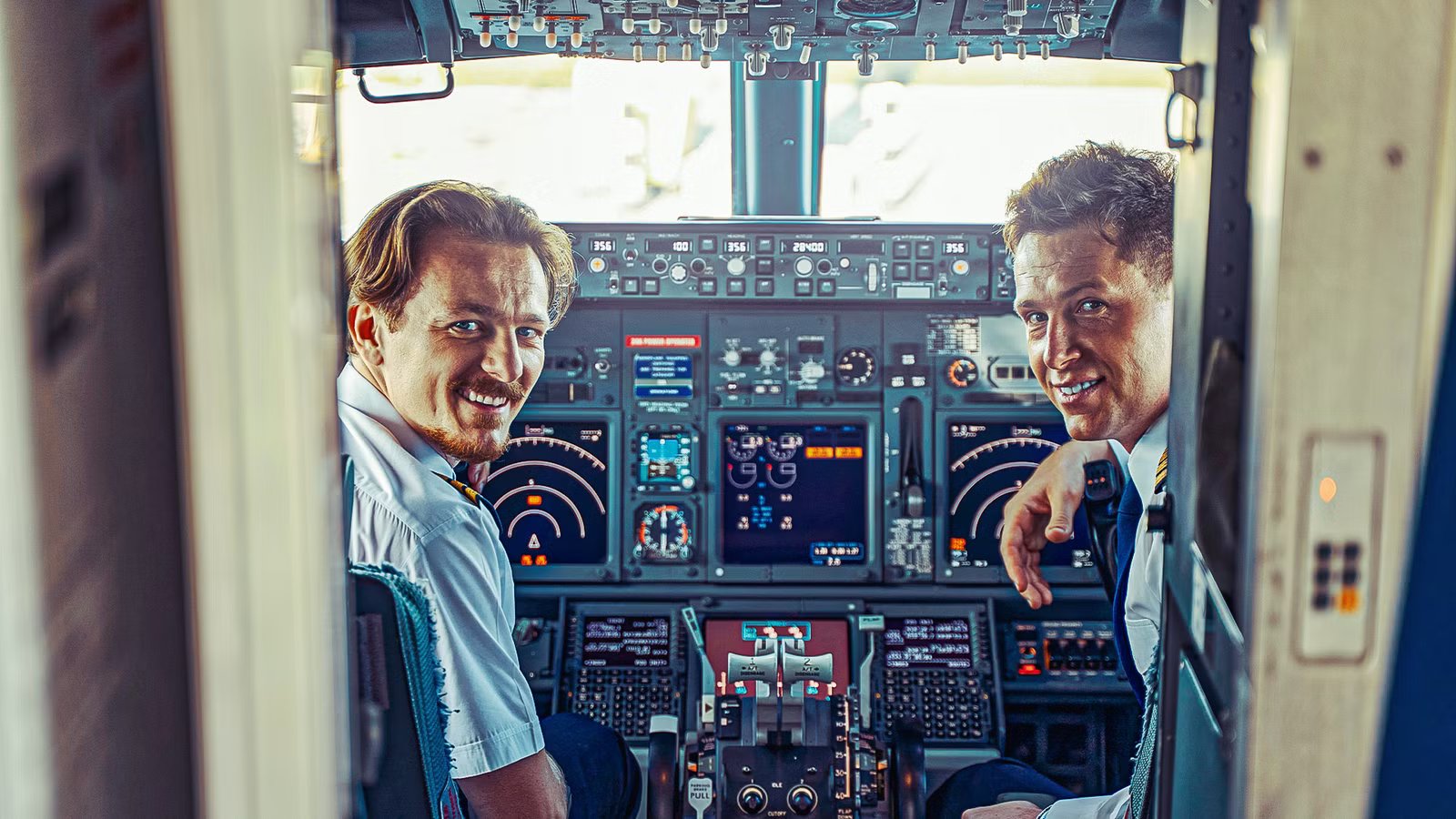
There are some striking differences in how Airbus and Boeing aircraft are piloted and built. Pilots have their preferences, with some preferring the “luxury” of an Airbus cockpit and automation of flying, while others prefer the “real flying” experience of Boeing. Bombardier built the CSeries, now Airbus A220, as a sort of hybrid between the two. Generally, pilots “stay in their lane” and will either fly Airbus and possibly transition through its respective variants, or Boeing aircraft and its aircraft types.
One of the most famous perks of flying Airbus is the small folding tray table built into the side console. The tray table has become something of an inside joke and meme. It feeds into the idea that Airbus cockpits are built comfortably, like offices where pilots can manage them with a desk. This feeds into the notion that Airbus pilots manage the aircraft, with some Boeing pilots teasing that they are button pushers who don’t really fly the aircraft. Here is what to know about some of the striking differences between Airbus and Boeing aircraft inside the cockpit.
Flying An A320 Is Closer To The A380 Than 737

The difference between flying an Airbus and a Boeing aircraft is so great that for a pilot flying an Airbus A320 narrowbody, flying an A380 Superjumbo is significantly more similar than flying the Boeing 737 counterpart. While this is partly down to the Boeing 737 being fundamentally an old 1960s design, it is also because the A320 and A380 share the same Airbus design philosophy. They have the same sidestick logic, the automation behavior feels characteristic of Airbus, and more.
Compared with the A320, the A380 is a bigger Airbus, not a different one. That said, there are differences as the A380 is far larger, has more inertia, is more complex, has a slower response due to mass, and so forth. The A320 and 737 have entirely different control philosophies (more on that below). Essentially, a pilot has to re-relearn how the airplane wants to be flown when jumping the species barrier from the A320 to the Boeing 737.
Airbus has designed its cockpits with “Cross-Crew Qualification” (CCQ). The smaller A320 and giant A380 share the same fly-by-wire logic, the same flight laws, and more. For a pilot moving from an Airbus flight deck to a 737 one, there is a “culture shock,” and pilots need to learn a new “language”. An Airbus’ quiet, spacious cockpit with the iconic tray table is replaced by a cramped and loud setting. The Boeing 737’s controls need to be physically far more than those of an Airbus.
Core Philosophical Difference: Automation

One of the core differences in the design philosophies between Airbus and Boeing is automation. An Airbus is designed with the idea that the airplane protects itself, while Boeing aircraft have the idea that the pilot is always in charge. Airbus computers intervene to prevent stalls, overspeed, excessive bank, and excessive pitch. The pilot’s input from the sidestick is more of a “request” than an absolute command.
Meanwhile, Boeing has designed its computers to assist the pilot, but they rarely override the pilot’s commands. If a pilot insists, they can exceed the aircraft limits, while the feel of the controls is described as mechanically “honest.” This means that pilots can feel they are actually flying the aircraft, which is one of the reasons why pilots love flying the Boeing 757.
|
Feature comparison |
Airbus A320/A330/A350/A380 |
Airbus A220 |
Boeing 737/777/787 etc. |
|---|---|---|---|
|
Control input |
Sidestick with no feedback |
Sidestick with feedback |
Yoke with feedback |
|
Thrust levers (autothrust) |
Non-moving |
Moving |
Moving |
|
Flight Laws |
Pitch-stability |
Speed-stability (feels more like Boeing) |
Speed-stability |
|
Protections |
Hard-limits |
Hard-limits (follows Airbus philosophy) |
Soft-limits |
|
Cockpit |
1980s-derived to 2000s |
Ultra-modern, clean layout |
Mix of legacy 1960s (737) and modern “Glass” (787) |
One Reddit user put it succinctly, “A320 = comfortable video game. No physical feedback … 737 = flying dump truck, fly it like an airplane.” One Boeing 787 Dreamliner pilot and YouTuber recently “flew” an A320 in a simulator. In her video, she said, “Even though the 787 is fly-by-wire, it still gives you full control. You can stall it if you push it that far. The Airbus, on the other hand, is a completely different concept. In normal law, it physically won’t let you stall.“

Why The Airbus A380 Has Such A Quiet Cabin
Features in the cabin and the science behind it.
Yoke Vs Sidestick

Boeing aircraft use conventional control yokes; these are similar to the steering wheels people are familiar with from driving a car. They provide pilots with a more familiar and hands-on control experience. Walk into an Airbus cockpit, and one will see sidesticks that resemble the joysticks of a video game. The Pilot Institute says, “Sidesticks are more compact and ergonomic but offer less physical and visual feedback than yokes.”
The sidestick comes with the fly-by-wire systems and computers that interpret the pilots’ inputs. The result is a smoother and predictable ride, but also one that feels less intuitive for pilots who are used to direct mechanical feedback. Unlike the sidestick, the yoke has the effect of providing more tactile cues to the pilot. Some pilots feel this is more pilot-centric and engaging.
The sidestick does not move when in autopilot or with other pilot inputs. By contrast, the yoke is a large mechanical-feeling “steering wheel” between the pilot’s legs that physically moves when the autopilot is activated. Respective automation philosophies also come in here. On newer Boeing aircraft, the yoke will get harder to pull or even vibrate to warn the pilots about their commands, but ultimately, it will allow the pilots to override the system. The Airbus’ stickstick will just straight up refuse to let the pilot stall the aircraft.
Airbus Vs Boeing Trim Differences

The design philosophies also have a significant impact on trimming. Airbus aircraft will auto-trim to maintain a flight path, and no manual trim from the pilot is typically required. Meanwhile, with Boeing aircraft, pilots need to trim the airplane for speed changes, often using the “pickle switch” on the yoke.
With Airbus, trim is fully automatic in Normal Law. Normal Law is the primary flight-control mode found on Airbus fly-by-wire aircraft. It is responsible for defining how a pilot’s inputs are interpreted by the aircraft’s computers and what protections are active. Similar to how cruise control in cars holds speed uphill and downhill and continuously adjusts power, Normal Law holds pitch/flight path when the stick is released and continuously auto trims.
An appropriate analogy (up to a point) for how Airbus aircraft work is a modern car with modern sensors and computers. These vehicles have electronic stability to prevent spins, their lane-keeping can resist steering inputs, they can override the driver’s throttle and automatically slam on the brakes, and have speed limiters to prevent excessive speed.

Why The Airbus A350 Has Such An Ultimate Passenger Experience
Discover why the Airbus A350 offers the ultimate passenger experience — quieter cabins, roomier seats, and comfort praised by flyers worldwide.
Airbus A220 & Boeing 737: The Two Outliers

When it comes to the Airbus and Boeing lineups, the Airbus A220 and the Boeing 737 stick out as outliers, although not completely so. The A220 is fundamentally not an Airbus airplane; it is the Bombardier CSeries that was purchased and absorbed by Airbus. But it is not a clean break from Airbus; instead, it is considered a philosophical hybrid.
The aircraft comes with a sidestick and fly-by-wire, and while it does have envelope projections, they are less rigid than those of normal Airbus aircraft. Its pitch feel is described as more Boeing-like. Pilots have described the cockpit ergonomics as feeling like a “thinking pilot designed it.” On the other side, the Boeing 737 stands out as a very old, but updated airplane. It comes with an older architecture, an emphasis on manual trim, more pilot workload, and lacks full fly-by-wire systems.
Pilots from the newer Boeing 777s and 787s often describe those jets as feeling like a modern Boeing, while those flying the Boeing 737 describe it as a classic airliner with modern avionics. It is a tragic irony that it was the Boeing 737 MAX whose now-infamous MCAS software overrode the pilot’s inputs, resulting in the 2018 and 2019 crashes. It was the Boeing 737 that was famous for being the jet where “the pilot is always in charge” that acted without explicit pilot commands, with catastrophic results.
Airbus Vs Boeing Pilot Preferences

When it comes to what pilots like, it varies. Again, using a car analogy, some drivers prefer an automatic car, while others prefer a manual/stick shift car and the greater feeling of control and “real driving” that comes with it. Some pilots like the increased comfort and reduced workload of flying the Airbus.
Other pilots may enjoy the feel of “real flying” and so favor Boeing. Pilots can have strong preferences and brand loyalty. As a rule, pilots who prefer Boeing aircraft typically prefer to have direct authority, tactile feedback, a manual flying feel, the ability to decisively override the aircraft’s systems, and a clear cause-and-effect.
At the end of the day, it’s not the pilots who choose what aircraft the airline company buys. Those decisions are determined by more mundane factors like interoperability, fuel burn, financing options, engine options, maintenance, and even geopolitics. Both Airbus and Boeing aircraft are incredibly safe, with no clear winner in safety.