dailynewsnblog
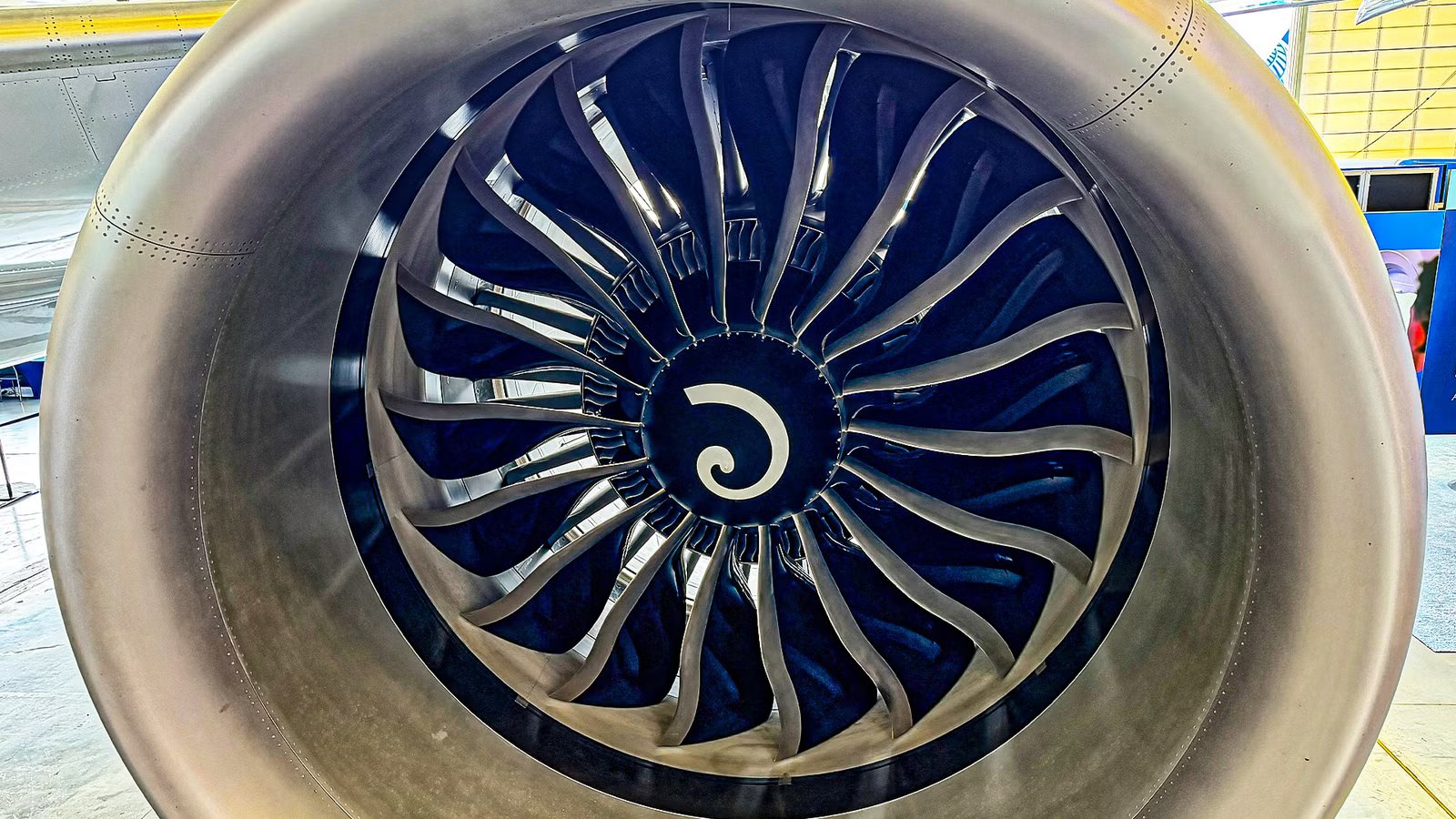
The Boeing 787 Dreamliner represents a significant leap forward in commercial aviation, combining cutting-edge materials, advanced aerodynamics, and innovative propulsion systems to achieve remarkable fuel efficiency and passenger comfort. At the heart of this technological marvel are its two engine options: the Rolls-Royce Trent 1000 and the General Electric GEnx.
These two high-bypass turbofan engines are designed specifically for the 787, each offering distinct advantages and considerations for airlines. In this article, we will examine their design philosophies, performance metrics, and operational impacts to offer a clear understanding of their differences and implications.
The Boeing 787 Dreamliner & Its Engine Options

The Boeing 787 Dreamliner is a widebody, twin-engine jet airliner developed by Boeing’s Commercial Airplanes division and became operational in 2011. Designed to be more fuel-efficient and environmentally friendly than its predecessors, the 787 incorporates advanced materials and systems to reduce weight and improve aerodynamics. One of the most significant decisions airlines face when acquiring the 787 is selecting the appropriate engine.
Boeing offers two primary engine options, the Rolls-Royce Trent 1000 and the General Electric GEnx, and each engine brings its unique blend of technology, performance, and operational characteristics. The choice between these engines can influence an airline’s operational efficiency, fleet management strategies, and overall profitability. Understanding the differences between the Trent 1000 and GEnx is crucial for stakeholders in the aviation industry.
The Rolls-Royce Trent 1000

The Rolls-Royce Trent 1000 is a high-bypass turbofan engine developed specifically for the Boeing 787 Dreamliner. It is part of Rolls-Royce’s Trent family of engines, renowned for their three-shaft design, which enables more efficient power generation and improved fuel economy. The Trent 1000 features a 112-inch (2.84-meter) fan and boasts a bypass ratio exceeding 10:1, contributing to its fuel efficiency and quieter operation, as described in Kawasaki Magazine.
In terms of thrust, the Trent 1000 offers a range from 53,000 to 78,000 lbf (235 to 347 kN), depending on the specific model. The engine’s three-shaft design enables improved fuel efficiency and performance across a range of operating conditions. Its high bypass ratio contributes to quieter operations and reduced emissions. Over the years, Rolls-Royce has introduced durability enhancements for the Trent 1000, aiming to increase the time between overhauls and reduce maintenance costs.
These enhancements have been implemented in the Trent 1000 TEN, where ‘TEN’ stands for Thrust, Efficiency, and New Technology, further refining performance. In that form, the Trent 1000 supports thrust ranges such as 276.96 to 360.43 kN, retains a bypass ratio of 10:1, and maintains the 50:1 pressure ratio, as described by Rolls-Royce. In service, these improvements matter. Every hour gained between overhauls means less downtime for airlines and lower lifecycle costs.

These Airlines Changed Their Boeing 787 Engines From Rolls-Royce To GE: Here’s Why
While around 34% of the Dreamliners flying today have RR engines, only around 8% of the known engine option orders are for RR engines.
The General Electric GEnx

The General Electric GEnx is a high-bypass turbofan engine developed for the Boeing 787 Dreamliner and the Boeing 747-8, and derived from the GE90 engine. The GEnx features advanced materials, including composite fan blades and cases, which reduce weight and improve fuel efficiency. The engine’s design emphasizes lower maintenance costs and extended time on the wing, making it a cost-effective choice for airlines.
In terms of thrust, the GEnx offers a range from 69,800 to 76,100 lbf (311 to 339 kN), depending on the specific model, as described by GE Aerospace. The engine’s two-shaft design incorporates a 111.1-inch (2.83-meter) fan and boasts a bypass ratio up to 9.0:1. The GEnx’s higher overall pressure ratio, up to 58.1:1, indicates more efficient compression and potentially better fuel economy.
The GEnx is designed to stay on wing 20% longer than its predecessors, thanks to its advanced materials and design. This results in lower maintenance costs and improved reliability. The engine’s emissions are up to 95% below current regulatory limits, ensuring compliance with stringent environmental standards. In practice, many 787 operators favor the GEnx for its combination of thrust, efficiency, and lifecycle economy.
Detailed Comparative Analysis

A deep comparative analysis reveals several key differences between the Rolls Royce Trent 1000 and General Electric GEnx engines. The GEnx offers a higher thrust range, making it more suitable for larger aircraft or heavier payloads. Its higher overall pressure ratio indicates more efficient compression, potentially leading to better fuel economy. However, the Trent 1000’s higher bypass ratio contributes to better fuel efficiency and quieter operation.
In terms of design, the GEnx utilizes advanced materials, such as composite fan blades and cases, which reduce weight and improve fuel efficiency. The Trent 1000 utilizes a titanium fan, which, although heavier, provides durability and strength. Maintenance is another area where the GEnx excels. Designed to stay on wing 20% longer than its predecessors, the GEnx results in lower maintenance costs and improved reliability.
|
Feature |
Rolls-Royce Trent 1000 |
General Electric GEnx |
|---|---|---|
|
Thrust Range |
53,000–78,000 lbf (235–347 kN) |
69,800–76,100 lbf (311–339 kN) |
|
Bypass Ratio |
>10:1 |
Up to 9.0:1 |
|
Overall Pressure Ratio |
50:1 |
Up to 58.1:1 |
|
Fan Diameter |
112 inches (2.84 meters) |
111.1 inches (2.83 meters) |
|
Compressor Stages |
8-stage intermediate pressure |
10-stage high-pressure |
|
Configuration |
Three-shaft turbofan |
Two-shaft turbofan |
|
Materials |
Titanium fan blades |
Composite fan blades and cases |
|
Maintenance Interval |
Enhanced durability with Trent 1000 TEN |
Extended time on wing, 20% longer than predecessors |
|
Emissions |
Compliant with environmental standards |
Up to 95% below current regulatory limits |
|
Noise Levels |
Quiet operation |
Quietest GE commercial engine |
|
Weight |
5,936–6,120 kg (13,080–13,500 lb) |
~5,000 kg (11,023 lb) |
The Trent 1000, meanwhile, has undergone durability enhancements with the introduction of the Trent 1000 TEN variant, aiming to increase time between overhauls and reduce maintenance costs. Both engines offer quiet operation and meet environmental standards, though their emissions are not specified to the same extent.
The GEnx is noted for its quiet operation, attributed to its larger, more efficient fan blades and advanced noise suppression technologies. Its emissions are up to 95% below current regulatory limits, ensuring compliance with stringent environmental standards. The weight difference between the two engines can impact the overall weight of the aircraft and its payload capacity. The GEnx is approximately 5,000 kg (11,023 lb), lighter than the Trent 1000, which weighs between 5,936 and 6,120 kg (13,080–13,500 lb).

Rolls-Royce Trent XWB Vs. General Electric GE9X? Which Engine Is More Powerful?
The GE9X is more powerful than the Trent XWB, although there is more than thrust that makes a good engine.
Striking Differences & Engine Superiority

When comparing the Rolls-Royce Trent 1000 and the General Electric GEnx, several key differences emerge that can influence an airline’s choice of engine for the Boeing 787 Dreamliner. In terms of performance and efficiency, the GEnx offers a higher thrust range of 69,800–76,100 lbf (311–339 kN) versus the Trent 1000’s 53,000–78,000 lbf (235–347 kN, depending on variant). Its higher overall pressure ratio (up to 58.1:1) allows for more efficient compression, potentially leading to better fuel economy.
Conversely, the Trent 1000’s higher bypass ratio (greater than 10:1) contributes to improved fuel efficiency and quieter operation during cruise. Meanwhile, the GEnx utilizes advanced materials like composite fan blades and cases, which reduce weight (~5,000 kg / 11,023 lb) while maintaining strength, improving fuel efficiency, and lowering maintenance. The Trent 1000’s titanium fan (~5,936–6,120 kg / 13,080–13,500 lb) prioritizes durability and structural integrity, benefiting airlines operating in diverse environmental conditions.
The GEnx is designed to stay on wing 20% longer than its predecessors, leading to lower maintenance costs and improved reliability. Meanwhile, the Trent 1000 has undergone durability enhancements with the introduction of the Trent 1000 TEN variant, aiming to increase time between overhauls and reduce maintenance costs. Airlines targeting minimal downtime may lean toward the GEnx, whereas operators valuing robust design and proven long-term performance may prefer the Trent 1000.
The GEnx is recognized for its quiet operation, which is attributed to its larger, more efficient fan blades and advanced noise suppression technologies. Its emissions are up to 95% below current regulatory limits, ensuring compliance with stringent environmental standards. As for the Trent 1000, it also offers quiet operation and meets environmental standards, though its emissions are not specified to the same extent as the GEnx.
The Trent 1000 is heavier by roughly 936–1,120 kg (2,057–2,477 lb), which affects aircraft payload capacity. In contrast, the GEnx’s lighter build can improve efficiency and range, particularly on long-haul routes. In summary, the GEnx is generally favored by airlines prioritizing payload, fuel economy, and maintenance savings, while the Trent 1000 appeals to operators who value high bypass efficiency and structural durability. In any case, both engines are significantly quieter compared to previous models.
The Bottom Line

Both the Rolls-Royce Trent 1000 and General Electric GEnx are cutting-edge turbofan engines that elevate the  Boeing 787 Dreamliner’s performance. While the Trent 1000 offers a high bypass ratio and durability, the GEnx emphasizes higher thrust, lighter weight, extended time-on-wing, and lower emissions.
The choice between these engines ultimately depends on an airline’s operational goals. For airlines prioritizing payload capacity, fuel efficiency, and lower maintenance costs, the GEnx may be the superior option. However, those valuing structural robustness and proven three-shaft engineering may prefer the Trent 1000. All in all, by understanding these differences, airlines can make informed decisions that optimize the performance, efficiency, and reliability of their Boeing 787 fleets.