dailynewsnblog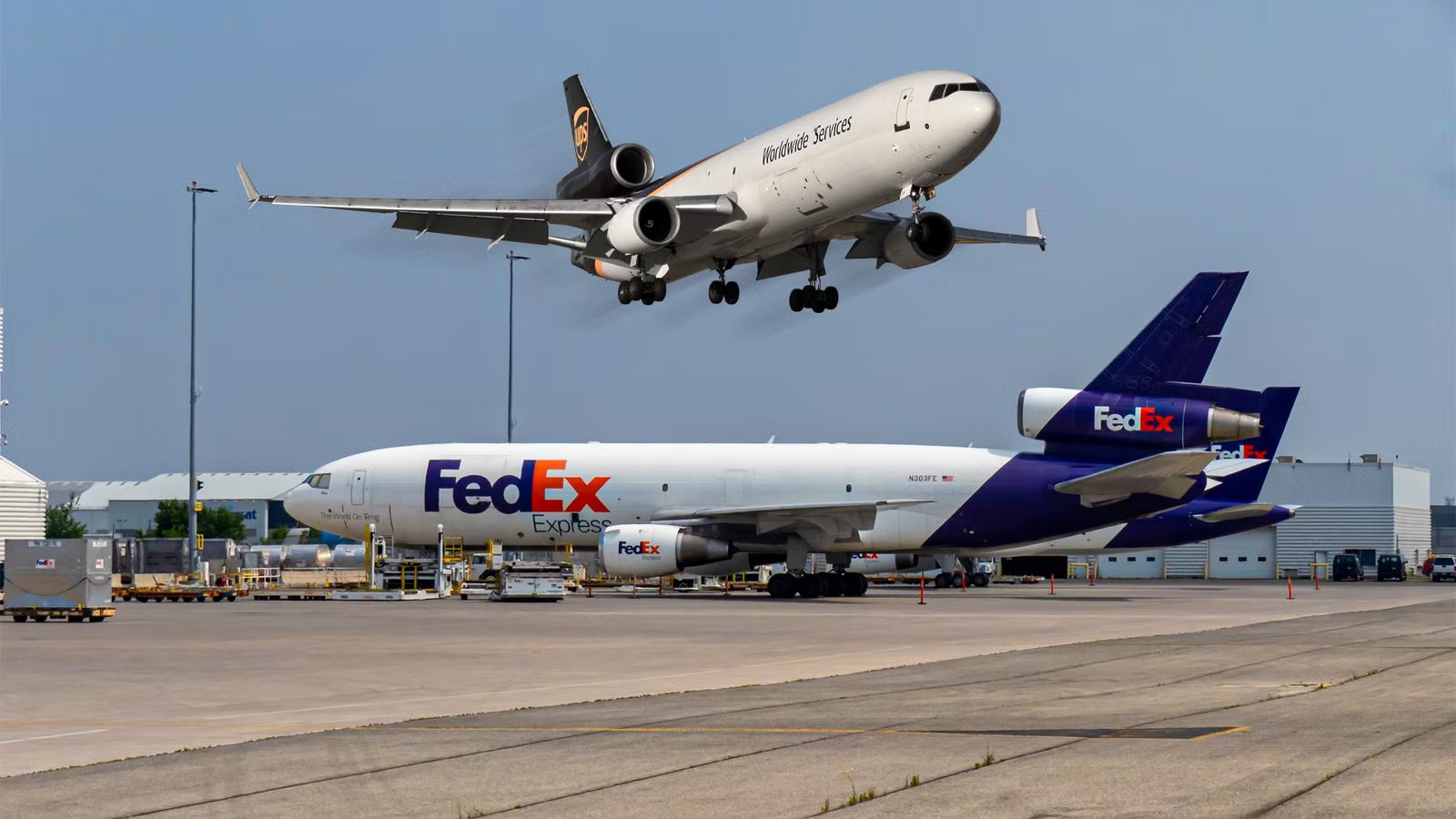
At first glance, the McDonnell Douglas MD-11 looks like little more than a stretched and updated version of the McDonnell Douglas DC-10. Both aircraft share the same basic trijet configuration, with two engines mounted under the wings and a third fitted at the base of the vertical stabilizer. Yet despite their close visual relationship, the two aircraft were built for somewhat different eras of commercial aviation and reflect different priorities in design, performance, and airline economics.
The DC-10 was developed as a widebody workhorse for the 1970s market, while the MD-11 was introduced later as a more advanced derivative intended to improve range, efficiency, and cockpit technology. From winglets and fuselage length to flight deck automation and real-world operating performance, the differences between the two aircraft go well beyond appearance. Looking at those changes helps explain not only how the MD-11 evolved from the DC-10, but also why the two aircraft ended up with very different legacies.
About The DC-10 And MD-11 Program

The DC-10 and MD-11 are closely related aircraft, but they came from two different moments in the history of Douglas and later McDonnell Douglas. The DC-10 was developed in the late 1960s as a widebody trijet intended to compete in the growing long-haul market. At the time, airlines wanted an aircraft that could carry a large number of passengers, offer widebody comfort, and still operate efficiently on routes that did not necessarily require a Boeing 747. Douglas responded with the DC-10, a three-engine aircraft with two engines mounted under the wings and a third located at the base of the vertical stabilizer.
The aircraft entered service in the early 1970s and went on to become one of the most recognizable widebody trijets ever built. It served airlines around the world in both passenger and cargo roles, and it also formed the basis for the military KC-10 tanker. By the time the McDonnell Aircraft Corporation merged with the Douglas Aircraft Company in 1967, Douglas had already been an important commercial aircraft manufacturer for decades, and the DC-10 became one of the most important widebody programs to carry into the McDonnell Douglas era.
The MD-11 came later as an attempted modernization of the DC-10 rather than an all-new aircraft. Launched in the 1980s, the MD-11 was designed to build on the DC-10 platform while improving range, efficiency, avionics, and operating economics. McDonnell Douglas gave it a stretched fuselage, aerodynamic refinements such as winglets, updated engines, and a modernized two-pilot glass cockpit that eliminated the need for a flight engineer. In many ways, the MD-11 was meant to keep the trijet relevant in a market that was rapidly becoming more competitive and more technologically advanced.
However, the MD-11 entered service at a difficult time. Twin-engine widebodies such as the Boeing 767 and later the Airbus A330 and Boeing 777 were becoming more capable, and airlines were increasingly moving away from three-engine designs. Although the MD-11 found a solid niche in cargo operations and remained in passenger service with several airlines, it never matched the broader commercial success of the DC-10. The story of the two aircraft, therefore, reflects both the evolution of widebody airliner design and the changing fortunes of McDonnell Douglas before its merger with Boeing in 1997.
Fuselage And Exterior Design Differences

At a glance, the MD-11 clearly looks like a descendant of the DC-10, but there are several visible differences between the two aircraft. The most obvious is length. The MD-11 features a stretched fuselage compared with the DC-10, giving it a longer and sleeker profile. This allowed McDonnell Douglas to increase passenger and cargo capacity while keeping the same overall trijet layout. The added length also changed the proportions of the aircraft, making the MD-11 appear more elongated than the shorter, slightly stubbier DC-10.
One of the easiest external differences to spot is the addition of winglets on the MD-11. The DC-10 used conventional wingtips, while the MD-11 introduced large blended winglets designed to reduce drag and improve fuel efficiency. These winglets became one of the aircraft’s defining visual features and helped distinguish it immediately from its predecessor. The MD-11 also received other aerodynamic refinements, including a redesigned tailcone and smaller clean-up changes across the airframe intended to improve performance.
The tail area also differs in subtle but important ways. While both aircraft use the same basic three-engine arrangement with the third engine mounted at the base of the vertical stabilizer, the MD-11’s tail section was refined to support its updated aerodynamic profile and longer-range mission. Combined with the winglets and stretched fuselage, these changes gave the MD-11 a more modern and more polished appearance than the DC-10, even though the two aircraft shared much of the same underlying design philosophy.

The Striking Differences Pilots Notice Between The McDonnell Douglas DC-10 & MD-11
A tale of two jets: the striking differences pilots notice between the McDonnell Douglas DC-10 and MD-11.
Cockpit And Flight Deck Changes

One of the biggest differences between the DC-10 and the MD-11 was found in the cockpit. The original DC-10 was designed in an era when widebody airliners commonly required a three-person flight deck, consisting of a captain, first officer, and flight engineer. The flight engineer sat at a dedicated systems panel behind the two pilots and was responsible for monitoring engines, fuel, electrical systems, pressurization, and other technical functions throughout the flight. This was standard for many long-haul aircraft of the period, but it also meant higher crew costs and a more labor-intensive cockpit environment.
By the time the MD-11 was developed, cockpit technology had advanced significantly. McDonnell Douglas designed the aircraft with a two-pilot glass cockpit, eliminating the need for a flight engineer. Many of the tasks that had once required a dedicated third crew member were now handled through automation, centralized electronic monitoring, and more advanced flight management systems. The MD-11, therefore, reflected a major shift in airline operations, where reducing cockpit crew requirements became an important way to improve efficiency and lower operating costs.
The flight deck itself also looked much more modern. The MD-11 replaced the more analog, instrument-heavy layout of the DC-10 with electronic displays and updated avionics, giving pilots better system awareness and more integrated control over the aircraft. This modernized cockpit was one of the most important parts of the MD-11 program because it allowed the aircraft to compete in a market where airlines increasingly expected higher levels of automation and lower crew costs. In practical terms, the cockpit changes were not just cosmetic. They represented one of the clearest signs that the MD-11 was intended to be a more technologically advanced successor to the DC-10 rather than simply a stretched derivative.
Performance, Range, And Efficiency

A major goal of the MD-11 program was to improve the DC-10’s economics without designing an entirely new aircraft from scratch. McDonnell Douglas wanted the newer jet to fly farther, burn less fuel per seat, and operate with lower crew costs, all while carrying more passengers or cargo than the DC-10. To achieve that, the MD-11 combined a stretched fuselage with aerodynamic improvements, updated engines, and a modernized flight deck. On paper, it offered clear advantages over the older DC-10, particularly on long-haul routes where range and fuel efficiency mattered most.
In practice, the MD-11 did deliver better range than the DC-10 and was better suited to longer missions. The addition of winglets, airframe refinements, and more efficient engines helped reduce drag and improve cruise performance. The aircraft was also intended to carry more payload over greater distances, giving airlines more flexibility on intercontinental routes. Compared with the DC-10, the MD-11 was a more capable long-range aircraft and a more modern platform for both passenger and freight operators.
However, the MD-11 is also remembered for not fully meeting its earliest performance expectations. Its real-world fuel burn and range figures did not initially match some of the more optimistic projections made during development, and this became a challenge as airlines increasingly evaluated aircraft on very precise economic terms. Even so, the MD-11 still represented a meaningful step forward from the DC-10 in terms of efficiency and range. Those strengths ultimately helped it find a long and successful second life as a freighter, where payload capability and long-haul performance remained especially valuable.

How Many McDonnell Douglas MD‑11s Were Built?
Though only a small number were built, the MD-11 remains one of the most iconic airplanes ever built.
Why The MD-11 Never Matched The DC-10’s Success

Although the MD-11 was conceived as a more advanced successor to the DC-10, it never achieved the same level of commercial success. One reason was timing. The aircraft entered service just as the airline industry was shifting away from three-engine widebodies and toward more efficient twin-engine aircraft. Advances in engine reliability and ETOPS rules made jets like the Boeing 767, Airbus A330, and later the Boeing 777 far more attractive to airlines, since they could offer similar or better range with lower fuel burn and lower maintenance costs.
The MD-11 also struggled because it did not fully deliver on all of its original performance promises. While it was a more capable aircraft than the DC-10 in many respects, airlines were buying aircraft in an increasingly competitive and economically sensitive market. If an aircraft fell short of expected range or fuel burn targets, even by a modest amount, that could significantly affect its appeal. As a result, some airlines that may have once been natural MD-11 customers instead chose newer twin-engine aircraft that better matched the industry’s direction.
By contrast, the DC-10 benefited from entering service during a very different era. In the 1970s, a widebody trijet filled an important market niche between smaller long-haul aircraft and the much larger Boeing 747. The DC-10, therefore, found broad appeal with passenger airlines around the world and built a substantial operator base. The MD-11, while technologically more advanced, arrived in a market that had already begun moving on from the very concept it represented.
Even so, the MD-11 carved out a strong legacy in cargo aviation. While its passenger career was relatively limited compared with the DC-10, the aircraft proved highly valuable as a freighter, where its payload capability, range, and modernized systems remained attractive. In that sense, the MD-11 did not fail outright. It simply became successful in a narrower role than the one McDonnell Douglas originally envisioned.