dailynewsnblog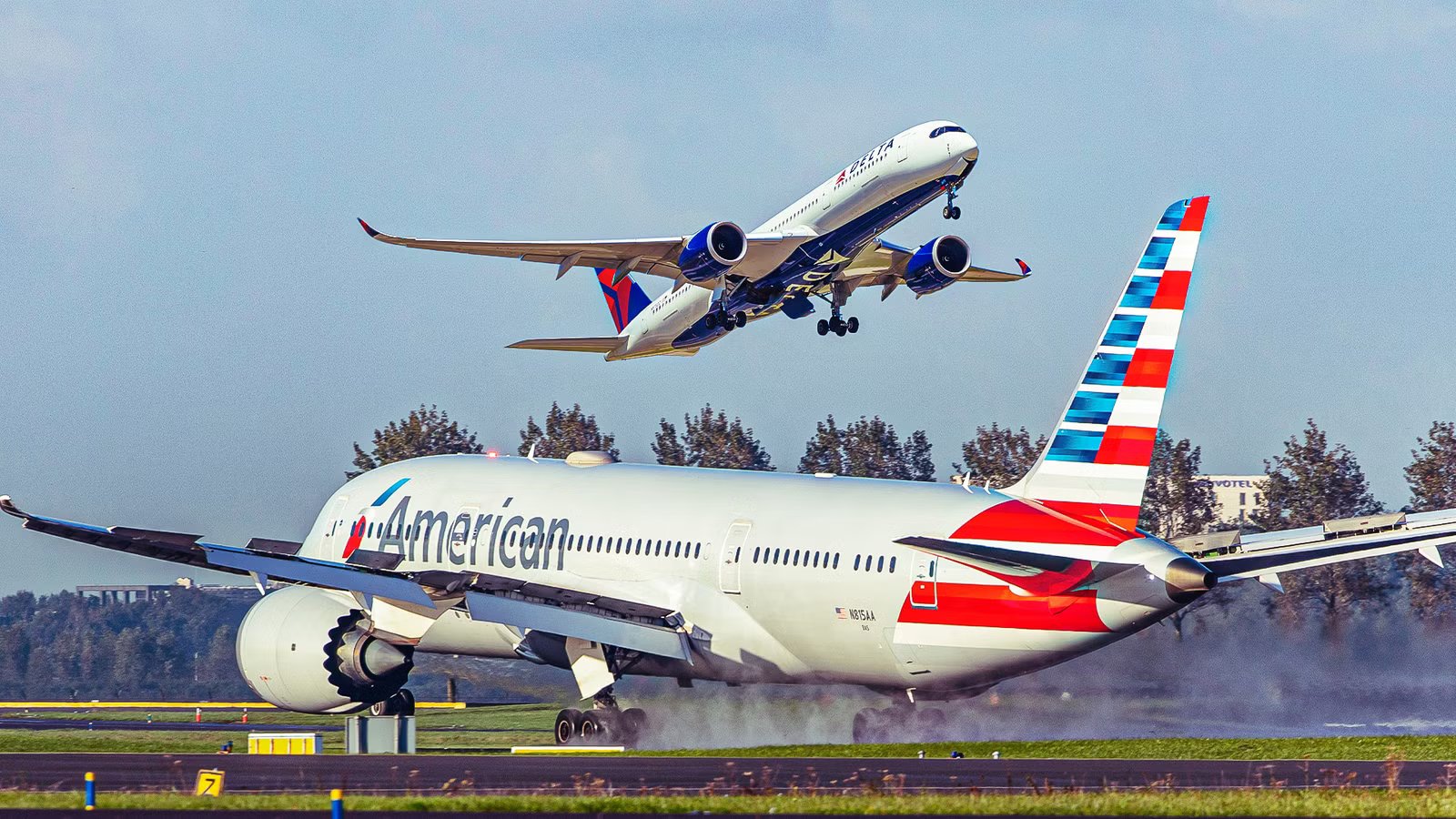
The Airbus A350 and Boeing 787 are often grouped together as two of the most advanced long-haul aircraft in commercial aviation, but they are not as similar as they may first appear. Both were designed around better fuel efficiency, modern materials, and improved passenger comfort, yet Airbus and  Boeing approached that mission in different ways. The result is two widebody families that overlap in some areas while diverging in others, particularly when it comes to size, range, cabin design, and airline use.
Those differences help explain why some carriers lean toward the 787’s broader family flexibility, while others prefer the A350’s larger platform and longer-range capability. From cabin width and seating potential to window design and ultra-long-haul performance, each aircraft reflects a different view of what a modern widebody should be. Looking at those details side by side makes it clear that this is not just a battle between two aircraft names, but between two distinct long-haul philosophies.
How The Airbus A350 & Boeing 787 Programs Took Shape

The Airbus A350 and Boeing 787 were born from the same broad market shift, but they emerged in different ways and with different priorities. Boeing launched the 787 Dreamliner first, aiming to create a new-generation long-haul aircraft family that would use lightweight composite materials, improved aerodynamics, and more efficient engines to make thinner intercontinental routes more economical. Rather than focusing on very large capacity, Boeing centered the program on efficiency and flexibility, giving airlines a way to operate long-range flights with fewer seats than a traditional large widebody.
Airbus responded with the A350 program after it became clear that airlines wanted more than just an incremental update to older twin-aisle designs. The result was the A350 XWB, with the “XWB” standing for Extra Wide Body. Airbus positioned the aircraft as a modern, long-range widebody family with a roomier cabin and stronger overlap with larger long-haul aircraft categories. While the 787 family stretches from the smaller 787-8 to the higher-capacity 787-10, the A350 family is more concentrated around the A350-900 and A350-1000, both of which sit higher on the capacity scale.
That difference in origin still shapes how the two aircraft are viewed today. The 787 was designed to open routes and give airlines a highly efficient long-haul tool across multiple size categories, while the A350 was built to offer similar next-generation efficiency with more cabin space and, in many cases, more carrying capability. As a result, the two are often treated as direct rivals, but they are not perfect one-for-one equivalents across the board. In many ways, the comparison is really about two manufacturers solving the same airline problem with slightly different assumptions about size, comfort, and mission.
Capacity And Aircraft Variants

One of the clearest differences between the Airbus A350 and Boeing 787 is how their families are structured. Boeing built the 787 as a three-member family, giving airlines the smaller 787-8, the mid-sized 787-9, and the stretched 787-10. Airbus, by contrast, concentrated the A350 family around two main passenger variants, the A350-900 and the larger A350-1000. That means the 787 lineup covers a broader spread of size categories.
Boeing lists the 787-8 at 248 passengers, the 787-9 at 296, and the 787-10 at 336 in its published typical configurations. Airbus lists the A350-900 at roughly 300 to 350 passengers in a typical three-class layout, while the A350-1000 is positioned at about 350 to 410. In simple terms, the 787-8 sits well below the A350 family in size, the 787-9 overlaps most closely with the A350-900, and the 787-10 starts to move toward the lower end of A350-1000 territory, though not as a perfect match.
That family structure has major implications for airline fleet planning. The 787 gives carriers more flexibility to serve lower-demand long-haul markets with the 787-8 or 787-9, while still offering a higher-capacity option in the 787-10 for dense routes that do not require the family’s longest range. The A350 lineup is more concentrated, but it also starts larger, which makes it especially attractive for airlines that want more seats, more premium-cabin real estate, or a stronger replacement for larger older widebodies. As a result, the 787 often works as a broader long-haul family, while the A350 tends to occupy a more upmarket and higher-capacity position within airline fleets.

Why The Airbus A350 Has Such An Ultimate Passenger Experience
Discover why the Airbus A350 offers the ultimate passenger experience — quieter cabins, roomier seats, and comfort praised by flyers worldwide.
Range And Long-Haul Capability

Range is one of the clearest areas where the Airbus A350 and Boeing 787 families begin to separate. Boeing lists the 787-8 at 7,305 nautical miles, the 787-9 at 7,565 nautical miles, and the 787-10 at 6,330 nautical miles, showing how the Dreamliner family covers several long-haul mission types with different size and range tradeoffs. Airbus lists the standard A350-900 at 8,500 nautical miles and the A350-1000 at 9,000 nautical miles, giving both main A350 passenger variants more published range than any standard 787 variant.
Airbus has also stretched the A350 platform further into the ultra-long-haul niche through dedicated ULR variants. The A350-900ULR, with ULR standing for Ultra Long Range, is capable of flying 9,700 nautical miles nonstop, which Airbus says gives it the longest range of any commercial airliner currently in service. That aircraft was developed for extremely long nonstop routes, most notably for Singapore Airlines, and it shows how Airbus pushed the A350 beyond conventional long-haul flying into a far more specialized mission category.
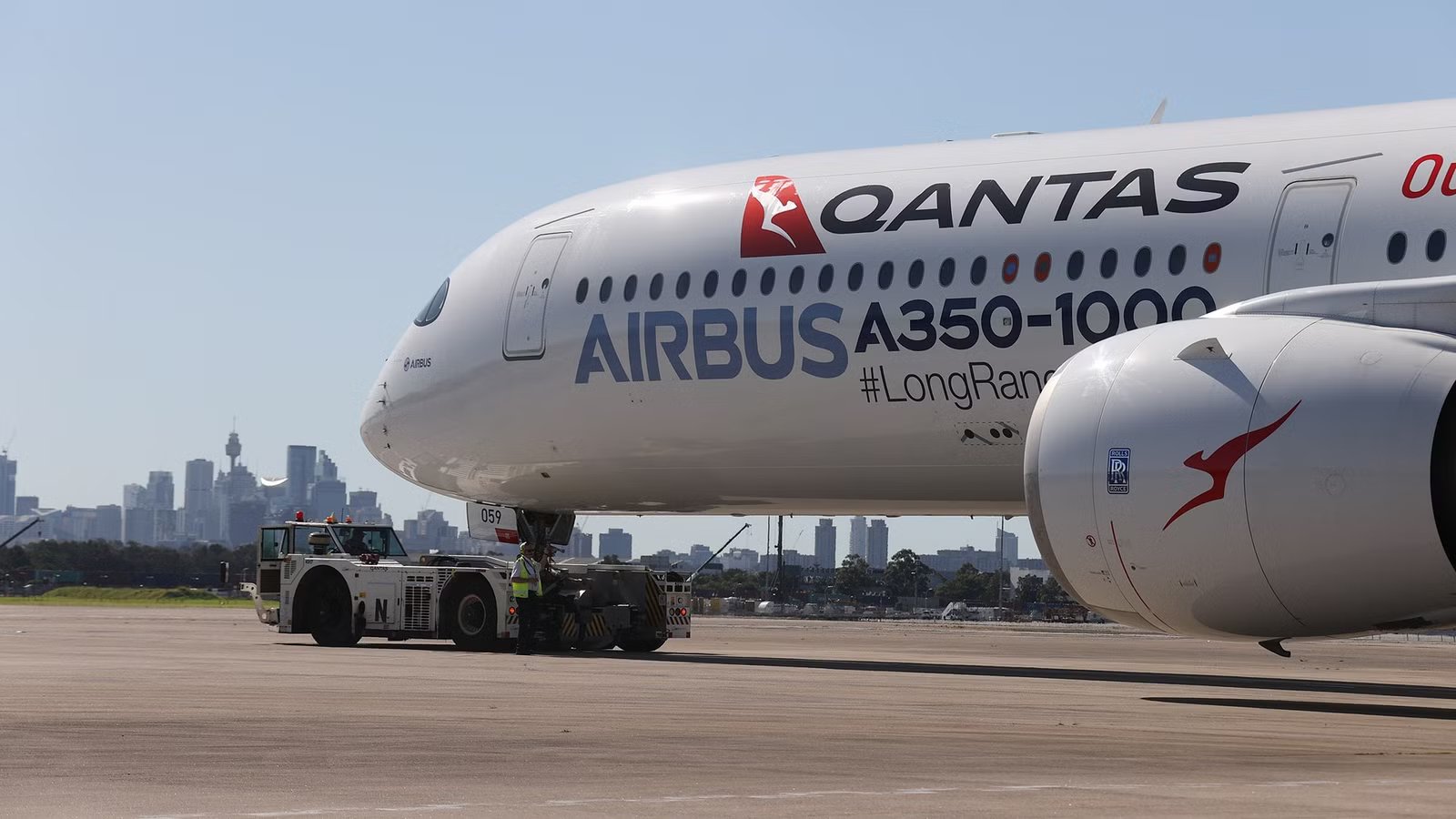
There is also the A350-1000ULR, which is tied to Qantas’ Project Sunrise. Qantas says those specially configured aircraft are being built to connect Australia’s east coast nonstop with London and New York, with flights of up to 22 hours and an additional 20,000-liter rear center fuel tank to support those missions. Taken together, that helps define the broader difference between the two families: the 787 was built as a flexible three-variant lineup for a wide range of long-haul markets, while the A350 family was designed with more outright range at larger sizes and then adapted even further for the most demanding passenger missions in commercial aviation.
Cabin Windows And The Passenger Experience On Board

One of the most visible differences between the Boeing 787 and Airbus A350 is how the window experience has traditionally been handled. Boeing made electronically dimmable windows one of the 787’s signature features from the start, replacing pull-down shades with a system that lets passengers and crew adjust the tint while preserving an outside view. Boeing also says the 787 has the largest windows of any widebody in service, making them a central part of the aircraft’s cabin identity rather than just a small design detail.
The A350 has generally taken a more conventional path, with traditional shades on many aircraft rather than making dimmable windows a defining feature of the program in the way Boeing did on the 787. That gives passengers a simpler, more familiar experience, and it avoids one of the recurring complaints about the 787, namely that its darkest setting still allows some light through. At the same time, Airbus has also introduced electro-dimmable windows as an option on newer A350 cabin developments, so the gap is not as absolute as it once was. Airbus has specifically highlighted electro-dimmable windows in newer A350 Airspace cabin material and in updated cabin standards for operators such as Air France.
More broadly, the difference reflects the overall personality of each aircraft. The 787 was designed to feel visibly new to passengers, with large dimmable windows, modern lighting, and a cabin concept that Boeing marketed heavily around the onboard experience. The A350 also emphasizes passenger comfort, but Airbus tends to frame that more around cabin quietness, spaciousness, lighting, and overall well-being rather than one standout feature. In practice, that means the 787 often feels more distinctive because of its windows, while the A350’s cabin experience is usually defined more by its width, calmness, and general sense of space.

Where Can You Fly Domestically On American Airlines’ Boeing 787 Dreamliners?
Whether flying across the country or between key airline hubs, the Dreamliner provides an upgraded travel experience.
Why Airlines Choose The A350 Over The 787 And Vice Versa

Airlines choose between the A350 and 787 based on what they need the aircraft to do within their broader fleet. The 787 family gives carriers more flexibility because it comes in three main variants, the 787-8, 787-9, and 787-10, covering a wider spread of capacity and route types. The A350 family is less diverse in size, but it generally offers more range, especially when looking at the A350-900, A350-1000, and specialized ultra-long-haul versions. That means the 787 is often the better fit for airlines that want more size options, while the A350 is often more attractive for carriers focused on longer-range flying.
A major part of the decision also comes down to the fleet an airline already has. If a carrier already has a large Boeing fleet, the 787 can be a more natural addition. If it already operates a large Airbus fleet, the A350 may make more sense. In many cases, the decision is not just about which aircraft is better on paper, but which one fits more smoothly into the airline’s long-term fleet strategy, route network, and manufacturer relationship.