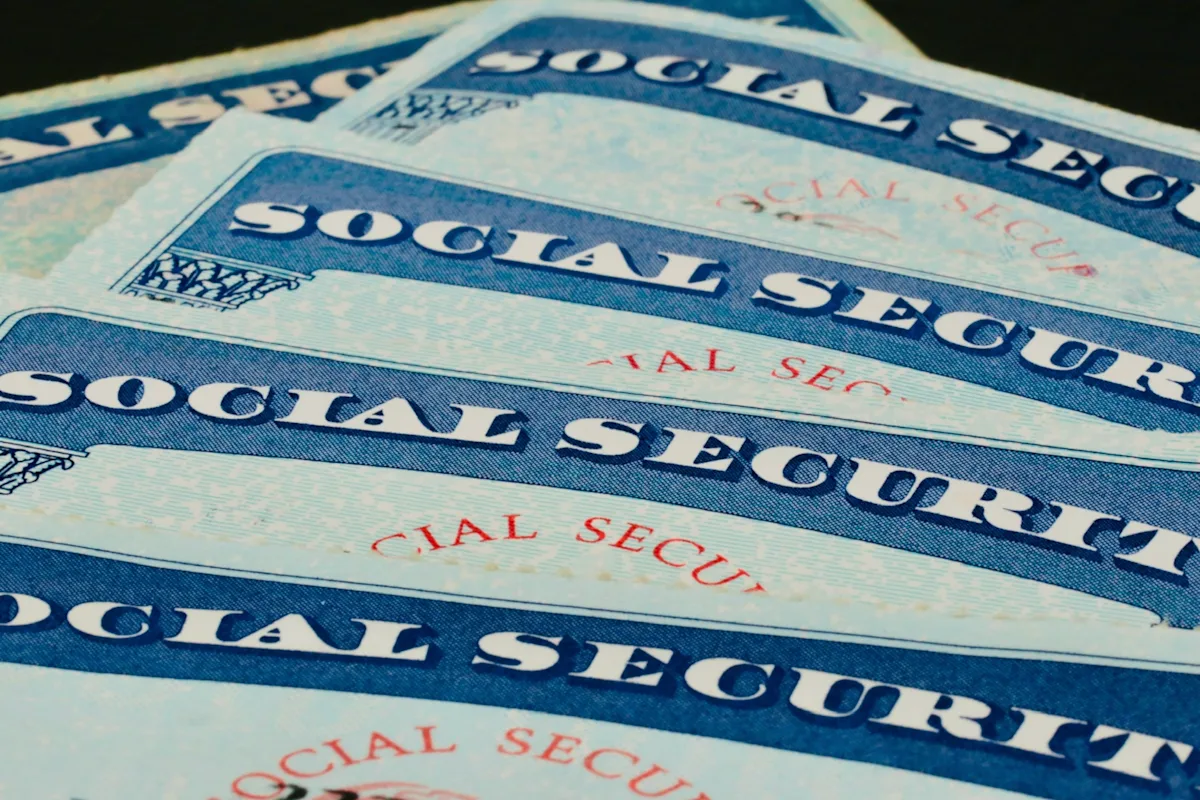
Claiming Social Security while still working isn’t an outlier these days.
It’s pretty common, according to a recent report by the Center for Retirement Research at Boston College, which found that 2 in 5 people combine work and benefits for at least some period of time.
Count among them Sharon Smith, who started her Social Security benefit at 67, even though she wasn’t retiring.
Smith, an executive coach and business consultant who splits her year between Naples, Fla. and Boston, had reached full-retirement age and was ready for a career transition.
“I stepped out of a high-pressure management job, and I needed a break to focus on my health and morph into a new career,” she said.
The income from the monthly Social Security check was an important key to that process.
“My husband and I needed that money as I built up my coaching business, and I’m glad we’ve had it,” she said. “I’m able to not feel like I have to do things I don’t want to do, or to take a job or not.”
Learn more: Retirement planning: A step-by-step guide
Social Security was created to provide income for those no longer working, but today, many households over age 65 report earnings from a job and Social Security income. Although the labor force participation rate declines sharply after people reach age 62, recent studies show that earnings from a job constitute more than a fifth of income for households over age 65, Siyan Liu, a co-author of the report, told Yahoo Finance.
People who work after claiming benefits fall into two distinct groups: More than two-thirds are low earners who claim early, Liu said. “They typically work part time and need to use Social Security to supplement earnings.”
The remaining third are higher earners who claim around their full retirement age and often continue to work full time. “Their combined income typically exceeds pre-claiming levels, suggesting some could postpone claiming until 70 to maximize monthly benefits,” she added.
You can take Social Security as early as age 62, but your benefit can be reduced as much as 30% from what it would have been at your Full Retirement Age (FRA). For anyone born in 1960 or later, your FRA is 67.
If you delay benefits from your FRA until age 70, you earn delayed retirement credits. Those come to roughly an 8% increase for each year until you hit 70, when the credits stop accruing.
Moving in and out of the job market before permanently retiring can have implications for your Social Security benefit. If you continue to work after claiming Social Security benefits after age 62 and before your FRA, the Social Security Administration (SSA) will temporarily withhold a portion of your benefits for earnings over a certain threshold, roughly $23,000.
In the year you hit full retirement age, that limit increases threefold; and in the month you hit full retirement age, the annual earnings test ends. From that point on, you can earn without limitations, and while you don’t get the amount you forfeited previously in a lump sum, your monthly benefit is adjusted upward so you will recoup all the benefits that were withheld.
Use this calculator on the SSA website to walk through the calculation.
Read more: How to find out your 2026 Social Security COLA increase
When Smith left her corporate career, she was trying to figure out what to do with her life. “I focused on my health, joined and chaired the board of a large health system, and then I slowly moved into coaching and consulting for small nonprofit healthcare organizations,” she said.
The work was rewarding but also much more satisfying. “I like the money from the combination of Social Security and work earnings and the ability to have an impact in an area I care about, which is healthcare,” she said. “The other thing for me is the interaction—the ability to have that connection with so many people and to help them.”
Liu said Smith’s journey is a common one: using the income to phase into retirement.
Bradley Schurman, demographic strategist and the author of “The Super Age,” calls it a “slow fade.”
“Retirement has become a slow fade, not a finish line, and this data shows just how blurry that boundary has become,” he said. “And that boundary is radically different, depending on your economic position in those retirement years, with lower-income folks taking early retirement and higher-income ones waiting until they are fully vested.”
Have a question about retirement? Personal finances? Anything career-related? Click here to drop Kerry Hannon a note.
The majority of workers 65 and older say they work both because they need the money and because they want to work, according to a report from the Pew Research Center on how Americans view their jobs. Some 17% say they keep working simply because they need the money.
“This helps them make ends meet,” Richard Johnson, AARP’s vice president of financial security, told Yahoo Finance. “The fact that many people need both a paycheck and a Social Security check to pay their bills underscores the danger of any efforts to cut Social Security benefits. Many retirees are barely hanging on as it is.”
The truth is many Americans are not financially prepared to stop working, and some do get a kick out of what they do. Older adults reported having more positive experiences with work overall and that it boosted their health and sense of well-being, compared with working adults between ages 50 and 64, according to a University of Michigan poll.
As of August of this year, there were approximately 11.9 million workers over 65 in the US labor force, representing roughly 7% of the total workforce, more than four times the number in the mid-1980s.
That group is projected to be 8.6% of the labor force in 2032, according to the Bureau of Labor Statistics. And older adults are projected to account for the lion’s share of labor force growth between now and then.
“We’ve built a system that practically guarantees people will keep working after they claim Social Security,” Schurman said. “It’s not a return to work — it’s the reality of the Super Age: longer lives, higher costs, and a retirement model that hasn’t kept up.”
Kerry Hannon is a Senior Columnist at Yahoo Finance. She is a career and retirement strategist and the author of 14 books, including “Retirement Bites: A Gen X Guide to Securing Your Financial Future,” “In Control at 50+: How to Succeed in the New World of Work,” and “Never Too Old to Get Rich.” Follow her on Bluesky and X.
Sign up for the Mind Your Money newsletter
Click here for the latest personal finance news to help you with investing, paying off debt, buying a home, retirement, and more
Read the latest financial and business news from Yahoo Finance


 dailynewsnblog