dailynewsnblog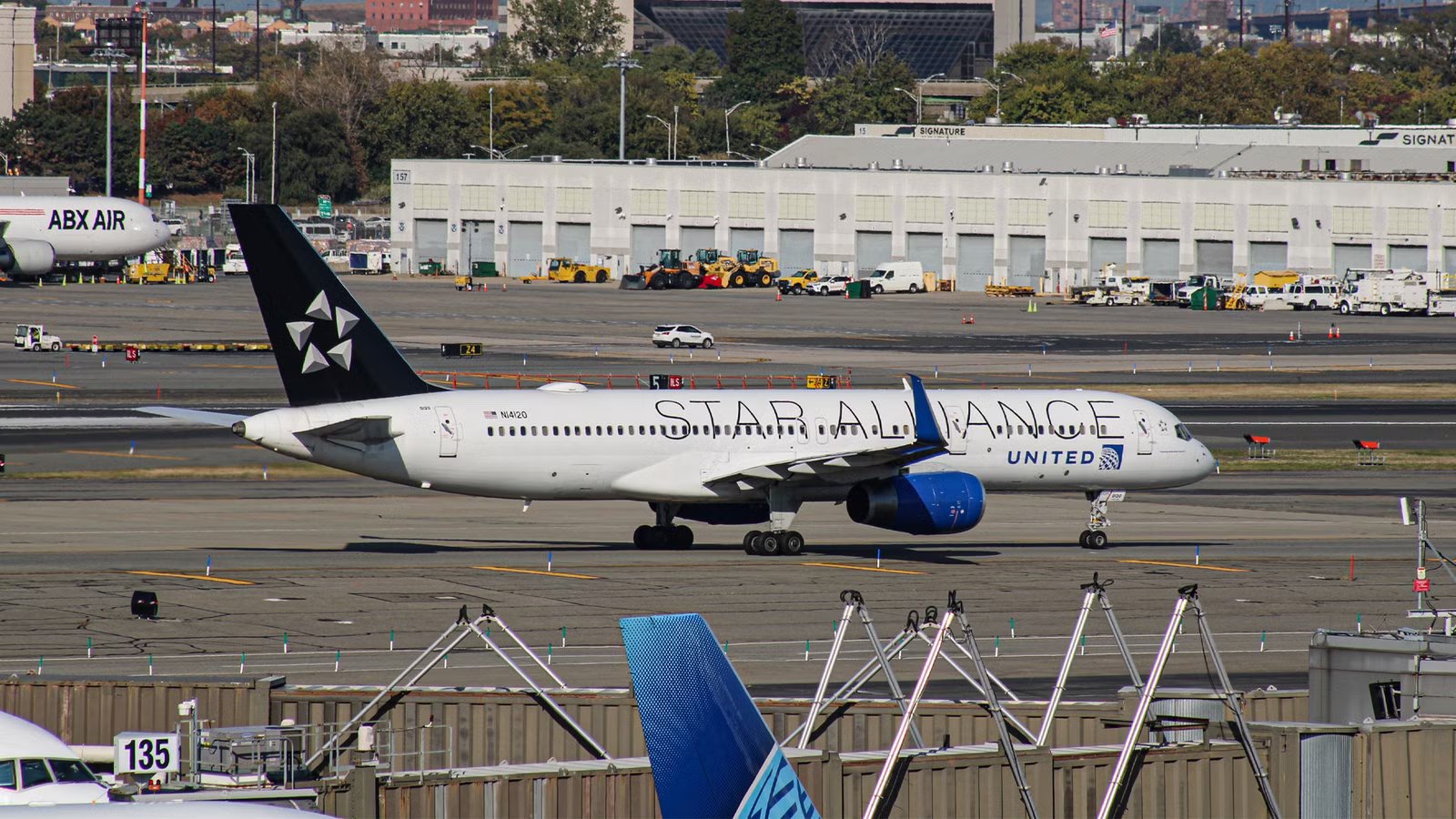
The Boeing 757 has long been one of the most beloved aircraft in commercial aviation. Designed during the late 1970s and entering service in 1983, the narrowbody aircraft quickly earned a reputation for impressive performance, excellent range, and remarkable versatility. For carriers like  United Airlines, the 757 became a true workhorse, capable of handling everything from high-density domestic routes to thin transatlantic services that would be uneconomical with larger widebody aircraft.
Yet despite its strong reputation among pilots, airlines, and aviation enthusiasts, the aircraft’s days in passenger service are slowly coming to an end. United Airlines still operates dozens of Boeing 757-200 and Boeing 757-300 aircraft, but the carrier has already begun planning for their eventual retirement as part of a broader fleet modernization strategy. The reasons behind this shift go far beyond simple aircraft age, reflecting instead a complex mix of operational costs, technological progress, and changing airline economics. Let’s take a closer look…
A Unique Aircraft In United Airlines’ Fleet

For decades, the Boeing 757 filled a unique role within United Airlines’ fleet, combining the capacity of a large narrowbody aircraft with range capabilities that rivaled some early widebodies. This allowed the  Star Alliance carrier to deploy it on a wide variety of routes that other aircraft could not serve profitably.
One of the Boeing 757’s most important strengths was its performance. With powerful engines and strong runway capability, the aircraft could operate from shorter runways and airports with operational constraints, while at the same time, it could fly long distances, allowing airlines to connect secondary cities with nonstop service. This flexibility was particularly valuable for United Airlines.
The Boeing 757 also became an important part of United Airlines’ transcontinental and transatlantic strategy, and has frequently been deployed on routes between its transatlantic hub at  Newark Liberty International Airport (EWR) and secondary European cities, where passenger demand was strong but still limited. With a capacity of approximately 170 passengers, the aircraft could provide a comfortable balance between capacity and operating costs. However, while the 757 remains uniquely capable, its design dates back more than four decades, and as aviation technology has advanced, newer aircraft have begun to replicate its strengths while delivering far better efficiency.

The Aircraft Set To Replace The Iconic Boeing 757
There isn’t a single airliner that can replicate all of the Boeing 757’s capabilities, but perhaps the market doesn’t require one.
Age Is Catching Up With The Fleet

The most obvious factor behind United Airlines’ decision to retire its Boeing 757s is the age of the aircraft themselves. Many of the airline’s examples entered service during the late 1980s and early 1990s, meaning some are now approaching or exceeding three decades of operational use.
Older aircraft inevitably require more intensive maintenance, as over time, components wear out, structural inspections become more complex, and replacement parts can become harder to source. While airlines are accustomed to maintaining aging aircraft, the cost of doing so eventually begins to outweigh the benefits of keeping them in service. For United Airlines, this reality is particularly relevant because the Boeing 757-200 and 757-300 fleets represent some of the oldest narrowbody subfleets in the airline’s network. As the aircraft age, maintenance checks become longer and more expensive, increasing downtime and reducing operational flexibility.
The average age of many of United Airlines’ Boeing 757s is now approaching 30 years, and at that point, airlines must carefully evaluate whether continuing to maintain the aircraft makes economic sense. Even if the aircraft themselves remain structurally sound, the increasing cost of upkeep can significantly erode profitability on the routes they serve.
Maintenance Complexity & Engine Differences

Another key reason behind the gradual retirement of United Airlines’ Boeing 757 fleet involves the complexities of maintaining different engine types across the same aircraft model. Historically, the carrier operated two distinct subfleets of the 757-200, with some aircraft powered by Pratt & Whitney engines and others, particularly those inherited from the 2010 merger with Continental Airlines, used Rolls-Royce RB211 engines. Maintaining both engine types simultaneously created significant logistical challenges.
Each engine type requires its own maintenance procedures, spare parts inventory, and technician training, which means that airlines must effectively maintain two separate support systems for aircraft that are otherwise identical. Over time, this complexity can drive up operating costs and reduce efficiency. United Airlines addressed part of this issue by retiring its Pratt & Whitney-powered Boeing 757s earlier than the rest of the fleet, and by consolidating around the Rolls-Royce-powered aircraft, the carrier was able to simplify maintenance operations and reduce long-term expenses.
However, even with this consolidation, United Airlines’ remaining Boeing 757 fleet still requires specialized maintenance infrastructure, and as newer aircraft enter the fleet, continuing to support a shrinking number of aging jets becomes increasingly inefficient.

How Many Boeing 757s Are Still Flying In 2026?
Despite a declining operator base, the 757 remains an important part of many airlines’ fleets in 2026.
Fuel Efficiency & Environmental Concerns

Perhaps the biggest long-term challenge facing the Boeing 757 is its fuel efficiency, or lack thereof, compared with modern aircraft. The 757 was designed in an era when fuel prices were far lower and environmental concerns played a much smaller role in airline planning, and while the aircraft remains powerful and capable, its engines and aerodynamic design simply cannot match the efficiency of modern narrowbody aircraft.
New aircraft such as the Airbus A321neo and Airbus A321XLR offer dramatically lower fuel consumption per seat. These aircraft incorporate next-generation engines, improved wing designs, and lighter materials that significantly reduce operating costs, and for airlines operating thousands of flights per year, even small improvements in fuel burn can translate into millions of dollars in savings.
Environmental considerations are also becoming increasingly important, as airlines around the world are under growing pressure from regulators, investors, and passengers to reduce carbon emissions. Operating older aircraft that burn more fuel makes it harder to meet these sustainability goals, and as a result, replacing older jets with modern alternatives is not just an economic decision but also a strategic one. Airlines must demonstrate progress toward lower emissions, and introducing more efficient aircraft is one of the most effective ways to achieve that.
New Aircraft Are Filling The Gap

One of the reasons the Boeing 757 has remained in service for so long is that no direct replacement has existed for many years, and the aircraft occupies a unique niche between traditional narrowbodies and smaller widebodies, making it difficult for manufacturers to replicate its capabilities.
However, that situation is finally changing. The Airbus A321XLR is widely viewed as the closest modern equivalent to the 757, offering comparable range while delivering significantly improved fuel efficiency and lower operating costs. United Airlines has placed substantial orders for the A321neo family, including the long-range A321XLR variant, and these aircraft are expected to take over many of the routes currently operated by the 757, including transcontinental flights and certain transatlantic services.
With these new aircraft entering the fleet, United Airlines will be able to maintain its network of long and thin routes without relying on aging aircraft. The Airbus A321XLR’s improved economics also make it easier for the airline to sustain service to smaller international destinations that would otherwise be difficult to serve profitably. In other words, the retirement of the Boeing 757 is not simply about removing an old aircraft; it is also about replacing it with a new generation of aircraft that can operate the same service more efficiently.

Why In The World Does Delta Still Fly The Boeing 757?
The aircraft is a key piece of the airline’s fleet.
Passenger Expectations Are Changing

Beyond operational costs and fleet planning, passenger expectations also play a role in the gradual retirement of the Boeing 757. While many travelers appreciate the aircraft’s spacious layout and relatively large cabin for a narrowbody aircraft, the overall passenger experience can feel dated compared with modern aircraft. Newer aircraft feature larger overhead lockers, improved cabin lighting, better air filtration systems, and more advanced in-flight entertainment options.
Airlines increasingly compete not just on price and route networks but also on the onboard experience, and introducing new aircraft allows carriers to install updated seating products, faster WiFi, and improved cabin interiors that align with modern passenger expectations. By contrast, older aircraft can be more difficult and expensive to upgrade, and while United Airlines has refurbished some of its Boeing 757 cabins over the years, there are limits to how much modernization can be achieved within the constraints of an older aircraft design.
Passengers themselves often notice the difference, and for airlines seeking to maintain a premium brand image, replacing older aircraft with newer models can help ensure a more consistent passenger experience across the fleet.
Reliability & Operational Efficiency

Finally, operational reliability is another factor pushing airlines toward the retirement of older aircraft types, because as aircraft age, they are more likely to experience mechanical issues that can lead to delays or cancellations. Even when maintenance teams perform exceptional work, the reality is that older components and systems are more prone to failure than those found on newer aircraft, which can affect dispatch reliability and create scheduling challenges across a large airline network.
Older aircraft are also more prone to delays, and for a global carrier like United Airlines, reliability is critical. Delays and cancellations can ripple throughout the network, affecting thousands of passengers and increasing operational costs. Introducing newer aircraft helps mitigate these risks, as modern aircraft typically require less unscheduled maintenance and can remain in service longer between major inspections, improving overall fleet efficiency.
Ultimately, while the Boeing 757 remains a highly capable aircraft, the combination of age, maintenance complexity, fuel efficiency challenges, and evolving passenger expectations means its time in United Airlines’ fleet is gradually coming to an end.