dailynewsnblog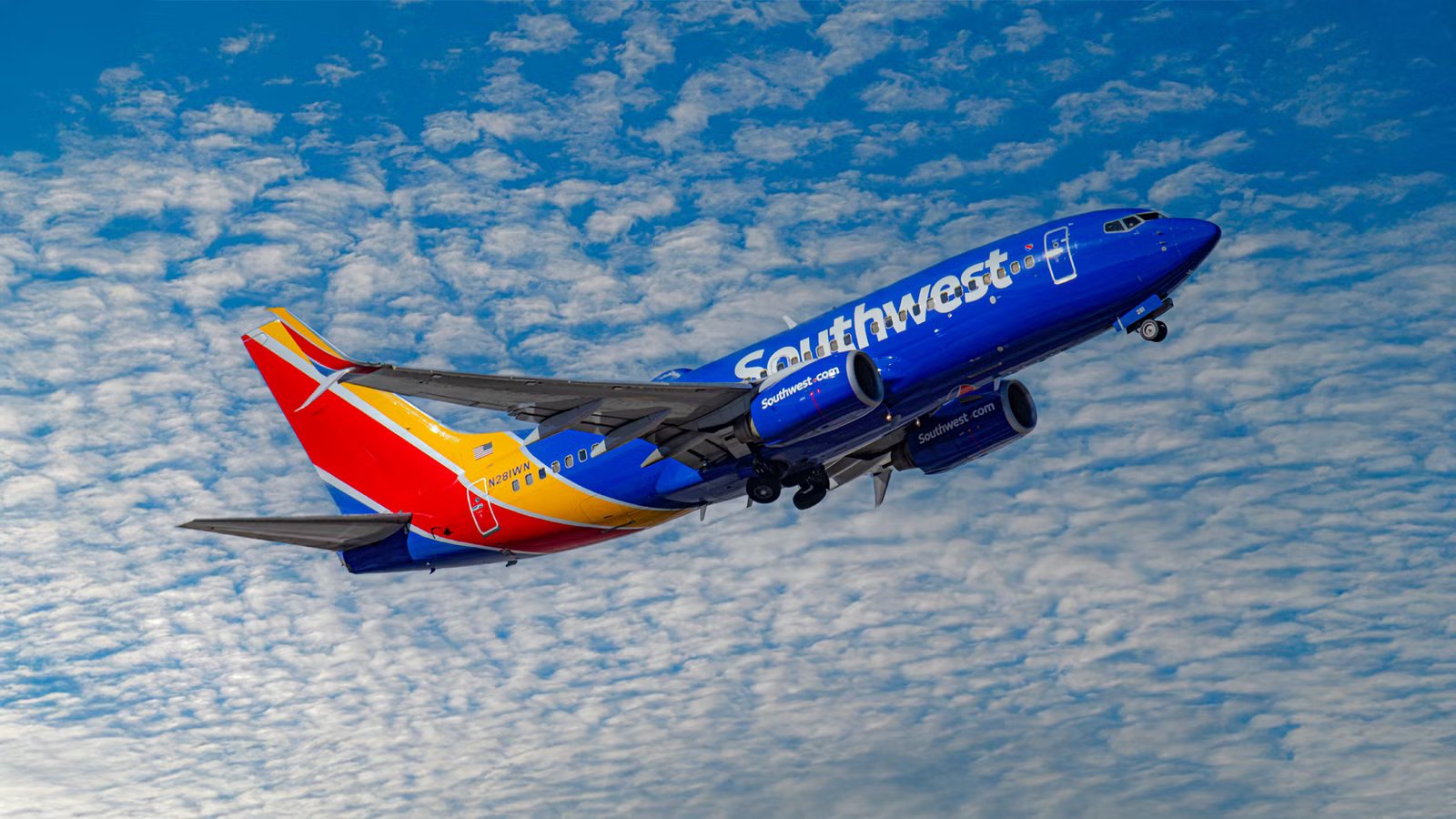
 Southwest Airlines is currently spending hundreds of millions of dollars overhauling late-1990s Boeing 737-700s, keeping jets that have logged tens of thousands of flight hours in active service and rolling out assigned seating and premium cabin options. Rather than opting for a clean break from its oldest workhorses, the low-cost carrier continues to rely on three-decade-old airframe technology to fly major domestic routes.
As confirmed in Southwest’s 2025 10-K filing and updated statements by airline leadership in July 2026, the carrier still operates more than 450 Boeing 737 Next-Generation aircraft that will see retirement over many years. What began as a plan to replace hundreds of aging 737-700s with the fuel-efficient 737 MAX 7 has turned into a multi-year saga in fleet preservation that will extend well into the next decade.
No Replacement Just Yet

The key driver behind the lingering presence of the 737-700 is the protracted certification delay of its intended successor, the 737 MAX 7. Southwest originally selected the MAX 7 as the direct replacement for its 143-seat 737-700 fleet, placing firm orders designed to phase out its oldest airframes over a 15-year window. However, heightened scrutiny from the Federal Aviation Administration (FAA), alongside engineering redesigns for the engine anti-ice system, repeatedly pushed back the certification timeline for the smallest MAX variant, leaving Southwest without its intended fleet replacement tool.
According to reports from Aviation Week covering Southwest’s July 2026 financial updates, airline executives confirmed that the carrier still faces a multi-year backlog before the MAX 7 can enter commercial service at scale. With more than 450 Next-Generation aircraft remaining on the active register, Southwest’s chief financial officer stated in July 2026 that retiring these legacy jets will now take many years, extending deep into the 2030s. The carrier has had to repeatedly revise its annual fleet delivery expectations downward, recalibrating its capital expenditure plans and keeping older airframes on high-utilization flight lines.
Extending the operating life of an aging narrowbody involves far more than simply postponing a retirement date on a spreadsheet. Every additional year a 25-year-old 737-700 spends in revenue service triggers intensive maintenance requirements, costly engine overhauls, and rising fuel expenditures, and when scaled up across an entire fleet of these aircraft, costs can rise significantly.
Why Not Opt For The MAX 8?

Swapping the entire order book to 175-seat 737 MAX 8s seems like an obvious solution, but doing so would destabilize Southwest’s route economics and operational position. The 143-seat 737-700 fills a specific capacity niche in Southwest’s point-to-point network, particularly on lower-density domestic routes where flooding the market with 32 additional seats per flight would lower load factors. On mid-tier regional routes, maintaining flight frequency with a smaller aircraft generates higher revenue per available seat-mile than flying an under-booked MAX 8.
High-congestion or short-runway environments, such as California’s Hollywood Burbank Airport (BUR), Orange County’s John Wayne Airport (SNA), and Chicago Midway International Airport (MDW), impose strict takeoff performance limits and gate envelope restrictions. According to Simple Flying fleet analysis and operational metrics in Southwest’s 2025 annual report, the 737-700 offers superior short-field performance and lower maximum takeoff weight, allowing full passenger loads out of weight-restricted runways where a MAX 8 would face severe payload penalties.
Runway limits and passenger capacity explain why Southwest cannot simply standardize on the MAX 8 today, but they also show an even tougher operational challenge for the existing fleet. To keep these 143-seat 737-700s flying safely until MAX 7 deliveries arrive in volume, Southwest must subject these quarter-century-old airframes to increasingly complex overhauls and heavy maintenance cycles.
A Measured Engine Strategy

To keep these long-trusted airframes airworthy without incurring unsustainable overhaul bills, Southwest has a strategy of selective maintenance triage and aggressive component harvesting across its legacy fleet. Instead of sending every aging 737-700 through full-scope, multi-million-dollar heavy D-checks, the airline meticulously evaluates the remaining flight cycles on both the airframe and its twin CFM56-7B engines, as per Aviation Week. The cycle-budgeting system allows Southwest to identify which aircraft justify capital investment for heavy overhauls and which should be retired early to be used as internal parts donors.
Overhauling a pair of CFM56 engines can cost up to $6 million, according to Avitrader, an expenditure that often approaches or exceeds the residual value of a 25-year-old airframe. To mitigate these prohibitive costs, Southwest relies on Used Serviceable Material (USM). When the airline retires 60 aircraft in a year, those airframes are stripped for high-demand rotable parts, landing gear sets, and flight control actuators. These certified components are then re-inducted into active maintenance lines, providing a steady supply of spare parts to keep the remaining active Next-Generation jets compliant through mandatory heavy C-checks.
However, even an optimized maintenance program using harvested components cannot alter the underlying fuel burn physics of late-1990s engine architecture. Component harvesting is great for preventing direct maintenance overhead from rising, but every flight hour logged by a classic 737-700 incurs continuous operational penalties in fuel burn and carbon emissions compared to modern narrowbodies that competitors already have operating.
What Will The MAX Bring To Southwest?

The CFM LEAP-1B engines powering the modern 737 MAX family offer a 15% reduction in fuel burn compared to the CFM56-7B turbofans on the 737-700. On a high-utilization network flying hundreds of daily departures across transcontinental corridors like Baltimore/Washington (BWI) to Las Vegas (LAS), that 15% translates into hundreds of thousands of extra gallons of jet fuel consumed across the fleet every single day. Critically in Southwest’s scenario of operating hundreds of these older airframes, this fuel penalty adds tens of millions of dollars in avoidable operating expenditure to the annual balance sheet.
The financial burden extends far beyond raw fuel burn to encompass mounting capital allocation and investor scrutiny. With jet fuel prices fluctuating and activist hedge funds like Elliott Management demanding aggressive margins and operational discipline from Southwest executive leadership, keeping three-decade-old engine technology airborne creates significant cost friction. Furthermore, the classic 737-700 lacks the aerodynamic refinements of the split-tip Advanced Technology winglets found on the MAX, increasing drag and further compounding burn rates on longer stage lengths. In a competitive domestic market where rival carriers use fuel-efficient narrowbodies, taking on higher cash operating costs per available seat-mile directly weakens Southwest’s unit profitability.
With the Federal Aviation Administration granting type certification for the 737 MAX 7 on August 3, 2026, ending nearly a decade of regulatory uncertainty, the financial rationale for retiring the 737-700 has reached a critical turning point. However, clearing the regulatory wall does not automatically translate into immediate fleet replacement on the ramp, as Boeing’s delivery ramp-up and Southwest’s line-induction process need months of operational preparation.
The Retirement Plan

Now that type certification for the 737 MAX 7 has been approved, it clears the main regulatory obstacle, but it does not enable an instant retirement of Southwest’s remaining 737-700s. Integrating hundreds of new aircraft requires a multi-year logistical pipeline, spanning factory delivery slots, line-induction retrofits, and pilot training throughput across more than 11,000 active aviators. With initial commercial deliveries expected to begin in early 2027, Southwest faces an operational induction timeline of six to nine months per batch of aircraft to install proprietary cabin interiors, configure flight deck avionics, and cycle flight crews through differences training before retiring matching older airframes.
To manage this transition without disrupting daily network reliability, Southwest plans a phased retirement schedule through 2031, aiming to phase out between 50 and 60 classic narrowbodies annually. On many short-haul shuttle routes, aircraft swap schedules will need to align with cabin standardization programs to make sure that there are consistent amenities such as in-seat power, expanded overhead bins, and assigned seating layouts across both older and next-generation variants.
Southwest’s 2031 all-MAX deadline can only be met if the supply chain is not affected, which is looking unlikely to be the case with an engineer strike looming over the production line. There is little that Southwest can do other than wait and see whether these problems can be resolved and ensure that the 42 aircraft per month production rate stays stable.
All Comes Down To The Supply Chain

The eventual retirement of Southwest’s final 737-700 is a massive moment in the airline’s history, solidifying the complete transformation of the world’s largest low-cost carrier. As Southwest introduces assigned seating, extra-legroom seats, and premium boarding tiers, transitioning to an all-MAX fleet is essential to providing the operational consistency and fuel margins required to support its evolved business model.
With over 400 total MAX variants remaining on order for Southwest, Boeing must achieve and sustain production output without any further delays. Any unexpected supply chain slowdown or manufacturing defect will immediately ripple down to Southwest’s Dallas headquarters, which may end up leading to the extension of remaining 737-700 airframes once again.
Southwest’s quarterly SEC filings and Boeing’s monthly delivery logs over the next two years will be where the reality is documented at its clearest. If delivery pacing falters, Southwest’s quarter-century-old workhorses will continue climbing out of airports across North America and show exactly how operational necessity always overrides retirement schedules.