dailynewsnblog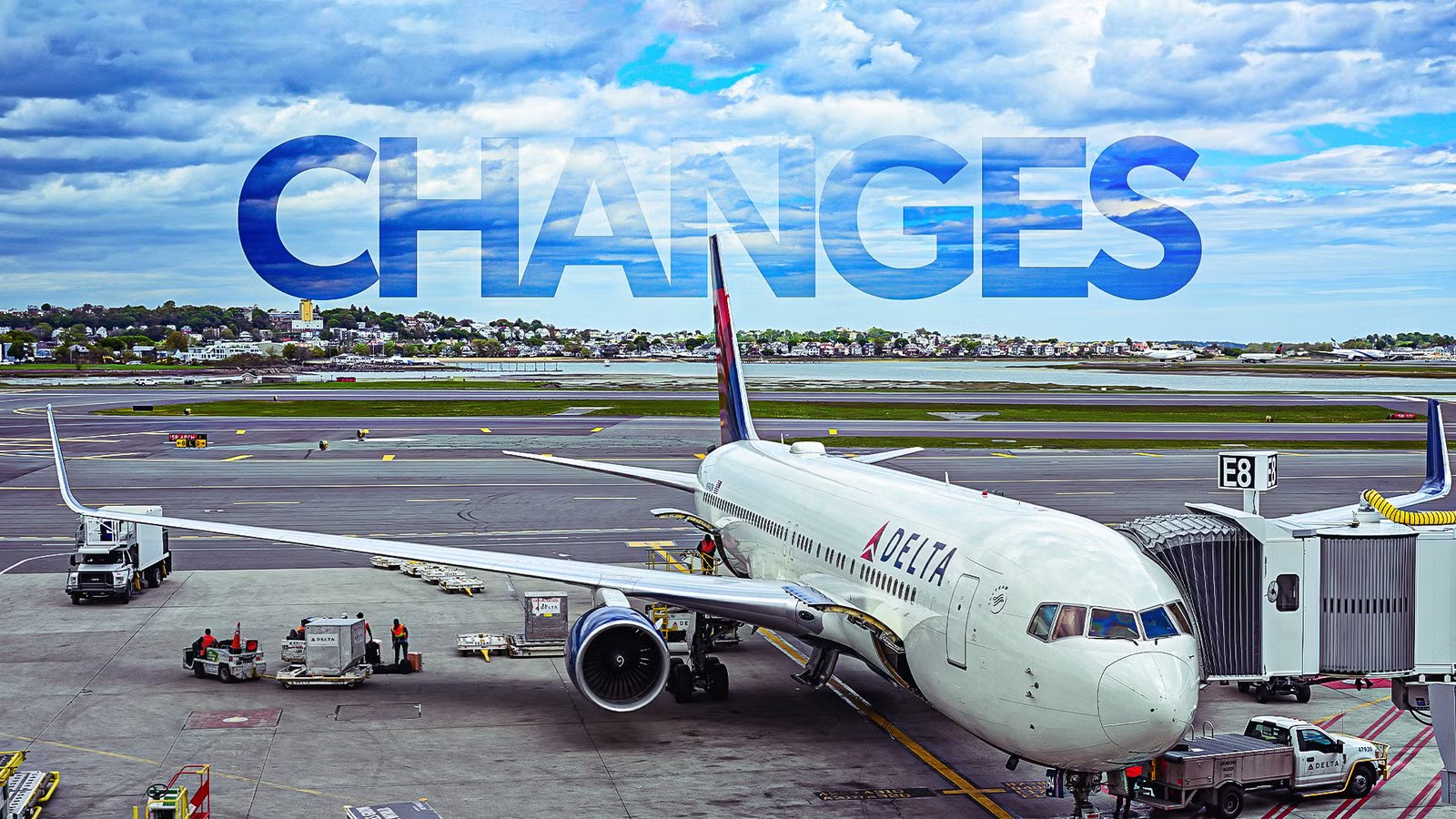
For  Delta Air Lines passengers in 2026, the biggest individual baggage story is not a complete rewriting of the rules, but rather a mix of tighter deadlines, smarter tracking, and a few familiar policies that are now much more important than they were before. Delta still allows even Basic Economy travelers to bring a full-size carry-on and one personal item for free, with the usual size limit of 22 by 14 by 9 inches (56 by 35 by 23 cm). However, late boarding can now make overhead bin space significantly harder to find.
At the same time, the airline is leaning much further into technology, building on its long-running RFID bag-tracking system in the Fly Delta app and adding new AI-driven baggage handling tools that are aimed at improving how bags move behind the scenes. The more important change for many travelers is mostly procedural. Delta’s 20-minute baggage guarantee still exists on eligible domestic flights, but the claim window is far shorter, requiring passengers to submit a request within two hours after arrival.
That makes speed almost as important as the delay itself. Meanwhile, standard domestic checked-bag fees now sit at around $35 for the first bag and $45 for the second, with the usual 50-pound (23-kg) limit in most cabins and 70 pounds (32 kg) in Delta One and domestic first class. Medallion members and some co-branded cardholders also still qualify for free checked bags, meaning who you are and how you may choose to book a flight can matter just as much as what you might end up packing.
Smarter Tracking & Faster Claims

The newest piece of development in Delta’s baggage policies is that in 2026, the airline will be pushing towards a system of more automated baggage handling and a much tighter deadline for compensation claims. Delta is going to be expanding its Baggage AI tools, which are designed to fundamentally improve how bags are routed on the ramp, reduce empty vehicle movements, and better account for congestion and weather disruption.
This all roughly fits into how Delta is marketing its overall passenger experience in 2026. For passengers, this matters because it should improve the odds that a checked bag actually makes a tight connection or reaches the carousel on time. Delta is also still building out its RFID-based tracking system, which allows customers to follow checked bags through the Fly Delta app in almost real time. The bigger behavioral change, however, is with the 20-minute bag guarantee that loyal Delta customers have relied on for compensation during baggage delays.
Delta still offers 2,500 SkyMiles if an eligible bag does not arrive at the carousel within 20 minutes, but passengers now have only two hours after arrival to submit such a request. This is fundamentally a major shift from the far more relaxed window travelers were used to. In practice, Delta is keeping the customer-facing perk available while making it much easier for travelers to miss out if they do not know the new rules or act very quickly directly after landing.
Carry-Ons Stay Budget-Friendly, But Checked Bags Will Cost More

Not every important baggage point for Delta passengers in 2026 is a novel, headline-making development. However, several policies now have greater overall practical importance because of how people book and board. Delta has continued to stand apart from many of its rivals by allowing all passengers, including those on Basic Economy fares, to bring one full-size carry-on and one personal item onboard at no extra charge.
The carry-on size limit remains normal, so there have been no direct changes to that rule in and of itself. The catch is that Basic Economy passengers must typically board an aircraft late, which means that the policy can be less valuable in real life if overhead bin space is already gone and the bag has to be gate-checked. On the checked side, travelers should update their expectations on pricing, which is critical for budget-oriented travelers, although Delta is not as cheap an option as the US’s various budget carriers.
For domestic US itineraries, Delta’s standard checked-bag fees are now $35 for the first bag and $45 for the second, not the older $30 and $40 figures which many passengers may continue to remember. Standard weight limits remain 50 pounds (23 kg) for Delta Main, Comfort+, and Premium Select, while Delta One and first class customers get 70 pounds (32 kg). Medallion members and some other elite travelers will receive free checked bags, reinforcing how status can materially lower the cost of travel.

Does A Backpack Count As A Carry-On Or Personal Item On US Airlines?
The last thing anyone wants is to finally cross that jet-bridge and get to your seat only to find that your bag can’t go with you.
What Do These Changes Mean For Passengers?

For Delta passengers, the overall effect of Delta’s baggage changes is a mix of greater convenience, higher time sensitivity, and more uneven value depending on what type of fare a customer books and what status they may have. On the positive side, better tracking and AI-driven baggage handling will make travel feel more transparent and less stressful, especially for connecting passengers who worry about whether their checked bag ever made it onboard the flight.
Real-time updates in the Fly Delta app give travelers more visibility than older baggage systems ever did, to begin with. But Delta is also placing more responsibility on the customer to react rather quickly. The shortened two-hour claim window for the 20-minute bag guarantee means that passengers now need to be well aware of the rule, watch the clock, and file promptly or lose the benefit altogether. Cost remains a key pressure point as well.
Free carry-ons help Basic Economy passengers avoid checked-bag fees, but late boarding means that some will undoubtedly still end up separated from their bags at the gate. At the same time, higher domestic checked-bag fees make packing strategy more important, especially for infrequent travelers without elite status or cobranded credit card perks. In short, Delta’s baggage experience in 2026 is becoming more technology-forward and potentially more reliable, but also more procedural and expensive for travelers not familiar with the fine print.
Delta’s Financial Motivations

Delta is not making such sweeping changes without reasonable motivation. After all, higher checked-bag fees directly lift ancillary revenue while keeping free checked bags tied directly to Medallion status, and Delta SkyMiles Amex cards reinforce loyalty and help sell premium fares, status pursuit, and credit-card partnerships. Delta explicitly markets the card benefit as worth up to $70 roundtrip per traveler, something which shows how baggage policy can double as a customer-acquisition lever, not just as a travel rule on its own.
At the exact same time, Delta’s 2025 results show why operational efficiency matters so much. The airline itself generated around $63.4 billion in revenue, an impressive 9.2% operating margin, $8.3 billion in operating cash flow, and still managed to finish the year with $14.1 billion of debt and finance lease obligations. In that context, reducing mishandled bags, missed connections, and manual ramp inefficiency protects margins. This is exactly the kind of place where AI baggage handling and the shorter two-hour claim window fit in.
Delta says its expanded Baggage AI system is meant to optimize driver dispatch, reduce empty runs, and better handle congestion and weather disruptions, all of which should lower labor waste and service-recovery costs. The tighter baggage-guarantee claim window likely also reduces payout volume by making claims more immediate and easier to verify. Financially, the strategy is to earn more from bags, spend less fixing bag problems, and use baggage perks selectively to strengthen the higher-value customer ecosystem around Delta’s brand.

How Much Does It Cost To Upgrade To Premium Economy At Check-In?
Is waiting until the last minute the best strategy for your wallet?
AI In Commercial Aviation

Delta’s baggage initiative underscores the role that AI will soon play in commercial aviation. AI tools are no longer confined to flashy passenger-facing tools or general ideas about autonomous flying. Instead, AI models are being deployed in the operational costs of the airline business. This includes the dispatching of ramp drivers, reprioritization of bags in real time, and reactions to gate changes. These systems will also help reduce the effects of delays caused by airport congestion or the weather.
That matters because it shows aviation’s shift as practical, ground-level, and margin-focused. In Delta’s case, the technology is designed to make faster decisions every few minutes using live operational data, which turns AI into an invisible logistics engine rather than a marketing gimmick. More broadly, this fits into the industry’s general direction, with regulators pushing for the long-term modernization of baggage systems.
The Bottom Line

At the end of the day, Delta’s latest baggage moves are not all that out of line with what passengers have grown to expect from this carrier, one that offers a diverse, premium-oriented network. The airline has two joint objectives with these shifts: to improve the consistency of its passenger experience and ensure operational simplicity.
Passengers pay a price premium to fly Delta, and that has been a key piece of the airline’s business model for years now. The airline has won over travelers with the economics of its loyalty program, as well as capitalizing on the fact that many of its more budget-oriented competitors have continued to struggle.
As such, Delta has continued to focus on streamlining its operations, and baggage handling is one of the most complex tasks an airline has to manage. When passengers do not get their bags, they are unhappy, and this harms their overall experience quality. These moves take yet another step to improve baggage handling for customers.