dailynewsnblog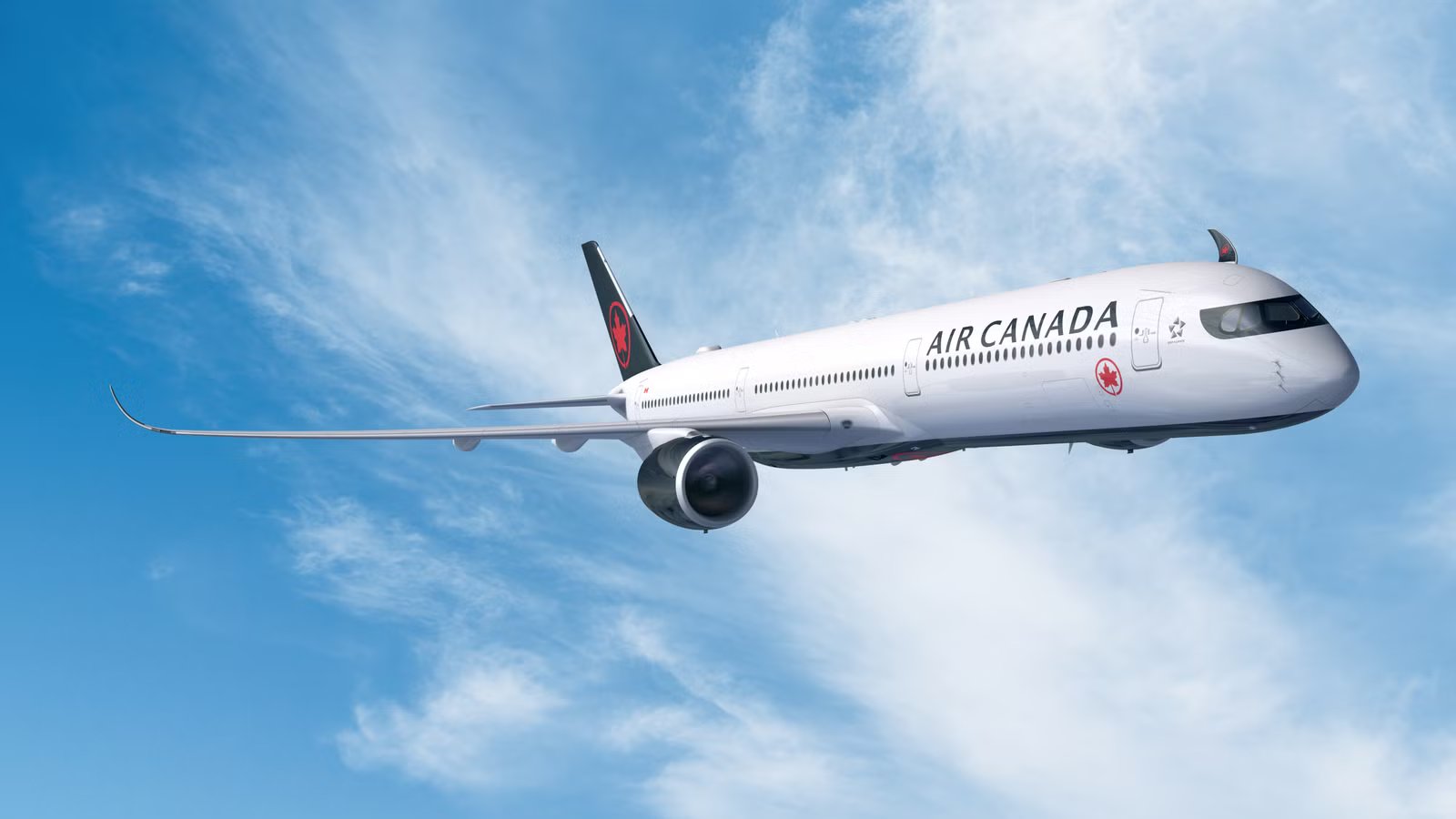
 Air Canada last month laid out ambitions for the future of its long-haul fleet with a firm order for eight Airbus A350-1000 widebody jets. These would “be central to the airline’s global expansion,” Air Canada noted at the time, bolstering its nonstop flight offerings to the likes of “the Indian subcontinent, Southeast Asia, and Australia.”
The initial eight A350-1000s delivered will make up the first in Air Canada’s fleet, with the deal leaving the door open for a further eight purchases. These are scheduled to be handed over from Airbus to Air Canada from 2030, marking a huge leap in its fleet modernization plans.
Air Canada’s Fleet Modernization

Details of how Air Canada will put its A350-1000s to use are, naturally, few and far between. However, a look at the airline’s current fleet blatantly shows that replacements will be needed in the near future for several of the aging models it still operates.
For instance, Air Canada boasts 20 Airbus A330s within its long-haul fleet. These average 19.3 years of age, but are far from the oldest within their ranks. Last year, the airline brought two passenger 767-300s back into service on the back of aircraft delivery delays. In total, it still has six such jets, averaging 32.3 years of age.
Air Canada’s current fleet, taken from Planespotters.net data:
|
Aircraft |
Total Number |
Average Age |
|
Airbus A220 |
42 |
4.1 years |
|
Airbus A320 |
16 |
22.6 years |
|
Airbus A321 |
22 |
19.5 years |
|
Airbus A330 |
20 |
19.3 years |
|
Boeing 737 |
51 |
5.8 years |
|
Boeing 767 |
6 |
32.3 years |
|
Boeing 777 |
25 |
16.3 years |
|
Boeing 787 |
40 |
9.1 years |
Perhaps most importantly, though, is the 25 Boeing 777 variants in Air Canada’s fleet. Besides the 787 Dreamliner, these are the backbone of its long-haul operation. However, at an average age of 16.3 years, the airline no doubt has to search for a successor to the 25 777s it still flies, given the usual two-decade lifespan of aircraft.
Replacing The 777

Air Canada’s A350-1000 order, which was disclosed on February 12, appears to have emerged just in time, therefore. Indeed, by the time the first A350-1000s begin to arrive, the average age of Air Canada’s 777s will have edged past the 20-year mark.
Realistically, the A350-1000 makes for a natural successor to the 777-200s and 777-300ERs in Air Canada’s fleet. Similar in both size and capacity, the A350-1000 offers slightly better range but falls short on maximum takeoff weight. Below is a comparison of the 777-300ER, A350-1000 and 787-9. Of the 777s and 787s in its fleet, the 777-300ER and 787-9 make up the majority, accounting for 17 and 30 of the variants respectively.
777-300ER, A350-1000 and 787-9 specifications:
|
Specifications |
777-300ER |
A350-1000 |
787-9 Dreamliner |
|
Length |
73.90 m |
73.78 m |
63.00 m |
|
Wingspan |
64.80 m |
64.75 m |
60.17 m |
|
Range |
7,884 nmi |
7,992 nmi |
8,313 nmi |
|
Engines |
2 GE90-115B |
2 Rolls-Royce Trent XWB-97 |
2 GEnx-1B or Rolls-Royce Trent 1000 |
|
Thrust |
230,600 lbf |
194,200 lbf |
142,000 lbf |
|
Capacity |
365 pax |
369 pax |
280 pax |
|
Max takeoff weight |
351,534 kgs |
308,000 kgs |
252,651 kgs |
Whilst similar across the board, where the A350-1000 really trumps the 777-300ER is in efficiency. Over 50 percent of the A350-1000 is built using carbon composites, making it around 30 to 40 tonnes lighter than the aluminum 777-300ER. Coupled with improved aerodynamics and engine technology, this translates to as much as a 25 percent reduction in fuel burn, making the A350-1000 a far more economically viable option.

What Are The Operating Costs Of An Airbus A350?
A closer look at the numbers behind this widebody’s performance.
What Has Drawn Air Canada To The A350-1000?

The A350-1000 speaks for itself then, offering far better efficiency than predecessors, which will only make for some serious cost-cutting for Air Canada. In fact, according to Airbus, the aircraft offers airlines the lowest operating cost per seat of any widebody.
As the airline’s chief commercial officer, Mark Galardo, put it upon announcing the deal, the jet offers “a natural next step in the evolution of [its] fleet”. “State-of-the-art capabilities and improved efficiencies” would aid in “unlocking new long-haul opportunities around the globe,” he went on to say.
In terms of numbers, the A350 family of jets costs on average $8,500 to $9,500 per flight hour when accounting for fuel, crew, maintenance, and ownership costs. This is broadly the same as the costs associated with the 787 Dreamliner and represents some of the best in the twin-engine long-haul market. However, the A350 has a longer range and a higher maximum payload, making it a winner for airlines’ flexibility. On top of this, the A350 also boasts some of the best passenger comforts, being quieter than rivals and having a lower cabin altitude of 6,000 feet.
Air Canada Brushes Off Boeing’s Latest Offering

In opting for the A350-1000, Air Canada appears to have actively chosen not to complement its Boeing-heavy long-haul fleet with the manufacturer’s newest option, the 777X. Given the headlines around repeated delays within the program and struggles in securing regulatory approval following a string of issues with the 777X, this might come as little surprise.
Air Canada was, in fact, reportedly mulling both the 777X and A350 prior to putting pen to paper with Airbus. However, following seven years of delay, which is set to see the 777X debut in 2027 rather than 2020 as originally intended, Air Canada might not be blamed for choosing reliability over commonality within its own fleet.
Having first flown commercially in November 2016 with Qatar Airways, the A350-1000 has gained a hefty headstart on its Boeing-built counterpart. While the 777X’s largest variant, the 777-9, is slated to carry up to 426 passengers, and the smaller 777-8 will be able to travel 8,745 nautical miles, some 109 A350-1000s had already been delivered as of February, per Airbus. Simply put, the A350 represents a known quantity, regardless of whether the 777X would have potentially been a better option in terms of capacity or range.

Why Might The World’s Widest Widebody Aircraft Have Airbus Worried?
The Airbus A350-1000 is limited in its market appeal due to the presence of the Boeing 777-9, but does this really matter?
Will The A350-1000 Become Common Among Air Canada’s Ranks?

Air Canada’s February order was for just eight A350-1000s. Whilst this can be upped to 16 under the agreement with Airbus, that would still fall short of filling the gap with retirements the airline will have to make among its older aircraft over the coming years.
So, having ventured into the A350-1000 market, it would make sense for Air Canada to bolster the jet’s numbers further within its fleet over the years ahead. It is no secret that airlines need to finely manage costs, and one way to do so is through commonality. If and when Air Canada looks to build its A350-1000 fleet, it will find benefits in economies of scale, but also in the reduced fuel requirements of the aircraft.
That said, Air Canada is waiting on a number of new deliveries aside from the A350-1000s. As of February, this included 14 Boeing 787-10 Dreamliners, expected later this year, alongside 30 Airbus A321XLRs. All the orders form part of its wide-ranging fleet modernization plan, which the airline says will support a “diversified future network,” so how vital the A350 comes to be in this time will tell.
Where Will Air Canada’s A350-1000s Be Put To Work First?

Shutterstock | Simple Flying
As mentioned, details of how Air Canada will utilize its brand-new A350s are largely unknown. From what the airline has disclosed, we know they will be delivered from “the second half of 2030,” and destinations across India, Southeast Asia, and Australia have been mentioned specifically. Whilst encompassing a fairly broad range of destinations, the strong range and capacity of the A350-1000 are set to leave Air Canada with wide-ranging options, whether that be revisiting old routes or serving entirely new destinations.
For Air Canada, the possibilities are plentiful. The A350-1000 appears a fine fit for transpacific links to the blossoming Asian market, primarily served by Air Canada from its Vancouver hub. However, it could also enable new nonstop routes from Toronto and Montréal, where demand for Asia-bound flights has also been strong in recent years. Flights between the Thai capital, Bangkok, and Canada, for example, drew some 259,000 passengers last year, up from 142,000 in 2023 and 231,000 in 2024.
Another option could also be the renewal of a nonstop service to Melbourne, for instance, which had been an option for passengers prior to the pandemic. This would complement its existing nonstop routes to Sydney and Brisbane, perhaps being a viable option once again thanks to the A350-1000’s strong cost profile. However, time will tell where the new A350-1000s will be put to work, and we can be sure such conversations have already graced Air Canada’s boardroom.