dailynewsnblog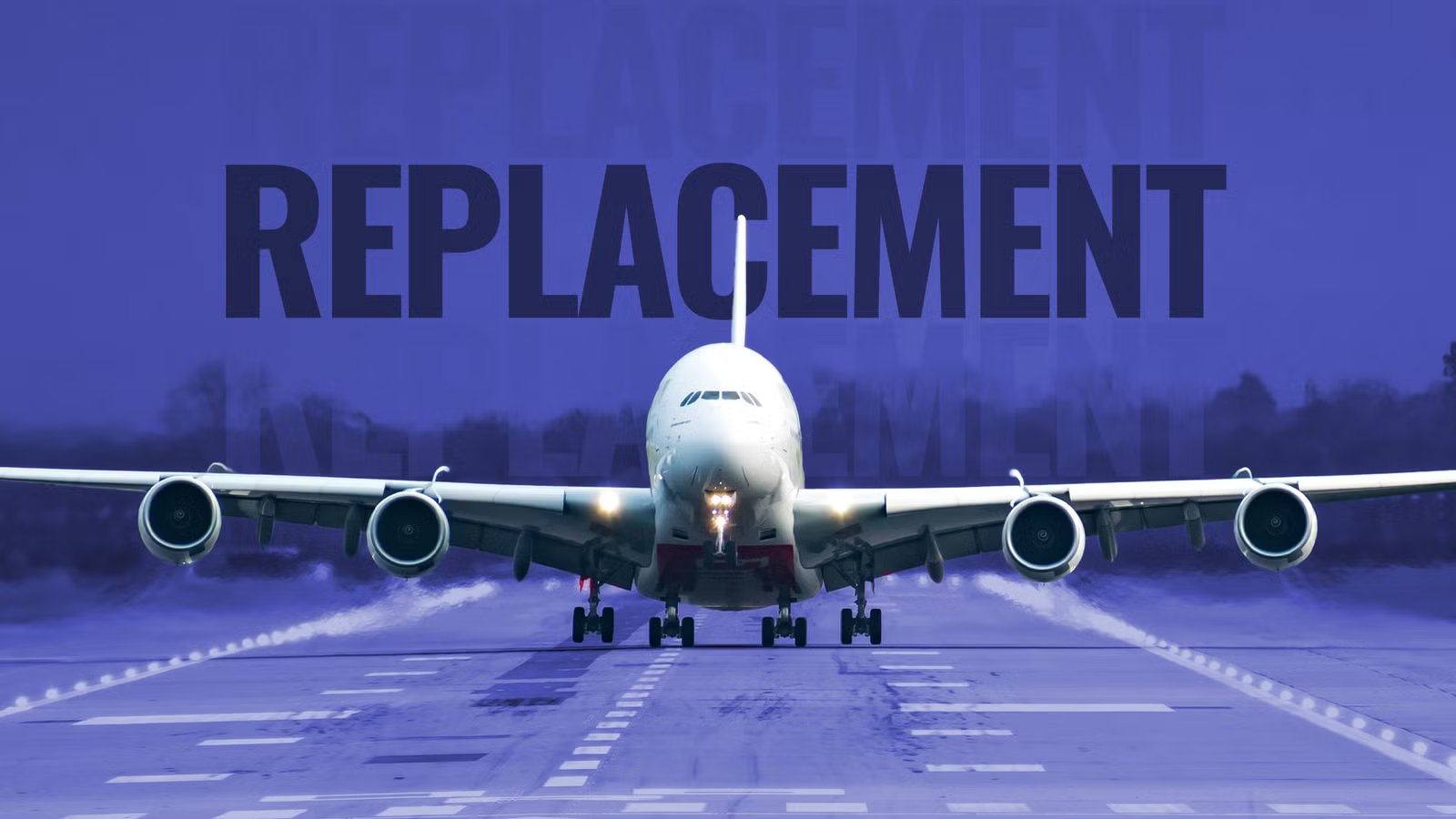
The Airbus A380, has been slowly dwindling in number since its maker discontinued production in 2021 as the COVID-19 Pandemic brought the death blow to quadjet manufacturing. In the aftermath of that sad finale for the iconic double-decker’s factory run, at least one airline has made every effort to keep the giants in the air. That carrier is, of course,  Emirates, which has over 100 A380s in its stables: the incredible fleet amassed by the Dubai-based airline accounts for half of the total production run of the A380.
Emirates has purchased secondhand superjumbos from carriers that retired theirs due to mounting operating costs, and Dubai International Airport (DXB) even has tailor-made terminals with sky-high jet bridges just for the A380. Despite clamoring for a renewed A380neo production, Airbus has yet to budge, citing insufficient market demand.
So, as these incredible giants of the sky are slowly scrapped, moth-balled, and put out to pasture in museums or the boneyard, what will take their place? The answer is the forthcoming Boeing 777X, which will be the largest twinjet ever made. The gigantic widebody will not seat as many passengers as the A380, nor have its spectacular second-deck. Still, it will meet the demands for efficiency that the future requires of the largest commercial planes in service.
The Future Widebody

The 777X is not set to enter service until 2027, but when it does, the gigantic twin-engine airliner will be a game changer for the commercial aviation industry, specifically, in the long-haul and high-density markets that are served by the A380 and a handful of A340s and Boeing 747s that are still flying. The COVID-19 Pandemic brought acute pain to the commercial flying business that exacerbated the already weakening economics of quadjet flying. That directly caused Airbus to end A380 production in 2021.
The world of passenger flying rules the marketplace for commercial jets, with cargo and other niche missions accounting for only a small percentage of total airframe sales. Atlas Air was the last customer to take delivery of the Boeing 747-8F in 2023, buying all three of the final examples to roll off the line. The A380, meanwhile, failed to become a cargo jet due to the unacceptable costs of refitting it for the mission. As such, if Boeing or Airbus is going to make a big jet, it has to be optimized for passenger service first and foremost.
The 777X brings a passenger capacity close to that of the 747-8, and while appreciably less than the A380, it is still close. That capacity shortfall is more than offset by the dramatically lower operating cost and more flexible deployment options of the 777X. The jet has fewer and less complex maintenance needs, which saves money and increases uptime. It can also fly to more airports thanks to lower airframe weight and quieter engines.
The  Boeing 777X will allow airlines that fly the gigantic A380 to take a minimal hit on capacity per departure while saving significant sums on the cost of flying, plus its modular cabin architecture means that when the demand for premium or economy service shifts, the layout can be swapped. Its improved cabin environment means that first class and economy both enjoy a markedly better experience in flight.
Smaller But Mightier

The 777X is designed to seat 400-415 passengers on a typical cabin layout. Compared to the A380, which seats 500-600 in conservative configurations, that number looks small, especially as the A380 is even certified for over 800 seats in an all-economy cabin environment. The problem, however, is that gigantic capacity comes at a steep cost for its operators, and filling so many seats to satisfy the cost of flying the behemoth just isn’t always profitable, or even possible.
The 777X solves that problem by enabling carriers to balance the pendulum between maximum seat count and efficient sustainment. The enormous twinjet will have the largest turbofan engines ever installed on a commercial plane in history. Its GE9X powerplants are a revolution in commercial aircraft engine technology and make it possible for the 777X to not only haul huge numbers of flyers, but cross incredible distances, move tons of cargo, and do it all while using less fuel.
Another important aspect of the future of flying is emissions. Quadjets like the Airbus A380, A340, and Boeing 747 are prime targets for regulatory bodies and environmental activists due to the high emissions of four-engine aircraft. The 777X not only has just two powerplants, but the GE9X promises to be more efficient and cleaner than the preceding GEnx, as well as more powerful.
Airbus’s A380 is equipped with Engine Alliance GP7200 or Rolls-Royce Trent 900 turbofans that put out 70,000 to 81,500 pounds of thrust. The 777X’s GE9X engines, on the other hand, have been recorded at a record-breaking 134,300 pounds of thrust. While the new Boeing may only have two engines, they nearly do the job of all four on the A380.
Raising Cabin Standards

The A380 is famed for luxurious flying experiences offered by its top operators like Emirates, Etihad, Qatar Airways, and Singapore Airlines. Emirates and Qatar Airways are also two of the top Boeing 777 owners by fleet count and have invested heavily in crafting the most indulgent and pampering premium cabin products on the market. That outstanding level of service has become a central pillar of the brand identity that many A380-flying airlines will need to sustain as the superjumbos reach the end of their service lives.
The 777X provides a large, spacious, and modern cabin environment that forms a strong baseline for unique cabin appointments created by each airline. In addition to being larger than the legacy 777 cabin by 4 inches, the lighting is provided by customizable LEDs, and the windows are 17% larger. The windows are also higher on the fuselage and can be optionally installed with electronic dimmer systems instead of physical covers.
The space itself is one thing, but the environmental conditions are also excellent in the Boeing 777X, whose cabin is set at an altitude of 6,000 feet instead of the industry standard 8,000 feet. That is in keeping with the A380’s own pressurization, which is also lower than most jetliners to reduce the fatigue of long-haul flying and jet lag. Many flights served by the giant jets are transcontinental or transoceanic, which makes this feature invaluable.
The 777X will also have cabin humidity that is twice as high as the legacy 777, which will surpass the A380 as well and help to make passengers feel fresher and energetic upon landing, as well as cut down on jet lag effects. In terms of cabin noise, the 777X’s GE9X engines will be quieter than on previous-generation widebodies. Paired with better cabin insulation, the 777X will have far less engine noise in the cabin. Boeing even went as far as to redesign the air conditioning to bring down the decibel level even more.
Modular By Design

A key upgrade that the 777X will give A380 operators is the flexible cabin configuration that is readily changeable depending on the needs of the airline. When market conditions change, customer demand shifts, or new technology becomes available, the 777X is adaptable. The architecture of the plane is designed to make it possible to reconfigure more than seat rows and premium suites, but also lavatories and galleys. Crew rest areas with bunks can also be installed or removed, depending on the aircraft’s mission.
If the demand for air travel falls short on long-haul routes, the cabin can be reappointed with maximum seating capacity to serve high-density destinations. Vice versa, rows can be removed, and more premium cabin spaces can be set up for long-distance itineraries instead. As the market for premium flying products shrinks or grows, so too can the amount of cabin floor space dedicated to the suites and luxury appointments inside the 777X.
Updating the technology aboard the 777X, like seatback inflight entertainment, will be a breeze as well for airlines that fly the 777X. As new airfare options become popular, like premium economy and business class, the airlines can introduce all-new cabin designs without major overhauls. This open architecture design is crucial for airlines to keep standards high, meet customer demands, adapt to market conditions, and keep up with new trends.

Airbus A380 Vs. Boeing 777X: Which Is the Bigger Aircraft?
The answer depends on the measure used.
A Worthy Successor But Not A True Substitute

There’s no true replacement for the Airbus A380, which is more than just the biggest airliner to ever take to the skies. It is an icon and a symbol of ingenuity, daring, size, and luxury. The colossal plane will never really be replaced by a smaller twinjet, but it can be retired with the assurance that another great plane is ready to take up the mantle. Airbus’s A380 will go down in history for its sheer size, but also the dizzyingly spectacular offerings of its operators, from lounges and bars in the sky to shower rooms and fully private suites.
The 777X cannot hope to achieve the same level of decadent and indulgent air travel as the A380, but in a future where the superjumbo simply cannot survive, the new twinjet will fill its place at the top of the food chain. It is a groundbreaking aircraft in its own right and will no doubt be furnished with similarly massive seat capacity and dazzling features by the top airlines around the world.